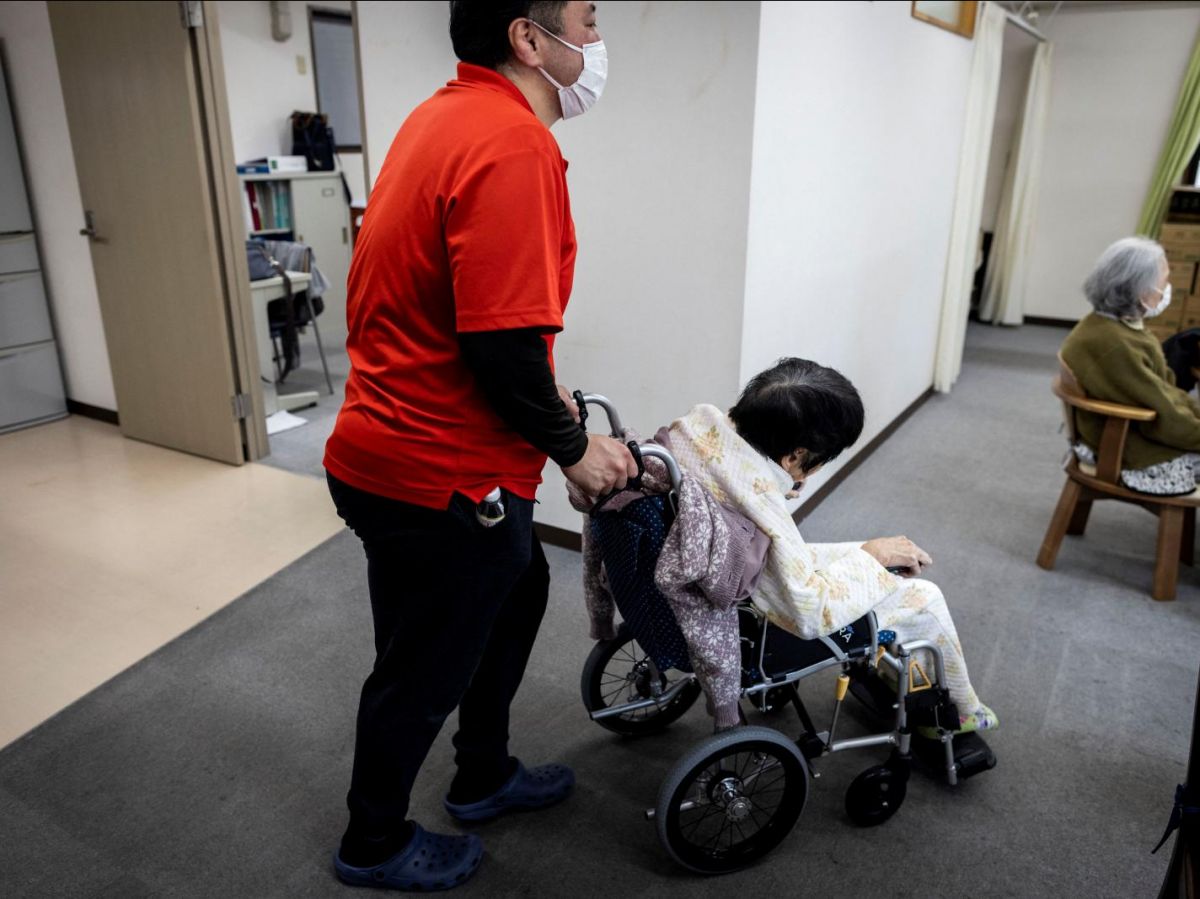
As in his dystopian novel, the writer Yo Kusakabe, a former geriatrician, believes that amputating the useless limbs of the elderly could be a solution to a possible collapse of the healthcare system in an aging Japan. Now adapted for the cinema, "Haiyoshin" ("Useless Body") has sparked intense controversy since its release in May in Japan, while shining a spotlight on a struggling healthcare sector in a country with the second oldest population in the world.
The former geriatrician from Osaka explained to AFP his shocking proposal: removing paralyzed limbs, based on consent, would relieve patients and would reduce the burden on caregivers“. “ If we amputated, a caregiver would have less difficulty lifting a heavyset patient and would suffer less back pain." explains the septuagenarian.

Yo Kusakabe's novel, published in 2003, paints an uncompromising picture of a Japan suffering from a shortage of caregivers, the exhaustion of family caregivers, and the mistreatment of the elderly. Population aging is a major concern in Japan today, where nearly one in three people is over 65. The government estimates that there will be a shortage of approximately 570,000 caregivers by 2040. “ The care sector has not yet collapsed, but as the number of elderly people requiring care is expected to continue to rise, it is heading towards a breaking point." says Mr. Kusakabe.
In Japan, homicides committed by overwhelmed and desperate caregivers are frequent enough that the term "kaigo satsujin" ("caregiving murders") is regularly used in the media. A 2016 NHK investigation revealed that such an act occurred on average every two weeks. If this trend continues, Kusakabe believes, " It is possible that amputation of unnecessary limbs will become an option.“.
“ Terrifying madness“

On social media, the film is described as " shocking » or « terrifying madness“A film influencer with over 600,000 followers talks about the…” the most controversial film of the year“. In "Haiyoshin", some patients seem relieved by "A-care", the name given to this program by the author.
The writer recalls that, during his career as a doctor, some patients dreamed of being rid of their paralyzed arms and legs, which only hindered their movements. In the film, the amputees, once freed from pain, retain their newfound agility.
For Kusakabe, his work raises the question: what truly constitutes a dignified end of life? Is it trying to get your immobile arms into the sleeves at the cost of great pain, or not suffering at all?“. “ If someone wants to have a limb amputated, if it makes care easier for their family, and if the family accepts it, then I think no one else should interfere." he says.
But such a quest " rational "Quality of life is not the compass guiding the care of the elderly in Japan," he adds. Thus, feeding tubes and intravenous infusions for those over 75 are very well covered by health insurance and often used to keep bedridden people alive. Families simply cannot bear the idea of doing nothing "for their dying parents or spouses, unaware of the suffering these treatments can inflict on them," explains Mr. Kusakabe.
Shaken confidence
This contrasts with countries like Sweden and Denmark, where good palliative care practices often prescribe withholding food from elderly people when they stop eating.
“ Japan blindly believes that even people at the end of their lives must be kept alive. "even though the burden on caregivers continues to increase." “ This inability to adopt a bold and rational approach probably means that such a radical measure as A-care is ultimately ill-suited to Japan", the doctor laments.
In "Haiyoshin", the initial enthusiasm for voluntary amputation is, however, brutally challenged by a tragedy that ultimately shakes the main character's confidence in the effectiveness of this practice. “ People tend to assume that medical procedures are completely safe and they only expect positive effects from them."This twist is," observes Kusakabe. my way of resisting the excessive expectations that society places on medicine“.
 English
  French