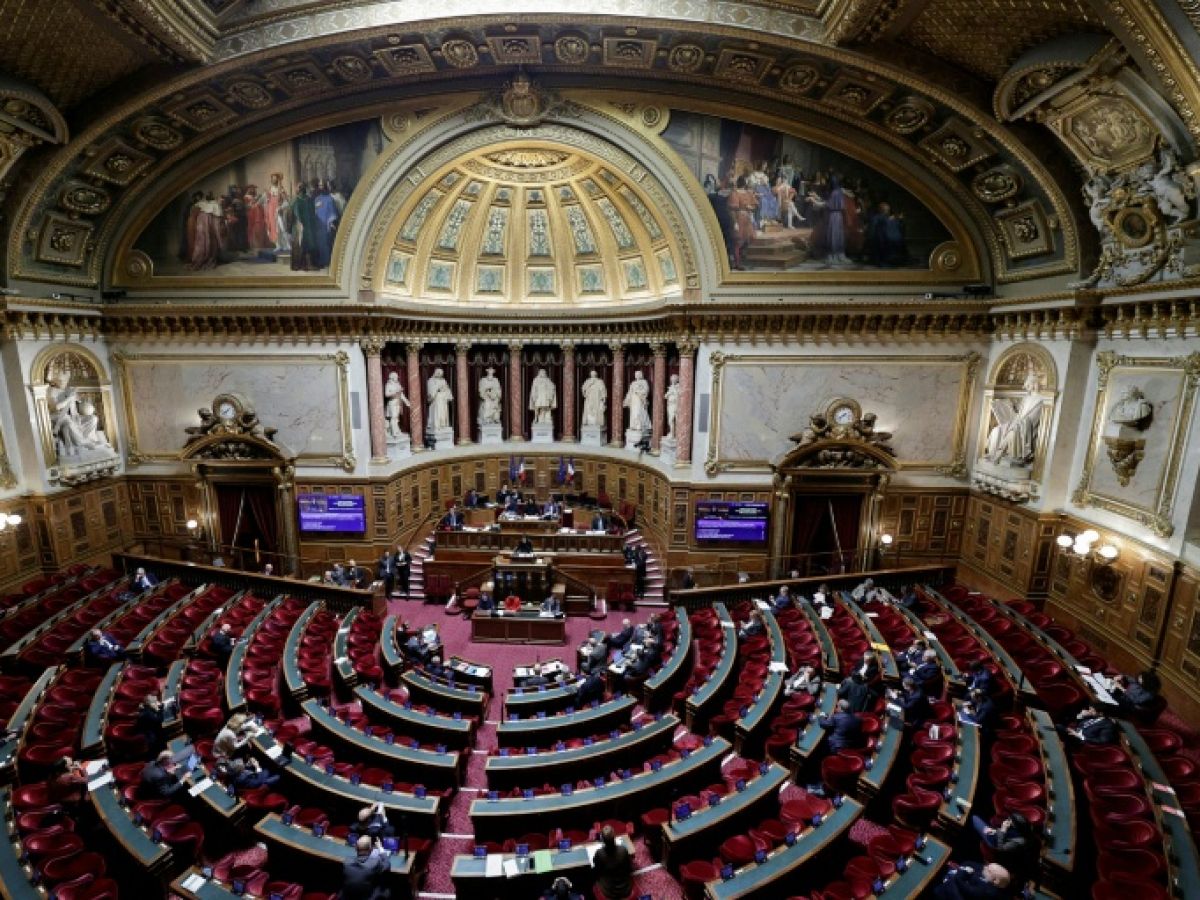
Long postponed due to political instability, the sensitive parliamentary debate on end-of-life care resumed on Wednesday in committee at the Senate, where reservations persist on the creation of an assisted dying system, desired by the executive but profoundly revised by the senators.
Designated by Emmanuel Macron as a societal priority for his second term, will the law on end-of-life care come into effect before 2027? That is the objective of the President of the Republic and the government.
![“With the skin” vs. “with the skin”… How should I eat fruits and vegetables? [Health+]](https://topreadymeals.com/wp-content/uploads/2024/08/1339-avec-la-peau-vs-avec-la-peau-comment-dois-je-manger-des-fruits-et-legumes-sante.jpg)
"We will see through the legislative work on the issue of dying with dignity," the head of state assured during his New Year's address to the French people.
Political upheavals – the dissolution of Parliament, the fall of the Barnier and Bayrou governments, and the drawn-out budget debates – have already caused several delays. The Senate has been waiting for the bill since May, when it was adopted by the National Assembly in its first reading.

The upper house will debate it in the chamber starting January 20, before a formal vote scheduled for January 28. The National Assembly is then expected to take it up again in February.
– “Medical assistance in dying” –
The debate takes the form of two bills being examined in parallel: a first one that is rather consensual on palliative care, and another, clearly more sensitive one, on the creation of assisted dying.
It is around this text that the debates are expected to be the most complex, especially in a Senate which leans to the right and is considered much more conservative than the National Assembly, particularly on societal issues.
In an opinion piece published in Le Figaro, 53 prominent figures, including many practitioners and two former ministers, Jean Leonetti and François Braun, called on senators to "surge on" to oppose the text, denouncing a "major ethical shift".
The Senate's Social Affairs Committee, responsible for the preliminary work on this text, did not make this choice, opting for adoption in a version largely revised under the impetus of the rapporteurs from the right wing of the Senate, which holds a majority in the chamber alongside its centrist allies.
"If we reject the text in the Senate, we cease to exist. Yet we have things to say," explained rapporteur Alain Milon (The Republicans) to AFP, committed to "protecting the patient and protecting the healthcare professional" called upon to perform the future medical procedure.
He thus advocated a transformation of the initial "right to assisted dying" into a much more strictly regulated "medical assistance in dying".
The system would therefore still provide for a very controlled legalization of assisted suicide and euthanasia – without these words appearing in the text – with the possibility for a sick person to use a lethal substance, or to have it administered by a doctor or nurse in certain cases.
– “The last resort” –
But the scope of the scheme is considerably restricted in the Senate version: this "medical assistance" would thus be reserved for patients whose "vital prognosis" is "in short-term danger", i.e. a life expectancy of only a few days.
“This must be a last resort,” explains Alain Milon, who fears “considerable abuses” if the Assembly’s wording is maintained. The MPs are indeed going much further, extending the measure to patients with a “serious and incurable condition” not only in the “terminal phase” but also in an “advanced phase,” potentially with several weeks or months to live.
The main architect of the text in the Assembly, MoDem MP Olivier Falorni, told AFP he was pleased to see the Senate rapporteurs "accept the principle of assisted dying": "This is not a barrage of criticism as some might have feared," he stressed, while nevertheless regretting a Senate proposal that would render the system "virtually ineffective."
The Socialists also regretted seeing the compromise reached in the National Assembly "distorted," while the centrists were divided. Some, like Olivier Henno (UDI), proposed "another path" by focusing the text on "assisted suicide" rather than euthanasia, which suggests intense debates are likely to follow in the chamber.
 English
  French