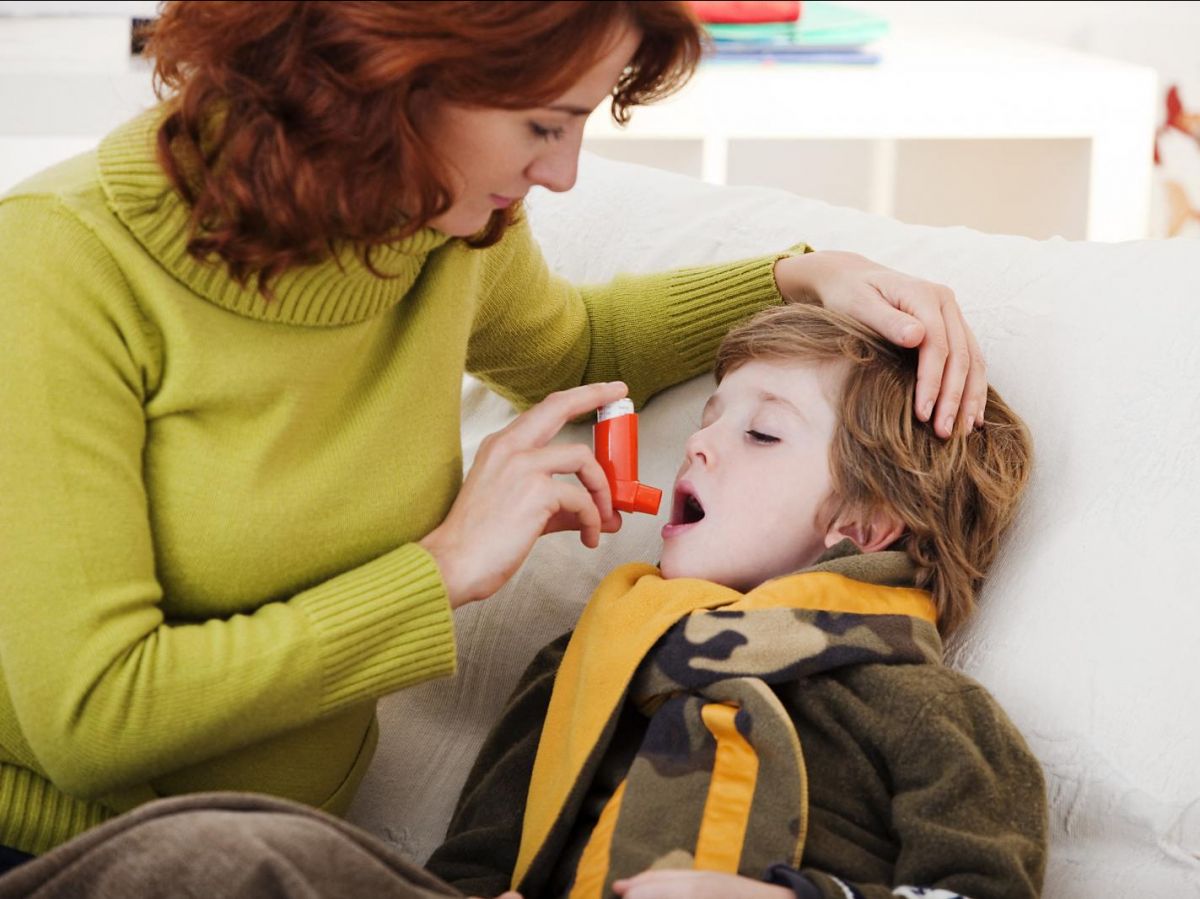
In France, approximately 4 million people suffer from asthma. Among adults, 15 to 20% of cases are work-related, according to the French National Health Insurance. It is also the most common chronic disease among children, with 10% of school-aged children suffering from it. While several types of treatment exist, asthma remains a chronic disease that cannot be cured. However, research is progressing in the hope of preventing asthma attacks. According to a recent study, an existing vaccine, the RSV vaccine, appears to offer this potential.
Asthma manifests as shortness of breath, coughing, wheezing, and respiratory discomfort that can be persistent. It is characterized by inflammation of the bronchi, which obstructs airflow to the lungs.

When inflamed bronchial tubes are irritated (by allergens, smoke, cold, dry air, pollution, etc.), they react by constricting and producing mucus. These symptoms, collectively known as asthma attacks, can last from several minutes to a few hours. They are triggered by several factors: a genetic predisposition to allergies and environmental factors such as pollen, dust mites, pet dander and fur, cockroaches, mold, etc. A family history of asthma contributes to its transmission to children, although this is not always the case.
Infection, heredity and immunity: the vicious circle
It is this relationship between genetic predisposition and allergy risk that researchers at Ghent University wanted to investigate. By examining a dataset including all Danish children and their parents, they noticed that viral infections contracted early in an infant's life and the allergy risk inherited from the parents amplified each other.

Children who contract RSV (respiratory syncytial virus) in the first few months of life are much more likely to overreact to certain common allergens. This effect is even more pronounced when asthma or allergies already run in the family: specific antibodies to an allergen are then directly passed from mother to infant, increasing their sensitivity to that allergen. The risk of developing asthma is then multiplied by six.
Read alsoAsthma and allergies: different species of fungi in patients' noses
"In the case of allergies, our immune system reacts to proteins, the allergens, which are neither invasive nor dangerous in themselves. It overreacts when it shouldn't even be concerned."explains Professor Bart Lambrecht, pulmonologist and author of this work published in Immunology Science.
“ The reason behind this is that our lifestyle is so clean that our immune system almost never needs to activate against serious chronic infections, such as tuberculosis or helminthiasis (triggered by parasites). During chronic infections, our immune system calls upon T lymphocytes, a kind of “anti-inflammatory police,” which forces the rest of the immune system not to be too aggressive unless there is a real danger. Because of this cleanliness in the Western world, we don't have enough regulatory T lymphocytes. This causes the immune system to overreact to harmless substances like allergens.
RSV, an unfavorable factor for all
This reaction is amplified when a serious infection like RSV has already occurred in the child's body. RSV (respiratory syncytial virus) is a highly contagious virus that can lead to serious infections. It is transmitted through the air (saliva, sneezing, coughing) and through direct contact (kissing an infected person) or indirect contact (surfaces, pacifiers, blankets, toys).
In winter, respiratory infection epidemics can be severe in very young children (bronchiolitis) and the elderly. Bronchiolitis affects nearly 301 per 1,000 infants under 2 years old each year, representing approximately 480,000 cases annually. Between 2 and 31 per 1,000 infants under 1 year old are hospitalized for bronchiolitis each year.
However, in children who have contracted RSV, the number of regulatory T lymphocytes drops to the point where there are no longer enough to properly defend the immune system. In addition, this virus can activate dendritic cells (involved in the immune response) in the lungs. These dendritic cells can use antibodies derived from the mother to begin recognizing allergens. This is how RSV and parental allergies become self-perpetuating and trigger asthma."A danger for children of allergic or asthmatic parents, as well as for others," continues Professor Lambrecht.
Read alsoSevere asthma attacks: the hope of monoclonal antibodies
In mouse models, pups born to mothers vaccinated against RSV did not develop asthma, even if the mother had a predisposition to allergies. Antibodies passed on to the newborn in the first few days after birth make RSV infection much less severe. Because the infection is less serious, dendritic cells are no longer activated. And finally, regulatory T cells are still present to do their job and respond appropriately to allergens." , underlines Professor Hamida Hammad, a pulmonologist in Ghent and co-author of this work.
The research team hopes these results will influence vaccination recommendations for pregnant women worldwide. In France, all pregnant women between 32 and 36 weeks of amenorrhea (between September and January) can already be vaccinated with a single dose. "This is a moment when public policy, science, and pediatricians can join forces."Lambrecht adds. If preventing RSV infection also reduces the risk of asthma, the benefits for families and healthcare systems could be enormous. explains the pulmonologist.
The benefit is all the more interesting given that the RSV vaccine is already developed, tested and on the market. In addition to protecting against acute respiratory infections, this injection would protect against asthma not only in infants with a genetic or allergic predisposition, but also in children who have developed the disease due to RSV. A triple benefit that would be a shame to miss out on.
 English
  French