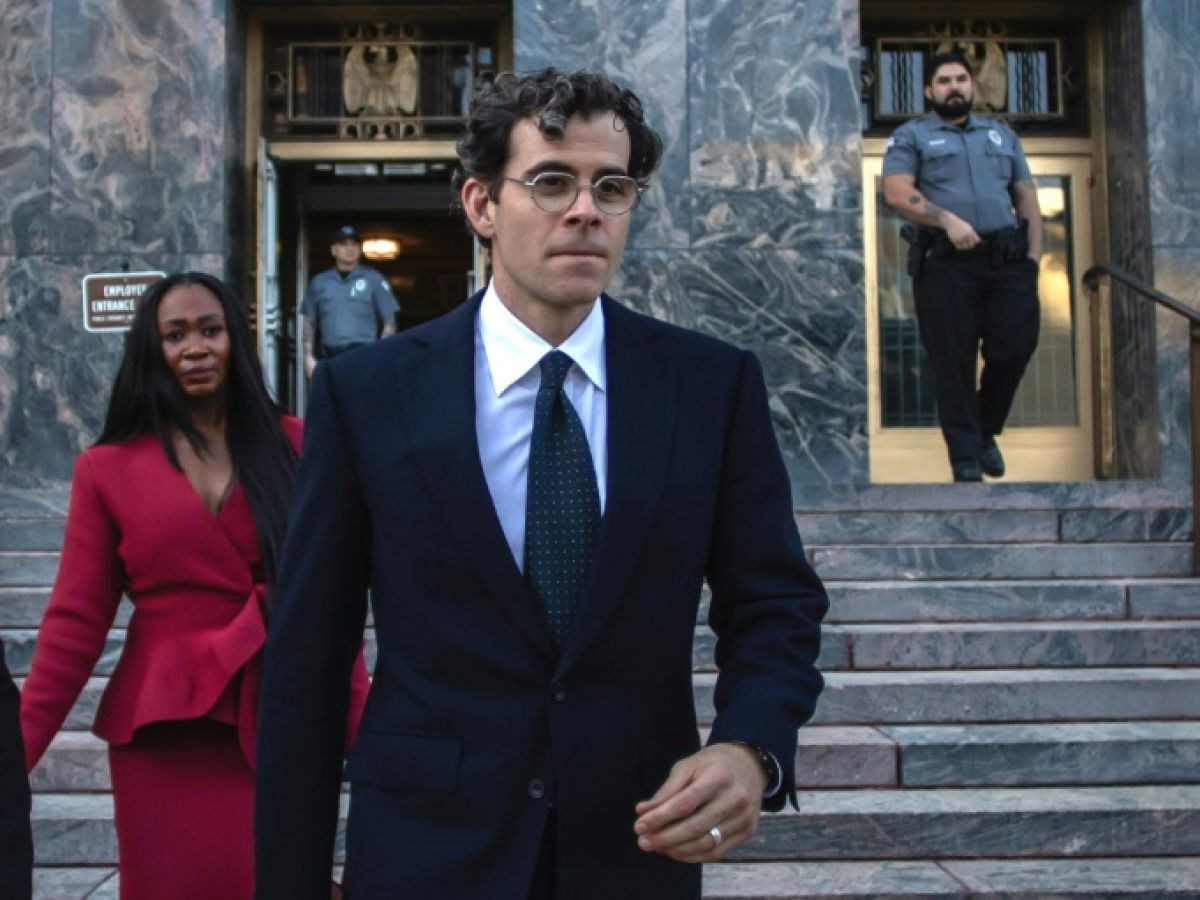
Instagram boss Adam Mosseri, the first Silicon Valley executive to testify at the Google and Meta trial, on Wednesday rejected the notion of social media addiction, preferring to speak of "problematic use," the company's own term.
"It is important to differentiate between clinical addiction and problematic use," argued the 40-year-old, in response to a question from the plaintiff's lawyer, Mark Lanier, on the 3rd day of the proceedings.
His interrogation, which lasted a whole day, did not produce any revelations but served as a full-scale rehearsal before the testimony of his boss, Mark Zuckerberg, expected on February 18.
The hearings, scheduled to last until March 20, are intended to help the 12 jurors in a Los Angeles civil court determine whether the executives at Google and Meta, through their respective subsidiaries YouTube and Instagram, knowingly designed their platforms to encourage unreasonable consumption by young internet users, to the detriment of their mental health.

The report focuses on the case of Kaley GM, a Californian now 20 years old, who began intensive use of YouTube at age 6, before Instagram, then TikTok and Snapchat.
His case was chosen to test the resolution of thousands of similar complaints accusing social media of being responsible for an epidemic of depression, anxiety, anorexia, and even suicides among young people.
"I'm sure I've mentioned being addicted to a Netflix series that I watched late into the night," Adam Mosseri elaborated, "but I don't think that's the same as a clinical addiction."
The day before, the prosecution had called psychiatrist Anne Lembke to testify to the jury to explain how social networks could constitute the "entry drug" for young people, programming their still immature prefrontal cortex towards addictive behaviors.
"I have never claimed to be able to diagnose clinical addiction," retorted Adam Mosseri, admitting that he had, in the past, "used the term too casually," notably in a podcast in 2020.
In the public gallery, mothers of teenagers who had committed suicide were visibly holding back their anger, after camping out all night in the rain outside the courthouse to ensure they had a seat.
– Profits and protection –
"The Instagram that Kayle signed up for" at age 11 "was very different and presented far fewer risks at the time because it was a smaller application," focused on photos and with far fewer options," said Adam Mosseri, who has headed the application since 2018.
Asked about the potential dilemma between user well-being and profits, on which most of his remuneration depends, he felt that "the protection of minors (also) has a positive effect on business and profits."
"We make less money with teenagers," because they don't click on ads very often, the executive argued.
On the other side, Kaley's lawyer tried, in vain, to get her to admit that there might have been an intention to retain young people as early as possible.
"I always try to take a long-term view," the New York native reiterated, assuring that he was careful "to maximize the advantages and minimize the disadvantages."
He acknowledged that his remuneration is more correlated to the platform's revenue than to his annual salary of 900,000 euros per year, via share-based compensation that can reach 10 to 20 million euros per year.
Faced with internal email loops, Adam Mosseri defended Mark Zuckerberg's 2020 decision to allow cosmetic surgery filters on Instagram, despite strong opposition from other executives, warning of their devastating effects on young girls.
Conversely, other executives emphasized the need to reinstate them in order not to lose market share, amidst emerging competition with TikTok.
The heart of the trial does not concern the danger posed by videos hosted by platforms, whose responsibility for content is very limited under American law.
It is the algorithms and personalization features, accused of encouraging compulsive viewing, that are the reason for this trial against Meta and YouTube, whose boss Neal Mohan is due to testify on February 19.
TikTok and Snapchat, who are also being sued, preferred to sign a confidential agreement before the trial.
 English
  French