It was at the start of a long weekend, last Friday in South Africa, that Lucille Blumberg received a message from a colleague specializing in infectious diseases mentioning an unknown disease on board a cruise ship: the start of a frantic race against time, making her play a crucial role in collecting samples from passengers infected with hantavirus.
Analysis of these samples revealed that this rare disease was the cause of a deadly epidemic that triggered an international health alert.
Read also What is the hantavirus infection that reportedly killed three people on a cruise ship?
The patient tested negative for influenza and Legionnaires' disease
Ms. Blumberg, who works at the South African National Institute for Communicable Diseases, told AFP how it all started with this email sent "through personal contact"“.

This health consultant for the British Overseas Territories tells him that on April 11, a Dutchman died on board a ship, the MV Hondius, and that his wife, who disembarked in South Africa a few days later, fell ill at Johannesburg airport before dying in hospital 15 days later.
The source also mentions a British national who was on the ship and who has contracted a type of pneumonia. He was evacuated to Johannesburg, admitted to intensive care, and tested negative for all the usual cruise ship illnesses (flu and Legionnaires' disease).
“ I received this call at 6:00 PM on Friday (May 1st), a public holiday, indicating that he had tested negative for common illnesses." explains Ms. Blumberg. She then requests a new battery of tests with a sample taken from her." originating from the deepest parts of the lungs“.
Read also Cruises: what are the procedures in case of a health risk?
" Oh my God "
At that time, Ms. Blumberg and other colleagues at the Institute already suspected hantavirus because several of the cruise passengers had traveled to Argentina and Chile, where the disease is endemic.
So, on Saturday morning, she also requested a test to detect hantavirus. The result arrived that afternoon. "The person who did it said, 'Oh my god'." she recounts. The result was positive. They repeated the test several times to be sure.
“ So we informed everyone, the hospitals, the WHO" she adds. And the search for contact cases has begun. On Sunday morning, she thought back to the case of the Dutch wife who died several days earlier.
“ I then wondered if we still had any blood samples from her."Laboratories normally only keep these samples for a week, and it had been more than seven days since his death."
Fortunately, that was the case, " probably due to the Friday bank holiday" she explains. The Dutch woman then becomes the second confirmed case of a person infected with hantavirus." And that was an important link", Ms. Blumberg points out.
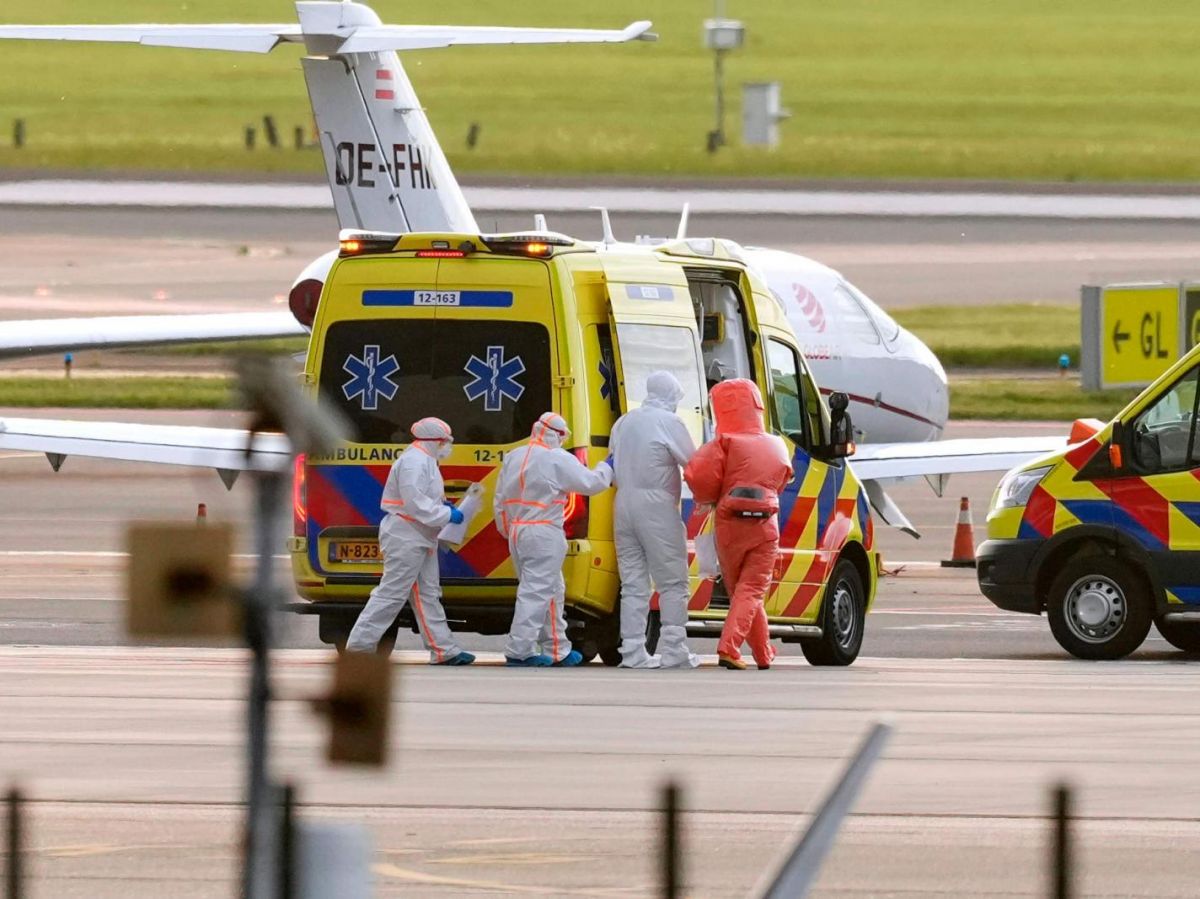
A third confirmed case, who disembarked from the ship two weeks ago, is currently being treated in Zurich, Swiss authorities announced Wednesday.
The WHO has identified five other suspected cases.
According to the WHO, five other suspected cases have been identified so far, with two deaths, including the Dutch traveler. Humans usually contract hantavirus from infected rodents, most often through contact with their urine, feces, or saliva.
The patients in Johannesburg and Zurich are all infected with the " Andes "of the hantavirus," the South African and Swiss governments announced on Wednesday. It is the only strain of hantavirus that is transmitted between humans.
However, this transmission is not " frequent" , says Ms. Blumberg, who has identified only two epidemic outbreaks in all medical literature, and none on a ship.
Manuel Schibler, who heads the virology laboratory at Geneva University Hospitals and is supervising the case of the infected patient currently being treated in Zurich, explained to AFP that The next step is to sequence the entire viral genome“.
This would allow to establish a link with the geographical location of the first person infected by this virus" he said.
Ms. Blumberg, for her part, asks for patience so that researchers can conduct the tests necessary to collect solid information, while praising the work " determinant"t" of the WHO in coordinating efforts. You cannot do this alone" she emphasizes.
 English
  French