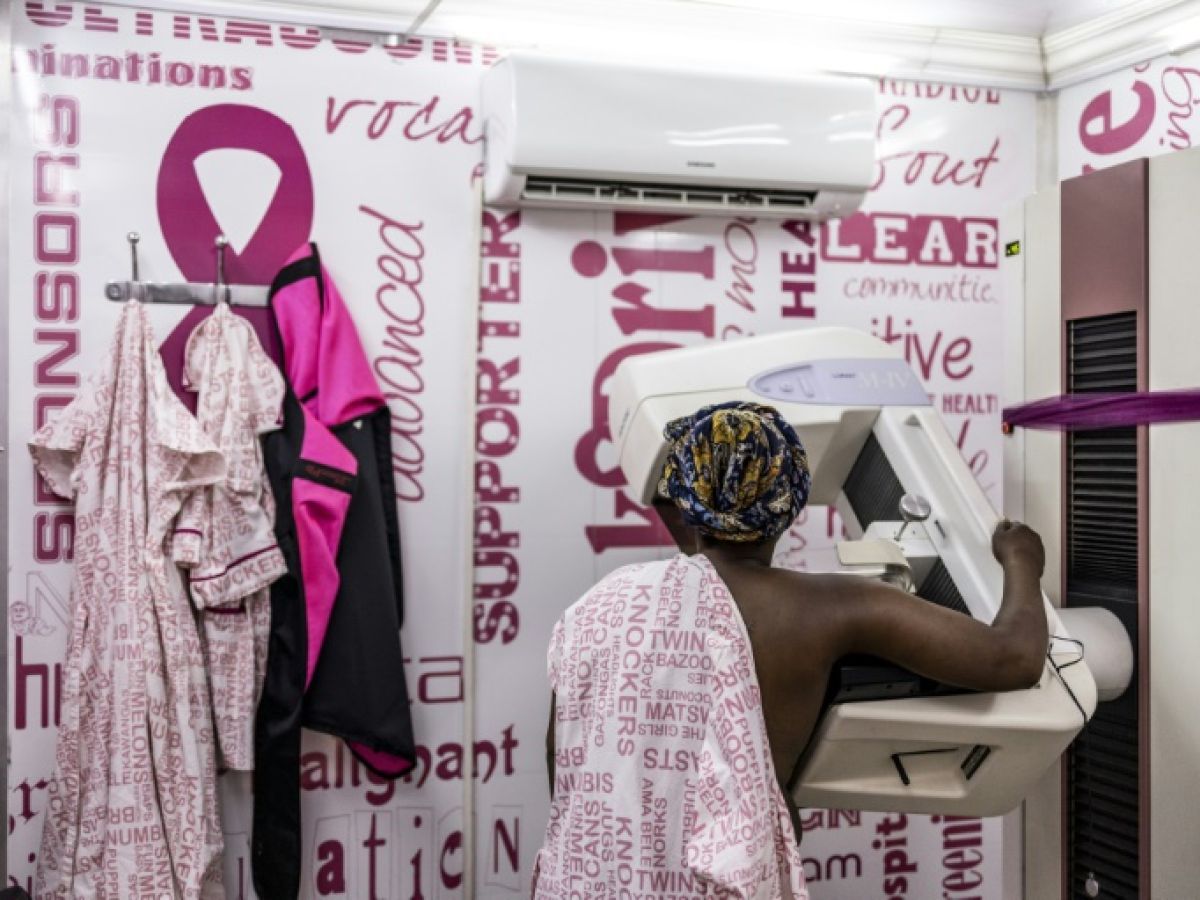
Artificial intelligence can improve human detection of breast cancer through more effective mammographic screening, while reducing the workload of radiologists, suggests a study published Friday.
This work, published in the medical journal The Lancet, involved the analysis of nearly 106,000 mammograms carried out in Sweden as part of a national breast cancer screening program, from April 2021 to early December 2022.
These examinations, performed on women with a median age of 53, were examined half of them by two radiologists intervening successively, and, for the other half, by a radiologist assisted by AI.
The study found that AI-assisted mammographic screening reduced the workload associated with reading images and, above all, produced "consistently better results".
AI-assisted breast cancer screening identified 811 women with cancer during screening compared to 741 women without AI, "without increasing the false positive rate," its authors conclude.
In addition, women who received AI-assisted screening were diagnosed with fewer "aggressive and advanced" breast cancers (-12%) in the following two years.
This improvement was observed regardless of the age and breast density (one of the risk factors among others) of the women examined.
– “Redressing the diagnosis of AI” –
Previous studies had notably shown similar effectiveness of AI-assisted screening with screening based on a dual human gaze, then better effectiveness but targeted at small invasive cancers, the study reports.
The results of the work published in The Lancet suggest that AI-assisted mammographic screening can "effectively improve screening performance" and "reduce the workload" of radiologists, arguing for its implementation in clinical practice, according to its authors.
But according to Jean-Philippe Masson, president of the National Federation of Radiologists (FNMR), recent American studies have suggested that these tools "do not actually save time and are expensive".
"It would save time if the radiologist could trust the tool and say, 'Okay, the AI didn't find anything, so I'll sign a report saying there's nothing there.' But that's not possible: the radiologist's eye and experience must correct the AI's diagnosis," particularly to avoid "over-diagnosis," he says.
Because sometimes "the AI tool will have seen a change in breast tissue which in reality is not cancer, but for example, a crossing of vessels," he adds.
When questioned by AFP, Stephen W. Duffy, emeritus professor of cancer screening at the Wolfson Institute of Public Health at Queen Mary University of London, judged the study to be "robust".
While it confirms that AI-assisted screening is "as safe as reading by two human radiologists", it remains to be confirmed by subsequent follow-up that women who have benefited from this type of screening develop fewer cancers, he warns.
Early detection has helped reduce breast cancer mortality, the study notes, but "some cancers are still not detected" by screening mammography, "despite the double reading of images recommended by European guidelines." This is because some rapidly progressing cancers develop between screenings.
The European regulation on artificial intelligence (AI Act), which entered into force in August 2024 and will be phased in from August 2026, classifies medical devices incorporating AI as "high risk" when they contribute to diagnosis or influence therapeutic decisions. They will therefore be subject to stricter safety and performance requirements.
 English
  French