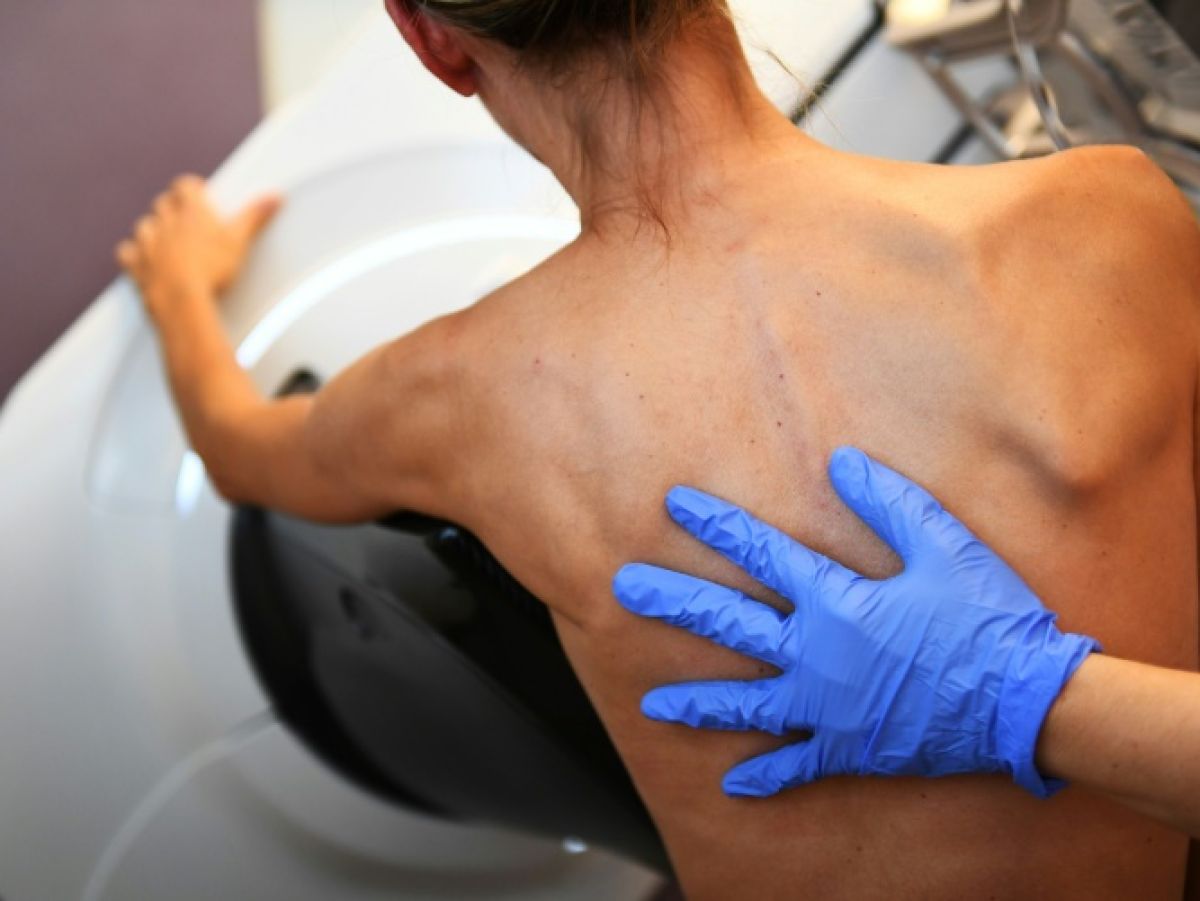
Social and territorial inequalities, significant out-of-pocket expenses, insufficient post-cancer follow-up: the Court of Auditors, in a report published Wednesday, highlights "numerous shortcomings" in the management of breast cancer and calls for "vigorous public action".
The most frequent and deadliest cancer for French women (approximately 61,000 new cases and some 12,000 deaths each year) constitutes "a major public health issue", emphasizes this report presented to the Social Affairs Committee of the National Assembly, which had requested it.
Its management also represents "a significant cost." For Social Security: nearly €4.7 billion in expenses in 2023, more than 651 times the amount spent in 2015, due in particular to medication costs. For patients: "A significant out-of-pocket expense," averaging €1,549, pushing "the most disadvantaged" to forgo necessary care, such as breast reconstruction, the Court points out in its 2015-2025 assessment.
Nevertheless, "many shortcomings remain," note the financial magistrates, after numerous hearings, visits to about ten cancer centers, analysis of an online survey of affected women and multiple data points.
"Heterogeneity in screening and monitoring practices, territorial and social inequalities in access to care, high costs for certain treatments such as breast reconstruction, insufficient integration of supportive care," their report diagnoses.
Territorial inequalities are particularly acute in overseas territories and rural areas, elected officials pointed out.
Yet, the "most effective" form of organized screening for prevention, offered every two years to women aged 50 to 74 and fully covered, shows "insufficient" and "declining" uptake, notes the Court of Auditors.
It is also "challenged" by individual screening, marked by "shortcomings" (absence of second reading) and "costly", due to excess fees, which sometimes require accelerated appointments.
"Some centers do not want to get involved in organized screening because individual screening is more profitable," explained Bernard Lejeune, president of the 6th chamber of the Court of Auditors, who was questioned at length by the Assembly, stressing that "at some point, there is a public health problem."
– “Unacceptable inequalities” –
Faced with "unacceptable inequalities in treatment", the Court suggests prohibiting additional fees for mammograms and ultrasounds associated with organized screening and requiring all equipped centers to take care of patients coming for an organized screening mammogram.
It also encourages reflection on the "targeting" of organized screening, perhaps by starting it earlier and tailoring it according to the level of risk. Some European countries have lowered the age to 40-45 years.
And France must make greater use of digital technology and artificial intelligence, within a regulated framework, the institution believes. "Some countries combine artificial intelligence with the essential human element," Bernard Lejeune explained.
For breast cancer, the care pathway also suffers from "shortcomings", leading to "inequality in the quality and safety of care", according to the report.
The Court calls for raising the minimum threshold for hospital stays to 150 for authorization of a healthcare facility to perform surgical procedures, in order to carry out operations in a high-volume, expert center. Patients could then receive other treatments, such as chemotherapy and radiotherapy, closer to home, which require regular travel.
The post-cancer period also appears problematic: "Severe and varied after-effects persist for a large proportion of treated women." "While several measures represent progress, their deployment remains incomplete, marked by inconsistent implementation," the report summarizes.
A year ago, Parliament unanimously passed a law initiated by the Communist Party providing for certain comprehensive coverage (renewal of breast implants, adapted underwear, etc.). "There is still no implementing legislation," lamented several members of the Social Affairs Committee.
The Court of Auditors now joins the calls for its implementation. Its magistrates also recommend facilitating access to supportive care, particularly adapted physical activity, and making the development of a personalized post-cancer program mandatory in healthcare facilities from 2027.
 English
  French