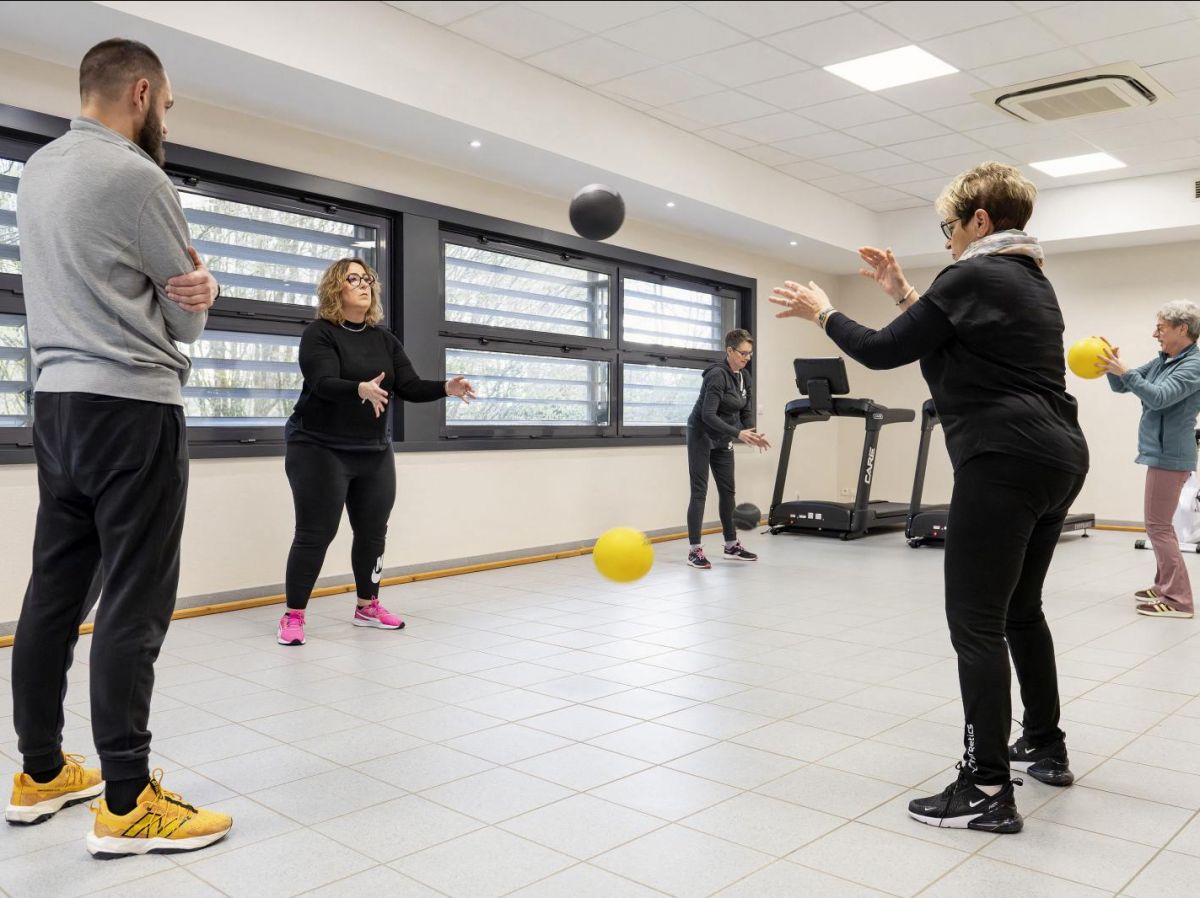
This decree, dated April 14, 2026 and published in the Official Journal of Thursday, April 16specifies the terms of application of the experiment of taking charge of adapted physical activity sessions in a global care pathway for patients receiving or having received treatment for cancer.
This experiment will be deployed in Brittany, Nouvelle-Aquitaine and Provence-Alpes-Côte d'Azur, under the guidance of the regional health agencies (ARS).
Read also Are you familiar with exercise on prescription?
A more comprehensive and permanent system was initially envisaged as part of the 2024 Social Security financing bill, also including people with diabetes. However, the government removed this measure during the parliamentary process, using Article 49.3, which allows it to control the selection of amendments.

This withdrawal had been criticized by patient and healthcare worker associations and organizations. They had deemed the measure "sacrificed" for budgetary reasons, despite the announcements by Emmanuel Macron, who had made physical activity a "major national cause" for 2024, the year of the Summer Olympic Games in Paris.
Cancers, mild depression, diabetes: numerous scientific studies have been proving for years the benefits of appropriate physical activity alongside treatments.
Read also Depression: Sport, as effective as medication and psychotherapy
Thanks to a 2016 law, adapted physical activity sessions are now covered by some health insurance plans.
Allowed by a 2016 law, adapted physical activity sessions are now covered by some mutual insurance companies or as part of experiments, but not widely by Health Insurance.
During 2026, a coordinated care and therapeutic education pathway with adapted physical activity should also be deployed for certain adults in situations of complex obesity or associated with certain complications.
According to several studies, including one conducted in 2021 by the National Cancer Institute, doctors rarely prescribe adapted physical activity due to a lack of training, but also "due to a lack of visibility and funding".
 English
  French