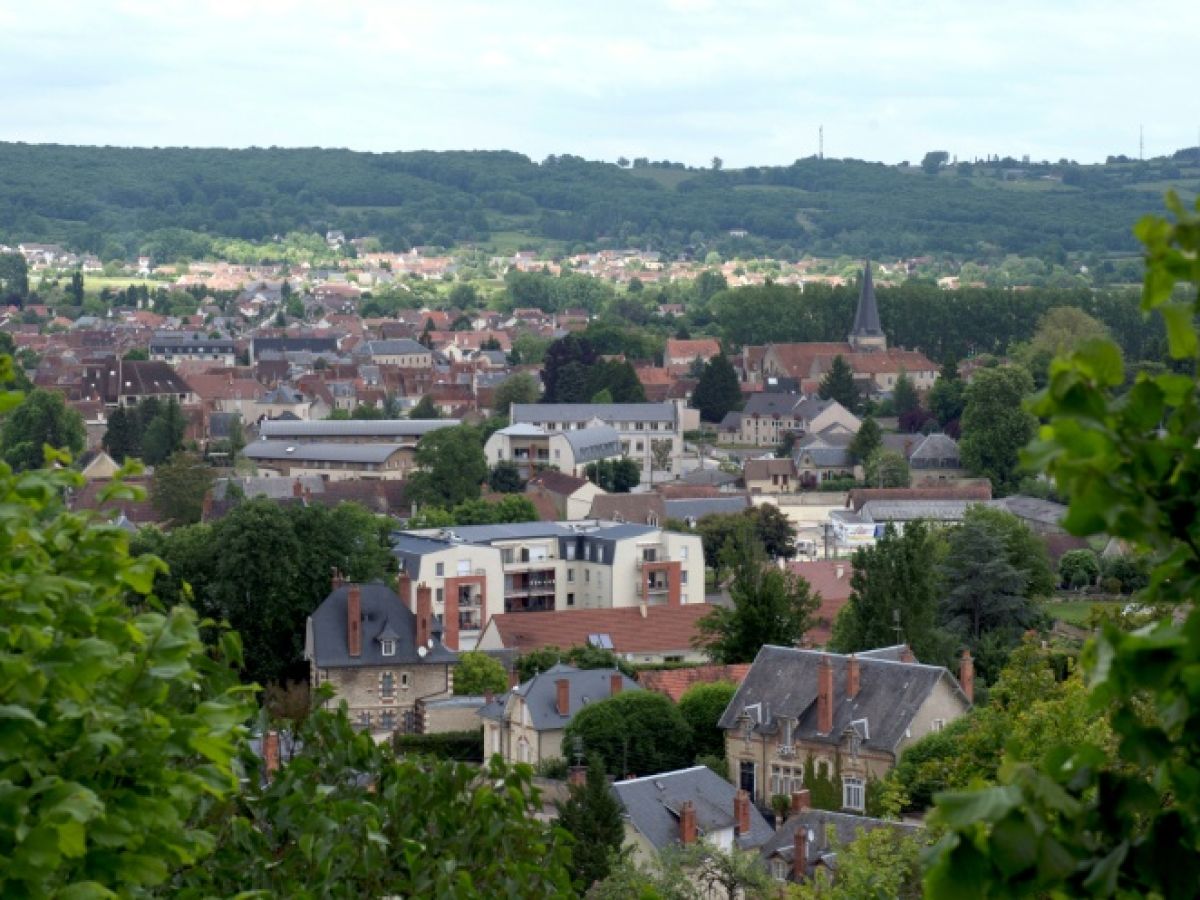
A bonus to attract mothers: the town of Saint-Amand-Montrond, in the Cher, adopted on Thursday evening the mayor's proposal to offer 1,000 euros to women coming to give birth in 2026 in the town's maternity ward, which is threatened by an insufficient number of births.
This measure aims in particular to save the maternity ward in the town, located 50 km south of Bourges, which is at risk of closure because it has fallen below the regulatory threshold of 300 births per year. The forecast for 2025 is 226 births.

A bonus of €1,000 in gift vouchers, redeemable at 150 participating businesses according to the municipality, will be paid from January 1, 2026, to mothers giving birth locally. €500 will be covered by the municipality and €500 by the inter-municipal council.
The LR mayor of this town of 10,000 inhabitants, Emmanuel Riotte, had already seen his proposal adopted by the community of municipalities on Wednesday.
The mayor hopes in particular to bring back to the maternity ward patients from the department and surrounding areas who currently go to larger maternity hospitals in Bourges, Montluçon or Nevers.
"We don't give money to a mother to have babies, we give money to a pregnant mother who decides to come and give birth in Saint-Amand," Mr. Riotte told AFP.
The mayor wants this financial incentive to be accompanied by "mandatory prenatal visits". "It would be completely idiotic for a mother to leave Brittany at 5:00 am to come and give birth at 1:00 pm in Saint-Amand", he insists.
19,000 inhabitants live in the community of municipalities around Saint-Amand-Montrond, whose maternity hospital is among the twenty or so in France that deviate from the minimum threshold of 300 births per year set by the regulations.
– Health risks?
The mayor's initiative has sparked outrage from four doctors' unions, who argue that "the choice of a maternity hospital should not be influenced by the prospect of a purely financial reward." The Snphare (anesthesiologists and intensive care specialists), Syngof (obstetrician-gynecologists), Snpeh (pediatricians), and Samu Urgences de France (emergency physicians) also warn of health risks in the event of complications.
"It is obvious that complicated births will have to be referred to a specialized facility, as has been the case for decades," replies Emmanuel Riotte.
This childbirth bonus comes in a general context of maternity ward closures that began in recent years: France had 457 maternity wards in 2023, 100 fewer than in 2010.
For Dr. Anne Wernet, of the national union of anesthesiologists and intensivists, we must accept closing small maternity wards, in the name of the safety of mothers and newborns.
In maternity wards that are too small, "nothing happens for a long time, and when there is a problem, there is no one left to manage the situation," she points out.
But elected officials, more often than not, do not want to hear about the closure of the maternity ward or the hospital, which for them is synonymous with loss of attractiveness and economic desertification, the maternity ward and the hospital often being the large local employer.
This is the case in Saint-Amand-Montrond, where nearly 34 people work at the maternity ward, and 675 in total for the hospital and the nursing home.
Spurred on by local elected officials, the National Assembly adopted a bill in the spring establishing a moratorium on the closure of small maternity wards, pending a government report on how to keep them open. The Senate must now examine it.
The birth rate has been steadily declining in France since 2010. It fell from 832,799 to 663,000 in 2024, a decrease of 20%, according to figures from INSEE.
In the Cher department, this decline reaches 30%, with 2,374 births in 2024.
 English
  French