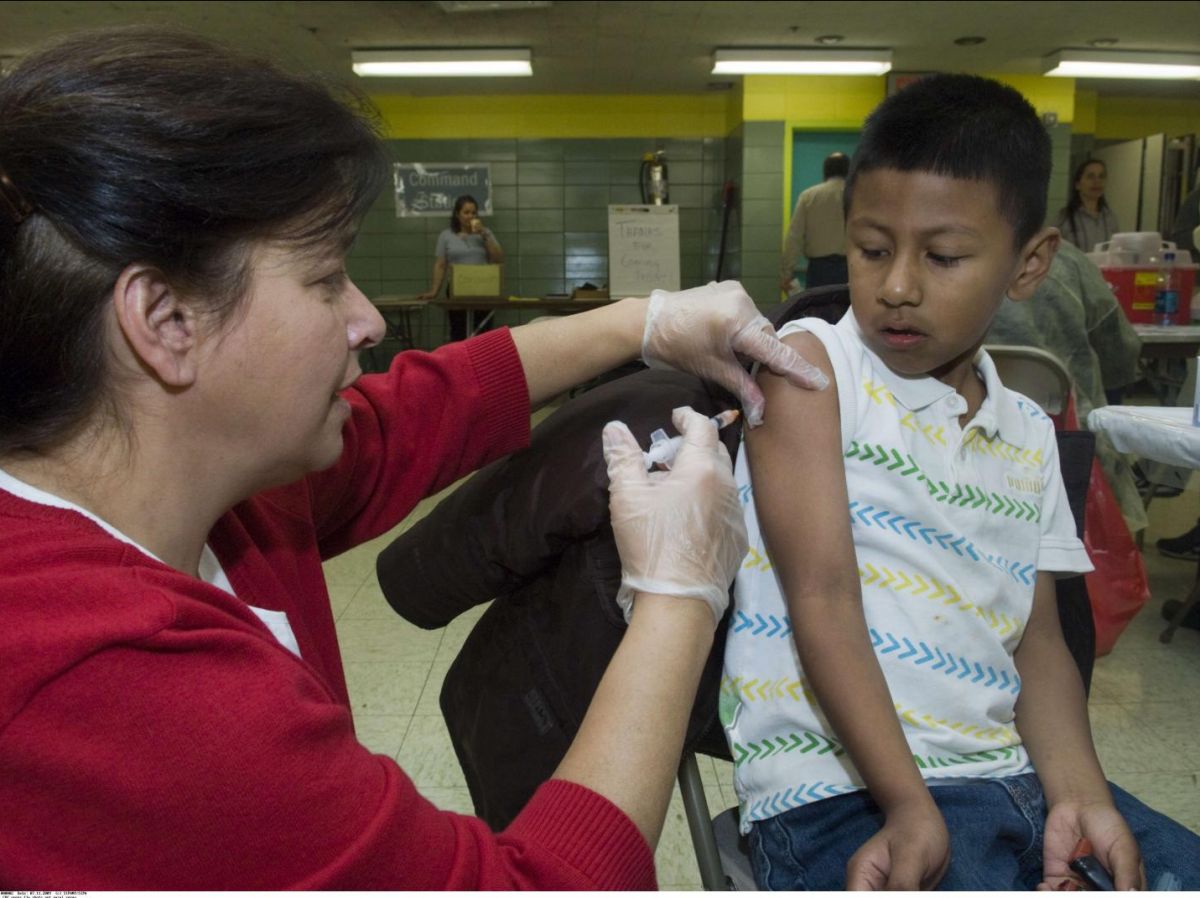
After making significant progress since the 1980s, childhood vaccination is showing signs of decline in several European countries since the Covid pandemic, risking a resurgence of infectious diseases, according to a study published Thursday, September 17, by The Lancet.
For this work, The levels of seven childhood vaccinations (diphtheria, tetanus and pertussis, hepatitis B, meningitis B, poliomyelitis, pneumococcus, measles, rubella) in the 27 EU countries were examined over more than 40 years, between 1980 and 2024, using data from the WHO and UNICEF.

The result is "« a complex panorama«" , according to the authors of this extensive analysis, published in The Lancet Regional Health.
Luxembourg and Portugal lead the way, Romania lags behind
On the one hand, the EU has achieved childhood vaccination rates« historically high »against these diseases, with a substantial increase over about forty years but heterogeneous depending on the country. In 2024, Luxembourg and Portugal thus reached at least 95% coverage for the seven vaccinations, whereas Romania was below 80%.

But " a recent, worrying and widespread deterioration »" has emerged in recent years, since the turning point of the Covid era, the study shows.
Sixteen EU countries have recorded a decline in vaccination rates for at least four vaccines. This is notably the case in Bulgaria, Cyprus, Ireland, the Netherlands, Romania, and Sweden, where all seven vaccinations studied have declined in recent years.
Data from Germany and Spain also showed a decline for five of the seven childhood vaccinations, while in France and Italy, vaccination coverage increased for four vaccines and decreased for three others.
Read also Measles cases surged in France in 2025, unlike in other European countries
Meningitis B and polio were particularly affected by the decline
The most marked recent declines have been observed for childhood vaccinations against meningitis B and poliomyelitis – down in 20 countries – followed by those against hepatitis B – down in 18 countries – and against diphtheria, tetanus, polio – down in 17 countries.
The trends appear relatively less unfavorable against measles and rubella.
Most of the declines in childhood vaccinations began between 2019 and 2022, coinciding with the Covid era.
While the researchers believe that the health crisis stemming from the pandemic may have played a role, they also specify that their study did not aim to elucidate the reasons for vaccine developments.
Read also Vaccines: A look back at two centuries of fear
Vaccines have prevented more than 154 million deaths in 50 years.
They particularly emphasize the "urgency" of ensuring high and sustainable vaccination coverage,« in order to prevent the reappearance of infectious diseases“.
Over the past 50 years, vaccinations have reduced the burden of diseases such as tetanus, pertussis, pneumonia, measles, influenza and diphtheria, preventing more than 154 million deaths worldwide, especially among children, the study notes.
The crisis stemming from Covid has, for its part, caused disruptions to the health system and fueled distrust and misinformation.
 English
  French