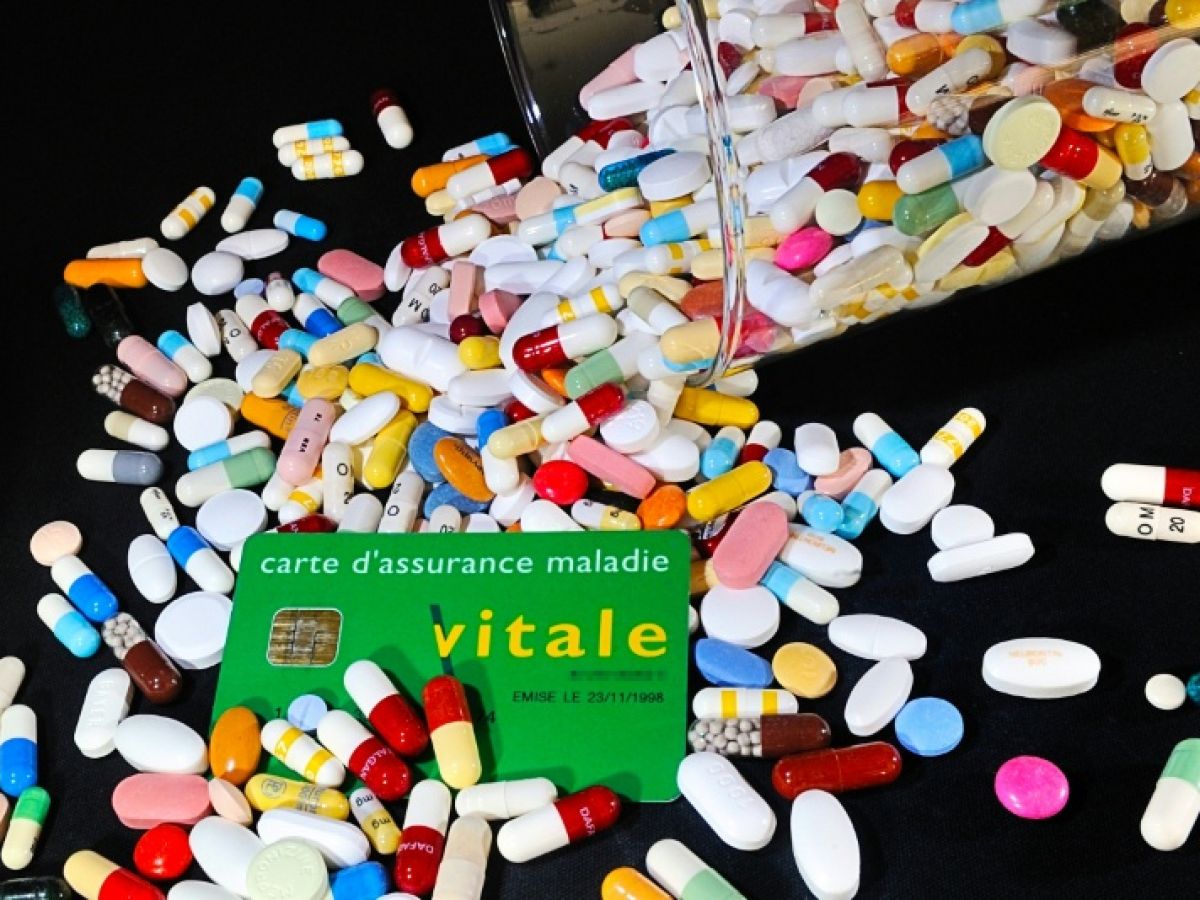
"Nearly one in two chronically ill patients" do not take their treatment "as prescribed" and the health consequences are "catastrophic," experts warned on Monday, calling for more work on this "public health problem."
Some 42% patients on long-term treatment report "having already forgotten or interrupted a dose" in the past year, according to an Opinionway study, carried out for the Medintechs trade show (dedicated to innovation in health) on Monday and Tuesday in Paris.

“The patient doesn’t take their medication every day, takes a break on weekends, takes half the dose, or regularly forgets,” explained Professor Gérard Friedlander, professor emeritus at Paris-Cité University, during a press conference. Many conditions are affected: cardiovascular diseases, Alzheimer’s, Parkinson’s, cancer…
"The health consequences are catastrophic": "it means more re-hospitalizations, more aggravations," "more relapses," and for the health system, "a major cost," Mr. Friedlander stressed.

Among patients with high blood pressure, "20% will not buy the first prescription," often without informing their doctor, who has tools to "detect non-compliance" with treatment (urine tests, hair tests, etc.) but on an "occasional" basis, testified Michel Azizi, a cardiologist specializing at Georges Pompidou Hospital.
The causes are multiple: "lack of time for the doctor" to "explain the disease", lack of confidence from the patient, "complexity" of treatments, which sometimes require swallowing a dozen pills daily, "side effects", which when they are not "serious" (vomiting, pain...), are "not systematically evaluated", stressed Dr. Mario Di Palma, oncologist at the Gustave Roussy hospital.
Adherence to treatment requires "significant, prolonged dialogue", particularly during "therapeutic education" sessions which are difficult to access and reserved in diabetology "for the most serious cases", lamented Jean-François Thébaut, vice-president of the French Federation of Diabetics.
He "expects a lot" from the "new pre-ALD status" (long-term illness), provided for in the 2026 Social Security budget, which should allow for coverage "before this aggravation".
Among other possible solutions: "digital tools", allowing, with the help of paramedical professionals (pharmacists, nurses, etc.), to monitor the patient, assess side effects, or "send reminders" by SMS when taking their pill.
Pharmaceutical industry, healthcare professionals and associations must "work together", argued the speakers, also calling for the development of new forms and methods of drug administration, like PrEP, a preventive treatment against HIV which can now be administered via two annual injections.
 English
  French