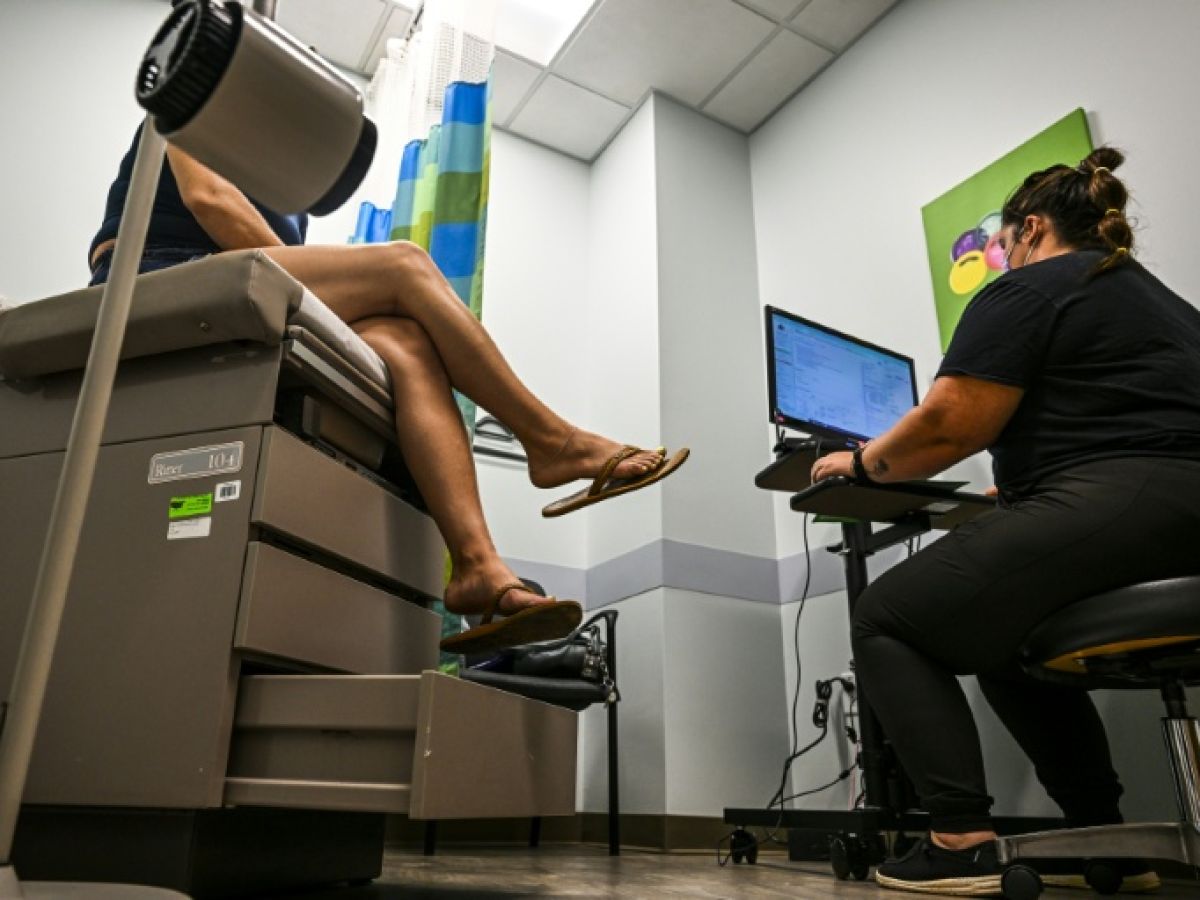
While it's well known that women are more prone to chronic pain than men, the medical community has long attributed this difference to a greater sensitivity in women. A new study hopes to shatter this idea.
"It's not in your head, and you're not weak. It's your immune system," assures Geoffroy Laumet, lead author of this work published Friday in the journal Science Immunology.
Led by Michigan State University in the United States, these studies have highlighted the role of certain immune system cells in pain resolution.
But also, and most importantly, the fact that this mechanism worked much better in men than in women.

"There are real biological reasons why women suffer from prolonged pain," insists Mr. Laumet, head of the laboratory researcher, to AFP.
And while these reasons are probably diverse, one of the leads revealed by his team lies in the action of a type of white blood cell.
– Biological mechanism –
They discovered in mice that a subcategory of immune cells left the blood to go to injured tissues and released "a molecule that silences pain-sensitive neurons," explains Mr. Laumet.
This action was more pronounced in male mice due to a well-known sex hormone, testosterone, which appeared to "promote the production by these white blood cells of the molecule that calms neurons," the researcher explains.
This biological mechanism was subsequently observed in human patients who had suffered physical trauma such as a road accident.
Researchers measured the levels of these specific white blood cells and the molecule suspected of relieving pain in their blood and discovered that they were much higher in men than in women.
And although injured men and women reported comparable levels of initial pain after their trauma, this pain then decreased significantly more rapidly in men than in women.
– Long ignored –
This discovery fills "a significant gap" in our understanding of pain, Elora Midavaine, a researcher at the University of California and a specialist in chronic pain, told AFP.
Because "while the differences between the sexes in terms of pain are well documented", the underlying mechanisms remain largely "poorly understood", notes this expert who did not participate in the study.
By shedding light on this mechanism, researchers could therefore pave the way for new treatments.
This avenue offers hope because, although many painkillers are currently on the market, no ideal treatment exists for chronic pain or for women.
Several studies have indeed pointed to differences in response to painkillers, with opioids, for example, not appearing to be as effective in women as in men.
It will surely take years to arrive at a suitable therapeutic solution, but Geoffroy Laumet hopes that this work can in the meantime "help to erase this widespread idea that women's pain is exaggerated".
Long neglected and minimized by the medical profession, women's pain was indeed considered to be a matter of "emotion" rather than something "rooted in biology," recalls Elora Midavaine.
And this prejudice has only begun to be deconstructed very recently, notably thanks to the inclusion of women and female subjects in clinical research in recent decades.
But as this study shows, things are "changing," the researcher assures.
 English
  French