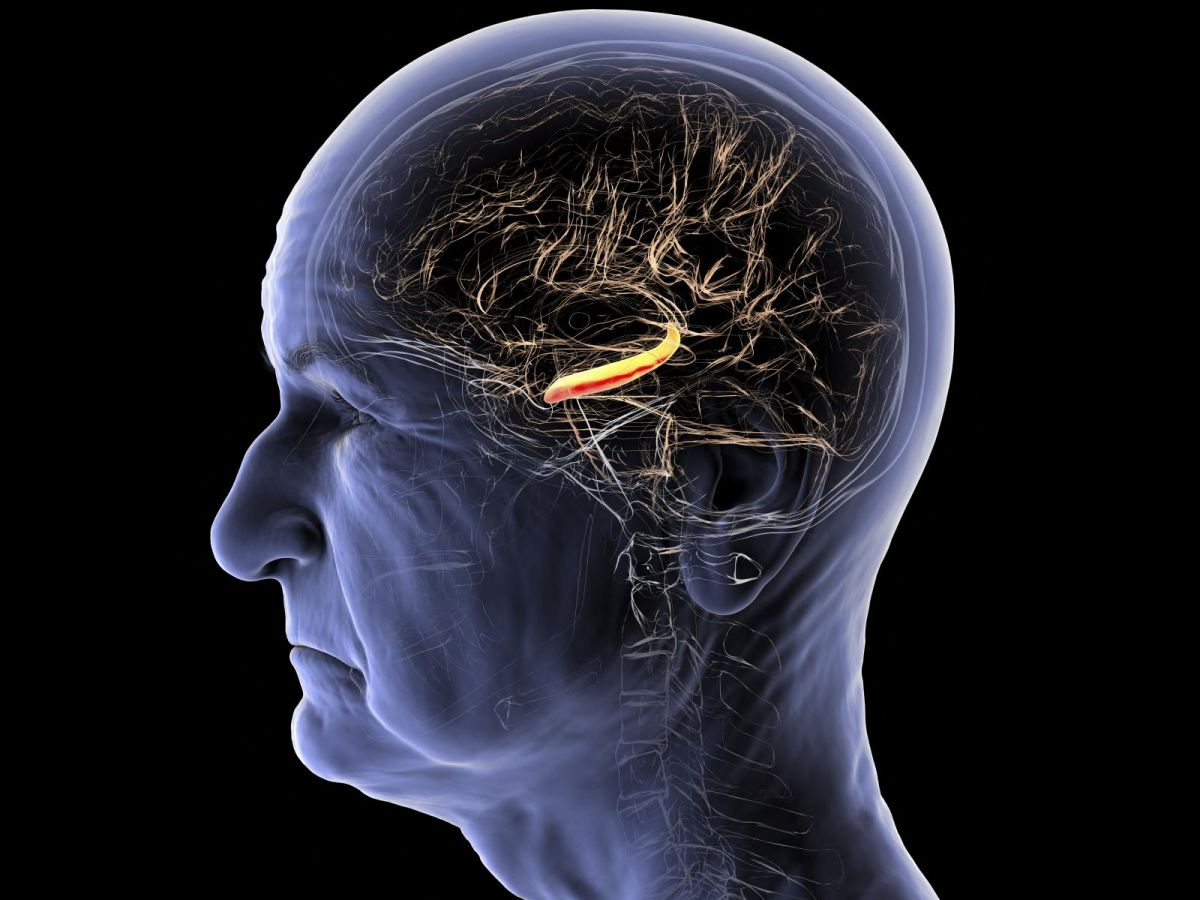
Aging is characterized by a general decline in the body, including losses in muscle and bone mass… And the brain is also affected. With age, it shrinks, in a natural process that affects us all, but which can be more or less rapid depending on the individual. Memory also tends to decline, even in healthy people. Researchers at the University of Oslo, Norway, investigated this correlation between decreasing brain volume and deteriorating memory. Their results, published on November 21, 2025, in the journal Nature Communications, show that this association is stronger in seniors, and that the speed of these declines is influenced by other factors, such as risk factors for Alzheimer's disease.
Brain volume and memory are linked in older people
Researchers used 13 databases containing MRI images of the brains of people who had undergone cognitive testing, for a total of 10,343 MRI scans and 13,460 cognitive tests in 3,737 healthy individuals. They then assessed memory decline as well as the decrease in brain volume to determine if the progression of the two events might be linked. At a young age, this association existed only in people with a more rapid shrinkage of the brain. But from age 60-70 onward, this link became evident in all participants.By integrating all this data from a dozen cohorts, we now have the most detailed picture yet of the structural changes that affect the brain with age and how they are linked to memory.”, summarizes in a press release Alvaro Pascual-Leone, author of the study.
Certain brain regions are more involved in this association
However, these associations were not uniform throughout the brain: this link between shrinkage and memory loss is first observed in the hippocampus, a structure crucial for memory. In individuals with more rapid cognitive decline, this decline begins to be associated with hippocampal shrinkage around the age of 50. In those with slower cognitive decline, the association with a decrease in the volume of this structure was only visible around the age of 70.
Other brain regions were also associated with cognitive decline, albeit to a lesser extent than the hippocampus. This is particularly true of the amygdala (a nucleus adjacent to the hippocampus), and areas of the cortex near the hippocampus.
Read alsoIt's proven: listening to and playing music slows cognitive decline
A predisposition to Alzheimer's disease accelerates brain aging
These associations suggest that cognitive decline could be caused by a loss of brain volume, specifically in the hippocampus and its surrounding area. However, since this association between reduced brain volume and memory loss is not observed at the same age for all participants, researchers sought to determine if there were any protective factors against these declines. Surprisingly, and contrary to popular belief, an individual's level of education appears to play no protective role, neither for brain volume loss, nor for memory decline, nor for the association between the two.
Surprisingly, and contrary to what one might expect, the main risk factor for Alzheimer's disease (the APOE ε4 allele) did not strengthen this association either. While individuals with this version of the APOE gene did experience a more rapid cognitive decline starting at age 60, this was not the case for brain shrinkage, unless only the hippocampus and amygdala are considered. And if only these structures are examined, the association between the two declines is no stronger: both declines are more rapid in these individuals starting at age 60, but hippocampal shrinkage is no more pronounced in these people than in others; it simply begins earlier, thus allowing this association to be observed sooner.
Read alsoThe hippocampus renews its neurons
"Cognitive decline and memory loss are not simply consequences of aging, but manifestations of individual predispositions and age-related processes that facilitate neurodegeneration and disease," concludes Alvaro Pascual-Leone. This suggests that age-related memory decline is not caused by a single region or gene, but reflects a broader biological vulnerability in the brain that accumulates with age. Understanding this will help experts identify at-risk individuals early and implement more precise, personalized interventions to improve cognitive health.
 English
  French