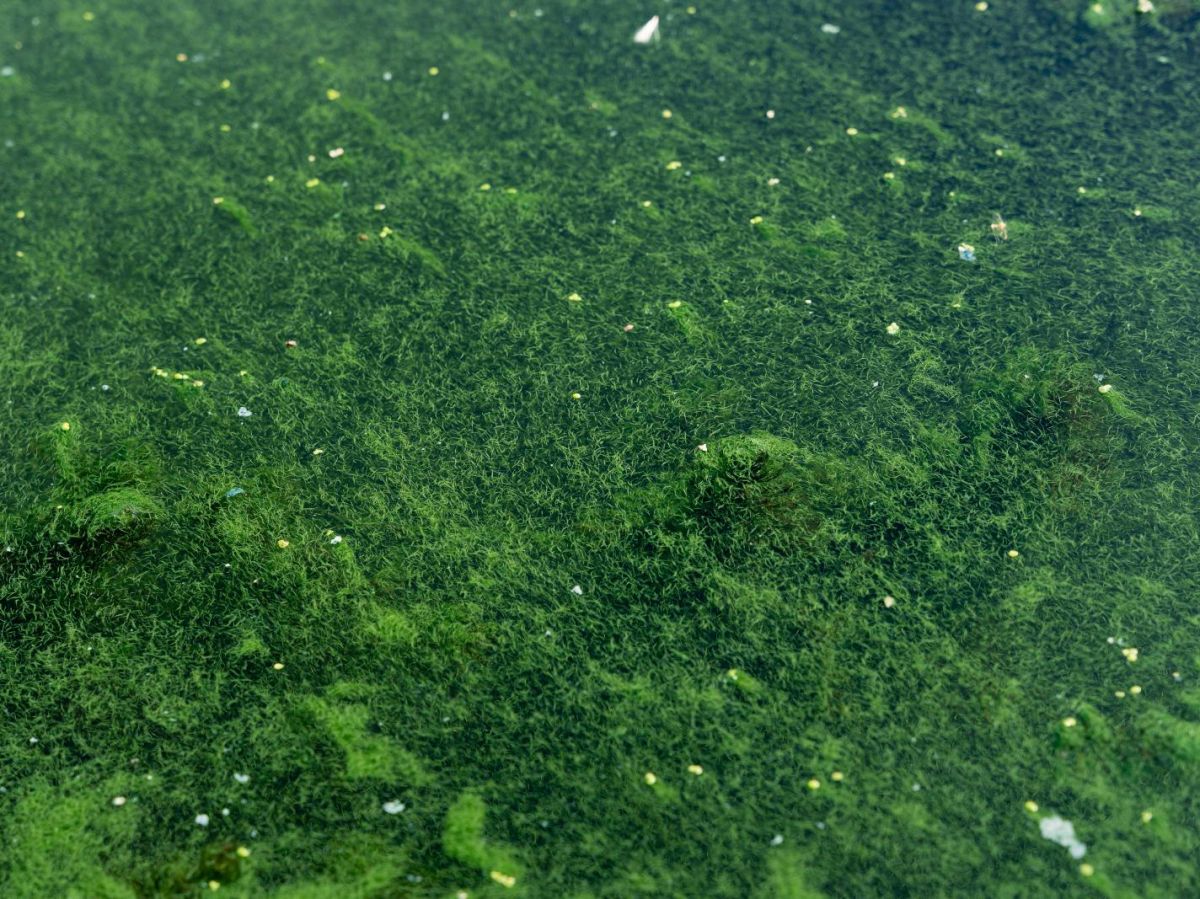
If you spend the summer near a lake or river, you have surely seen "No Swimming" signs and heard the names of these microorganisms: cyanobacteria. The reason we talk about them so much is that some of them represent a real health risk. They synthesize toxins such as microcystins or anatoxin neurotoxins, which can be dangerous for animals and humans.
Detecting these toxins can sometimes take several days, but a team of Swiss researchers at EPFL is working on a much faster method using a small, mushroom-shaped protein: aerolysin. Its unique characteristic is that it forms a nanopore, a tunnel about one nanometer in diameter, through which an electric current can be passed.
A unique electrical signature

When a cyanotoxin from the microcystin family passes through the tunnel, it alters the current and leaves behind a unique electrical signature. This technique is therefore so precise that it allows us to know exactly which microcystin variant we are dealing with. The problem is that, for now, it only detects seven out of approximately 300…which are all toxic.
Today, to determine if water is safe, we use the ELISA test. This method identifies all the toxins produced by cyanobacteria using antibodies. It's effective, but in the summer, laboratories are overwhelmed and results can take up to a week. During this time, the river or lake remains closed… sometimes unnecessarily. The nanopore method, currently under development, could allow for on-site analysis, providing real-time results and enabling rapid adjustments to swimming conditions.
Concentration of nutrients and light: the perfect cocktail for cyanobacteria
With climate change, cyanobacteria are proliferating more and more. These microorganisms are photosynthetic, meaning they need light and nutrients to multiply. When it's very hot, water evaporates and the concentration of phosphorus or nitrogen increases. This results in stagnant water rich in nutrients: the perfect cocktail for cyanobacteria. The next step for the EPFL researchers will therefore be to adapt their nanopore so that it can identify a wider range of cyanotoxins.
 English
  French