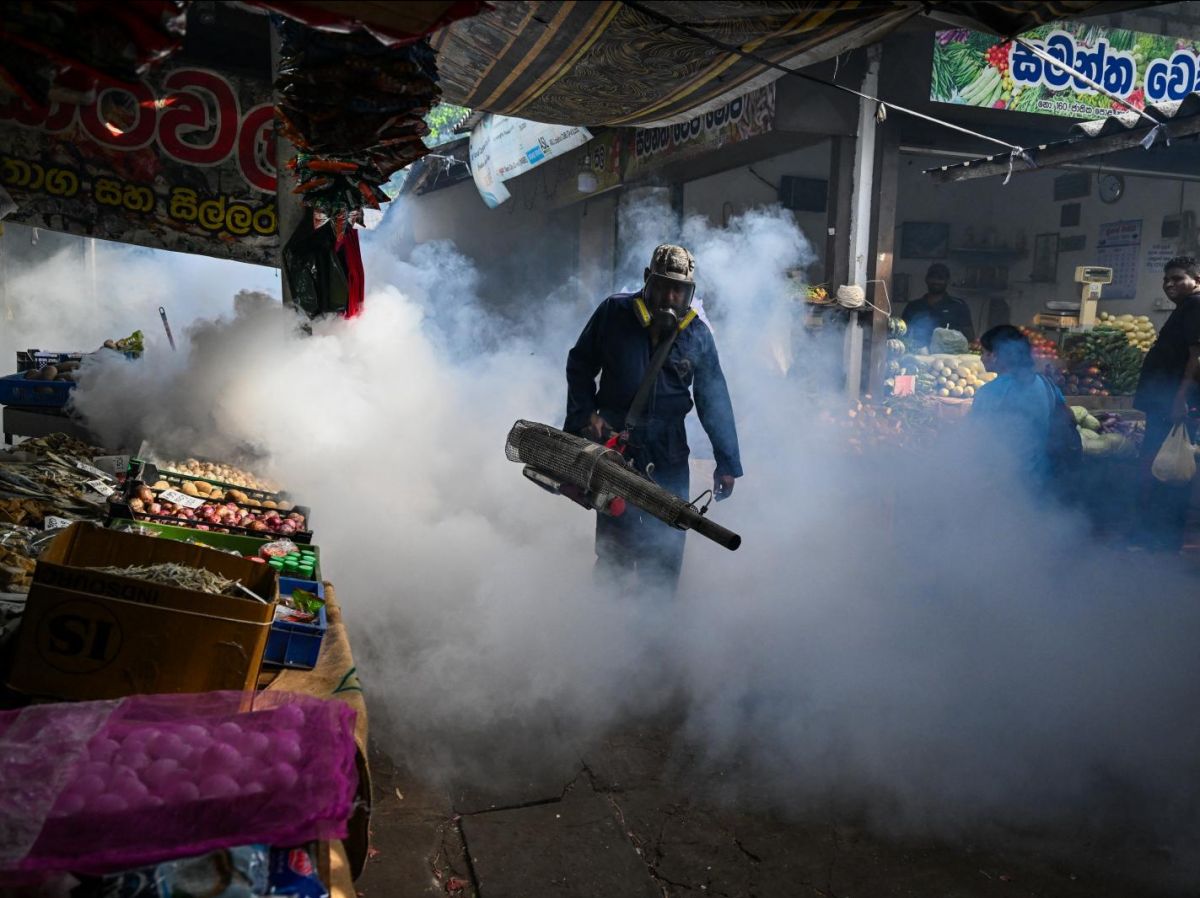
Sri Lanka announced on Wednesday, July 15, that it was intensifying a campaign supported by the army to stem the spread of a dengue epidemic, which has already claimed 49 lives this year.
The staff dedicated to the crisis, composed of members of the health services and law enforcement, will be doubled, with the mission of identifying the breeding grounds where Aedes mosquitoes lay their larvae in this country where a national campaign to eliminate breeding sites has been launched.

“ We are launching a new campaign to expand our operations to more areas with additional staff." Kapila Kannangara, head of the National Dengue Control Unit, told reporters in Colombo.
Dengue causes high fever, headaches, nausea, vomiting, muscle pain and, in the most severe cases, hemorrhaging that can lead to death.
Read also The proof is in: the tiger mosquito is indeed the vector of dengue fever in France
The WHO warns of an accelerated spread of mosquito-borne viruses
More than 60,000 cases have been reported this year (double the number for the same period in 2025), with 49 deaths. This figure remains well below the peak of 2017, when 186,000 patients were identified and 440 deaths recorded.
The Aedes mosquito, a vector of dengue fever and recognizable by its black and white striped legs, breeds in stagnant water.
Sri Lanka has been experiencing a resurgence of this mosquito-borne virus since early June.
Read also Chikungunya, dengue, Zika: more than 210 imported cases in mainland France in one month
Monsoon rains, stagnant water due to flooding, and haphazardly dumped waste have created ideal conditions for the rapid proliferation of mosquitoes.
The World Health Organization (WHO) has warned that dengue and other mosquito-borne viruses are spreading faster and further due to climate change.
 English
  French