A Kenyan man living in the Democratic Republic of Congo (DRC) died of the Ebola virus on Monday evening in a Nairobi hospital, Kenyan authorities announced on Tuesday, October 6. This was the first infection and first death linked to the disease ever recorded in the East African country.
The DRC is in the grip of the 17th Ebola virus disease epidemic in its history, which has become in a few months the deadliest ever recorded in this vast Central African country. To date, 8,300 cases have been recorded, including more than 4,000 deaths, according to Congolese authorities.

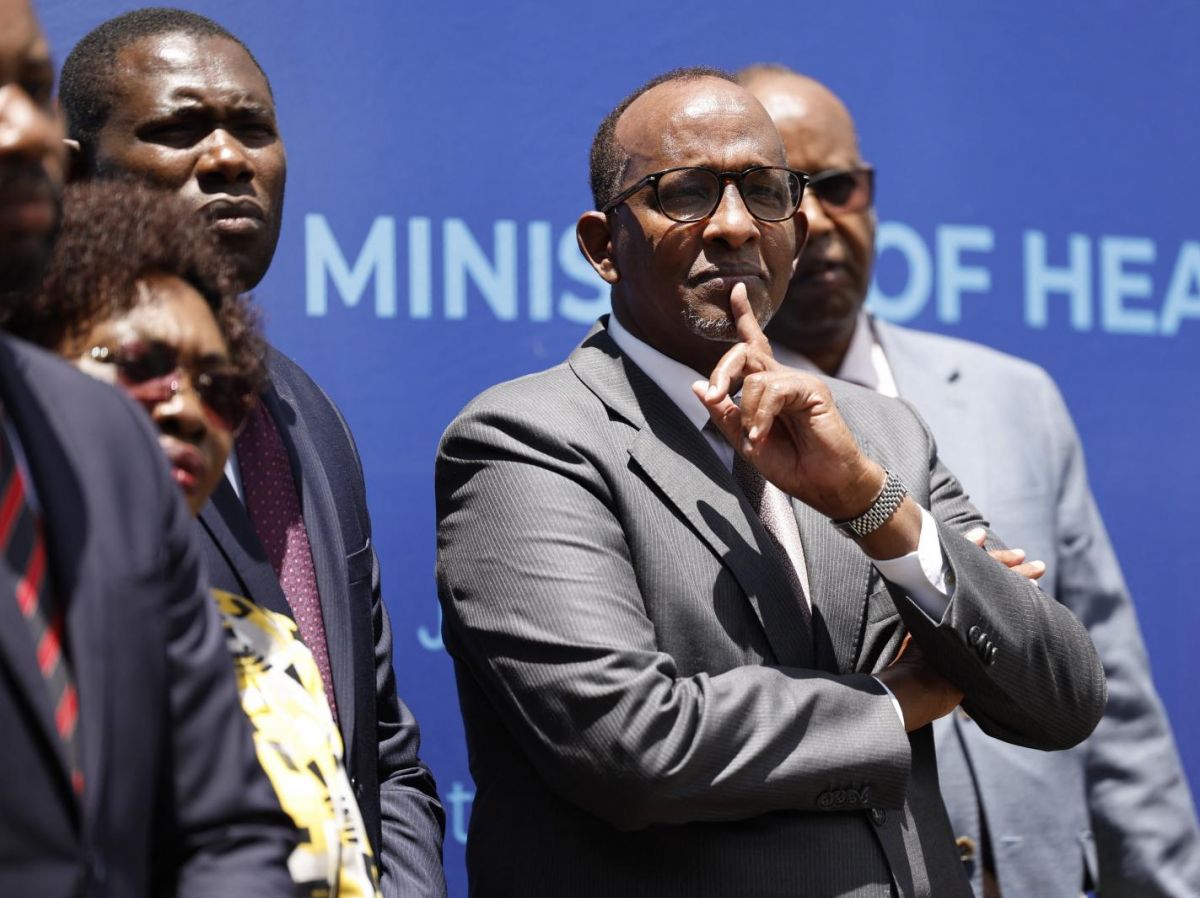
According to Kenyan Health Minister Aden Duale, the victim, a Kenyan man who had been living in the DRC for seven years, fell ill about a month ago and was treated in several hospitals in the country. He then crossed the border into Uganda by road and took a flight on October 3 from Kampala to Nairobi, the minister added.
Upon landing, a relative and a friend of the patient took him to a public hospital in the Kenyan capital, where he was placed in isolation as he presented with "« Fever, chills, intense fatigue, weakness, muscle pain, painful swallowing, sore throat, and bleeding under the skin at injection sites«", the minister listed.

These were all symptoms of Ebola hemorrhagic fever, which tests confirmed he was carrying. He died on Monday, October 5, Aden Duale said.
The African Union's health agency (Africa CDC), based in the Ethiopian capital Addis Ababa, announced in a statement that it will send a team to Kenya starting Tuesday. Its director, Jean Kaseya, will travel to the country. «"in the coming days“.
Priority: to find people who have been in contact with the sick person
The priority now is "« is to be able to locate people who have been in contact »"with the patient, a 40-year-old businessman," Patrick Amoth, director of Health at the ministry, explained to AFP.
Fifty-five people have been identified: 27 passengers and crew members from the Kampala-Nairobi flight and 28 people, including relatives and medical personnel, who cared for him. Once located, they will be placed in isolation for 21 days, the maximum incubation period of the virus.
“ The problem is that the system didn't work.«", explained Mr. Amoth, when asked what had allowed an already sick patient to reach Kenya, despite the state of alert linked to the epidemic.
Uganda, which borders Ituri province, the epicenter of the epidemic in the DRC, has a better track record: 20 infections had been confirmed there, including two deaths, with all other patients having recovered, according to official figures. The World Health Organization (WHO) declared the epidemic over in Uganda at the end of August, praising "« a decisive action » which allowed for« quickly master »"the spread of the virus.".
Given the patient's condition, "« There should have been a very high degree of suspicion (…) How was he allowed to travel so much?«" he wondered.
A test« would obviously have turned out to be positive since he had symptoms »"and he was transferred to an Ebola treatment center," continued Mr. Amoth, adding, however, that it was not the time to point fingers at anyone.
Read also What is Ebola virus disease?
«"Don't panic"»
“ We think he already knew he was ill when he arrived here. »and that he was able to spend« through the control process«" he told the press.« It is possible that some of the medications he was taking may have masked some of the symptoms.«", in particular to lower the fever.
The Kenyan Minister of Health has called on the population "« There is no need to panic, as all measures are in place to limit the spread of the disease.“.
There is currently no approved vaccine or treatment for the Bundibugyo strain of the Ebola virus that is causing the current outbreak.
Some 70,000 doses of the Ervebo vaccine, licensed against the Zaire strain, have been sent to the DRC to assess its impact on Bundibugyo.
Doctors Without Borders (MSF) warned on Monday about a «"Worrying surge" in Ebola virus cases in North Kivu, Another province in eastern DRC, bordering Uganda, has now recorded nearly 40,000 new cases, according to the NGO. The epidemic is not receding but "shifting," the NGO recently stated.
In mid-September, the WHO was already warning about the "exponential" progression of the virus in this province, with a doubling of the number of weekly deaths during the first half of September.
 English
 French