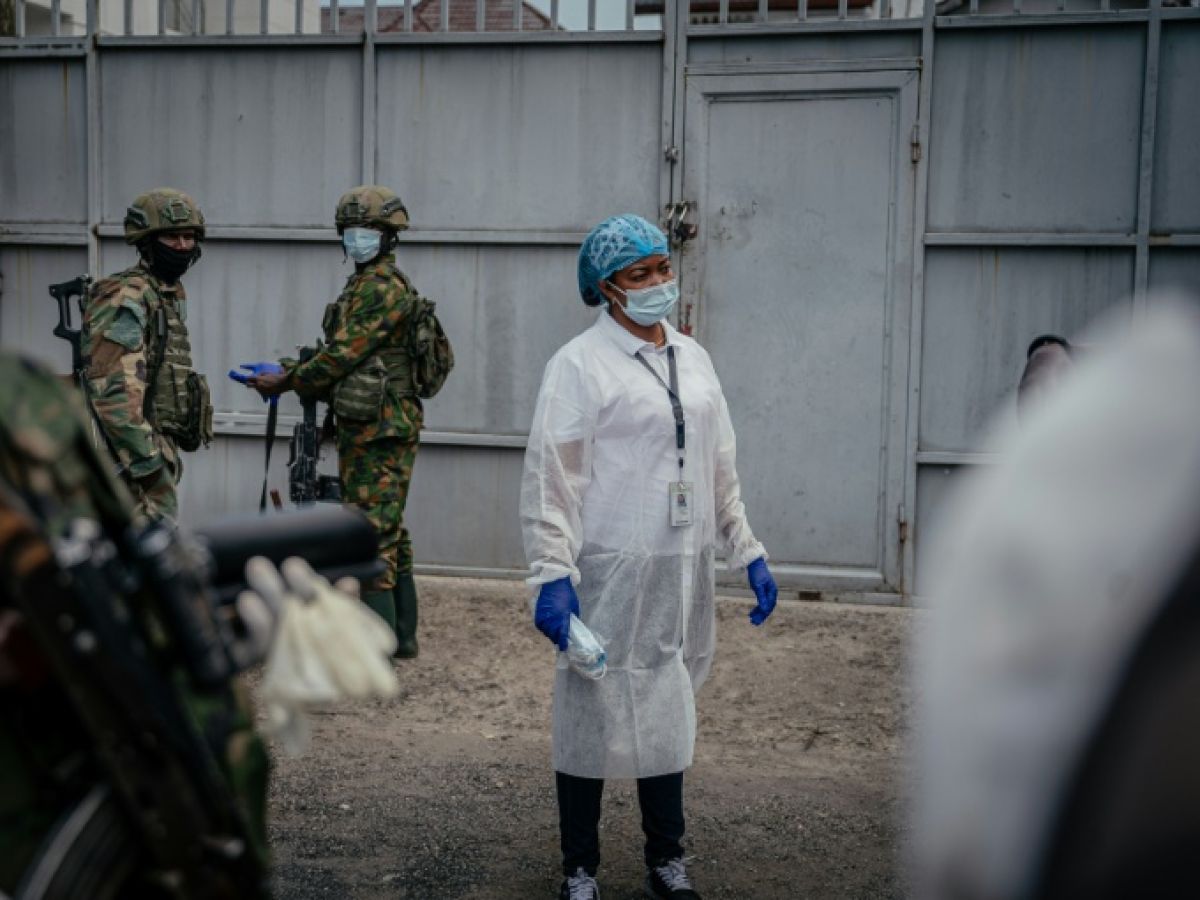
The WHO triggered an international health alert on Sunday, May 17, 2026, to deal with this 17th Ebola outbreak in the vast Central African country of more than 100 million inhabitants, where eastern provinces, difficult to access by road and plagued by violence from armed groups, are being hit.
"The WHO has assessed the epidemic risk as high at national and regional levels and low at the global level," WHO Director-General Tedros Adhanom Ghebreyesus told the press in Geneva, Switzerland, the day after an emergency committee meeting.
Ebola has caused more than 15,000 deaths in Africa over the past 50 years.
This committee, tasked with issuing a series of recommendations, confirmed that at this stage, the epidemic "does not respond" to the criteria for a pandemic emergency. For its part, the European Commission announced that the risk of infection in the EU was "very weak" and that "nothing indicates" that Europeans should take specific measures.

The epidemic comes at a time when NGOs are facing a general decline in international aid, particularly from the United States since Donald Trump's second term, which saw his country withdraw from the WHO.

Ebola causes a deadly hemorrhagic fever, but the virus, which has killed more than 15,000 people in Africa over the past 50 years, is relatively less contagious than, for example, Covid or measles.
Read alsoEbola and hantavirus: the world is living in a "dangerous and divisive" era, warns the WHO
"All contacts, all infected individuals, must not travel."
To date, 51 cases have been confirmed in the DRC, in the eastern provinces of Ituri and North Kivu. "although we know that the scale of the epidemic in the DRC is much greater"Dr. Tedros indicated. "We are full of suspected cases. We have no more room. That gives you an idea of how crazy the situation is right now."Trish Newport, head of emergencies for the NGO Doctors Without Borders (MSF) deployed in Bunia, the capital of Ituri, told AFP.
At the hospital in Rwampara, near Bunia, staff and equipment are still desperately lacking. The necessary supplies to isolate and treat infected individuals only began arriving on Monday. Nurses were without complete protective equipment kits until Friday. The local residents are even more destitute. “We dig graves and bury dead people without gloves or any protection,” Salama Bamunoba, representative of a local youth organization, is worried.
One death and one case have been recorded in Uganda, but no local outbreaks have been reported. The United States announced Monday that it would strengthen health screenings at its borders for air travelers arriving from affected countries in Africa.
An American man who contracted Ebola in the Democratic Republic of Congo is currently hospitalized in Germany. His wife and three children, who are asymptomatic, will be placed in isolation in the same hospital at the request of Washington, according to German authorities. Bahrain, a small state on the Arabian Peninsula, announced Tuesday evening that it was banning entry for one month to visitors from affected African countries.
"All contacts, all infected individuals, must not travel." Abdi Rahman Mahamud, director of health emergency response operations at the WHO, reminded everyone on Wednesday.
"We expect these figures to continue to rise."
The first identified case was a nurse who presented himself on April 24 at a health center in Bunia. But the epicenter of the outbreak was located about 90 km away, in the Mongbwalu area, suggesting that the epidemic originated in this locality and that the cases then spread.
The WHO was alerted to the emergence of a highly lethal disease on May 5, the first case of Ebola tested positive on May 15, and the organization declared international health emergency two days later. "Given the scale of the problem, we believe that (the epidemic) probably started a few months ago, but investigations are ongoing."explained Anaïs Legand, technical expert on viral hemorrhagic fevers at the WHO.
"We expect these figures to continue to rise, given the length of time the virus circulated before the outbreak was detected," added Dr. Tedros.
According to him, "Several factors justify serious concern about the risk of increased spread and further deaths."such as the estimated number of cases, particularly in urban areas, deaths among healthcare workers, population movements in the region and the nature of the virus variant, Bundibugyo, for which there is no licensed vaccine or treatment.
The WHO says it is searching for potential vaccines and effective treatments against this variant, but for Ms. Legand, the organization's priority today "is really about breaking the chain of transmission by implementing contact tracing, isolation and management of all suspected and confirmed cases."
 English
  French