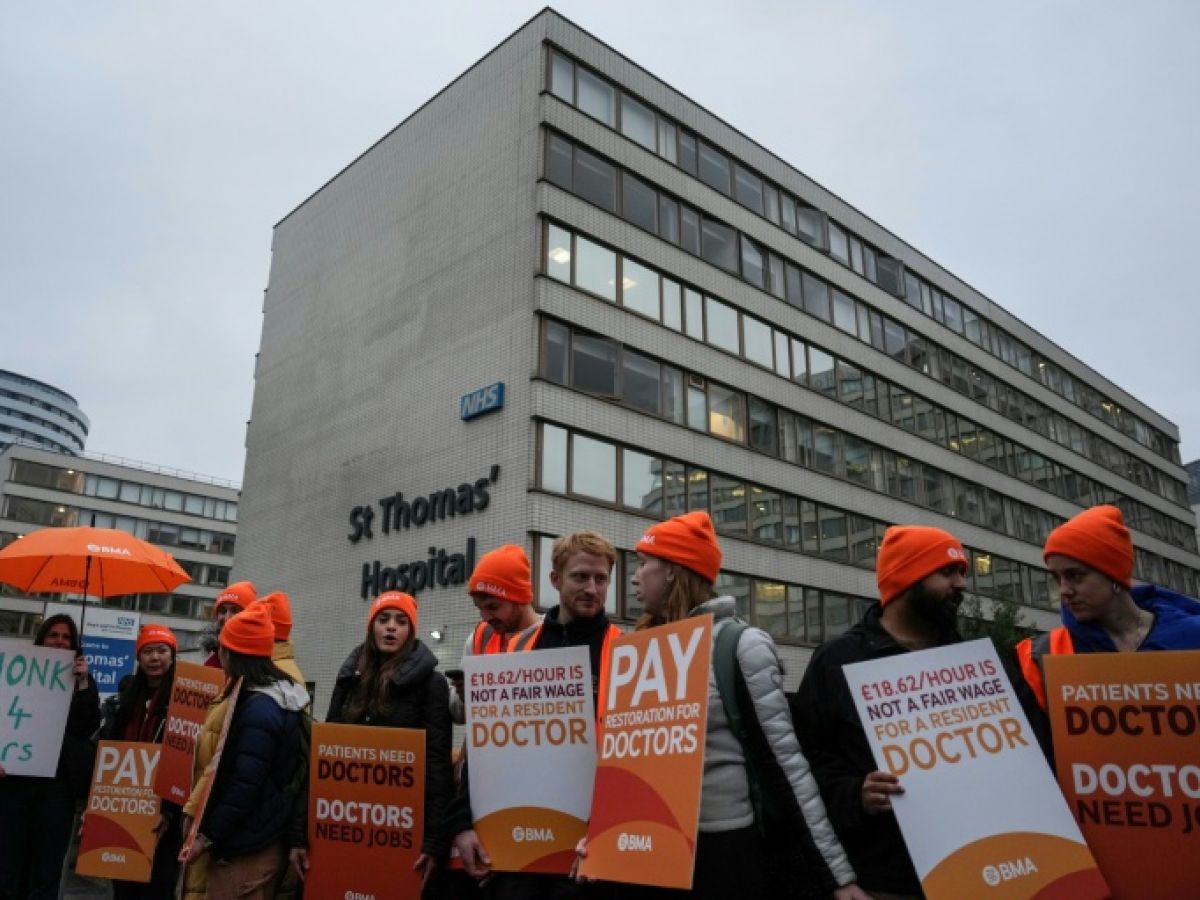
Thousands of English doctors began a new five-day strike on Friday to demand a pay rise in the face of inflation, once again engaging in a standoff with the Labour government.
This is the thirteenth strike by doctors since March 2023 working for the NHS public health service, in the midst of a crisis with endless waiting lists and a hemorrhage of professionals.

These resident doctors, whose status is similar to that of interns in France, make up about half of the medical staff in England. They began their strike at 7:00 AM (local time and GMT) on Friday.
Their union, the British Medical Association (BMA), is demanding a pay increase of around 26% to compensate for the loss of purchasing power due to inflation.

But British Health Secretary Wes Streeting is rejecting their demands. He points out that they have received a pay increase of nearly £301 over three years, and that he has already offered them measures to improve their working conditions.
On Wednesday, he said the Labour government would not be "held hostage" by the union, which he accused of "jeopardizing the future of the NHS".
This movement could lead to many cancellations or postponements of medical appointments in England, even though the head of NHS England has called on hospitals to maintain at least 95% of the activity planned for these five days.
The most recent strike, which lasted five days in July, cost the NHS £300 million (€339 million). Some 54,000 appointments and procedures were cancelled or postponed, according to the NHS.
According to a Savanta poll reported by the Times, only a third of young doctors supported the new strike, following Wes Streeting's proposals to improve their working conditions.
 English
  French