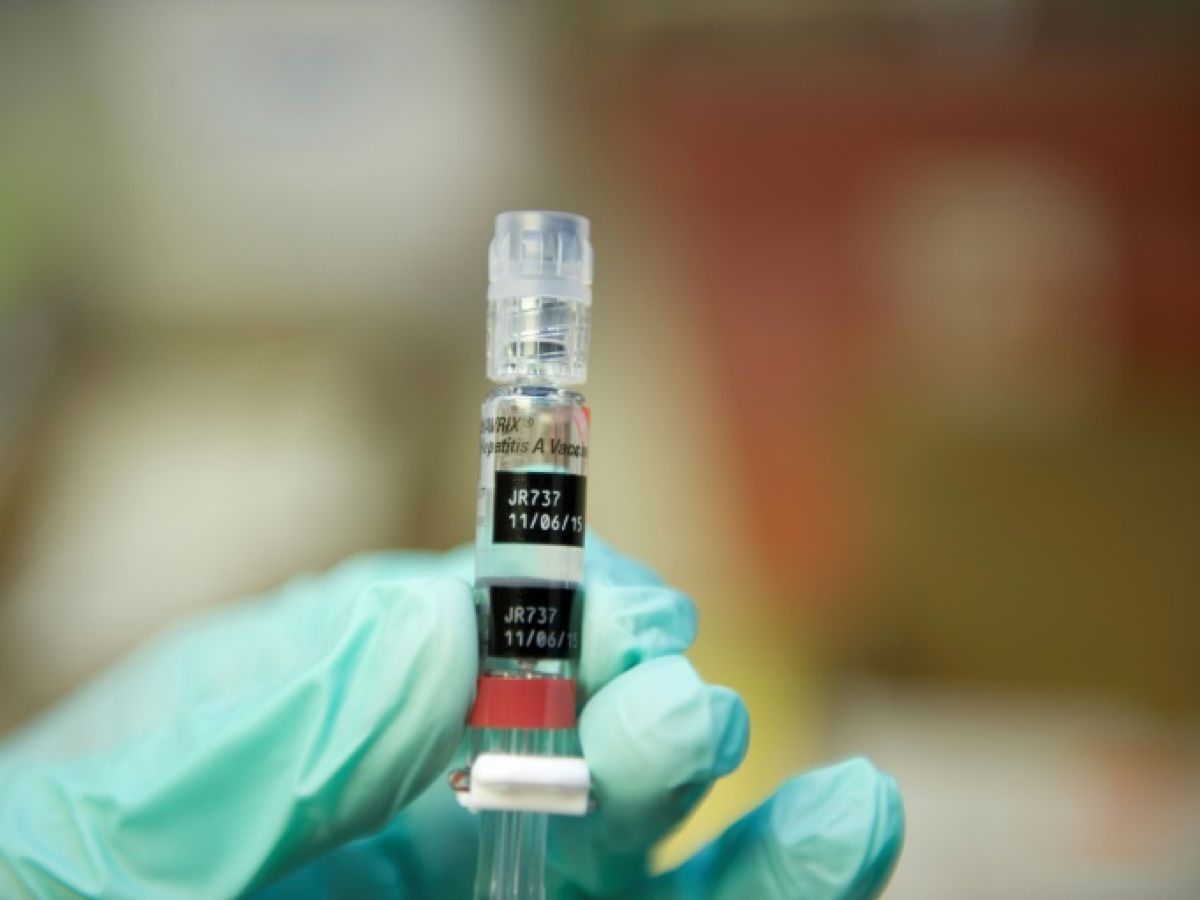
A group of experts appointed by Donald Trump's vaccine-skeptic Health Secretary decided on Friday to stop recommending the hepatitis B vaccine for all newborns, against the advice of many healthcare professionals.
This decision, adopted by eight votes to three, should be followed by the US federal authorities and lead to the end of the country's current prevention policy, in place for more than 30 years.
Donald Trump praised it on his Truth Social network as a "very good decision".
According to the new recommendation, the administration of a first dose of hepatitis B vaccine – out of three – in the first hours of a child's life would no longer be systematically recommended to babies whose mother has tested negative.
This major change was immediately denounced by healthcare associations as unjustified and even dangerous, due in particular to the shortcomings in maternal screening in the United States and the possibility that newborns could be infected by other people in their environment.
This "will lead to an increase in hepatitis B infections in infants and children," said Susan Kressly, president of the American Academy of Pediatrics.
The Advisory Committee on Immunisation Practices (ACIP), completely revamped earlier this year by vaccine-skeptic Secretary Robert Kennedy Jr., also recommended that a serological test could be performed after a first injection to assess the need for future doses.
– “To cause harm” –
Hepatitis B is a viral liver disease that can be transmitted from mother to mother during childbirth and exposes those affected to a high risk of death from cirrhosis or liver cancer.
The recommendation to vaccinate all newborns, supported by the WHO, was introduced in the United States in 1991 and has made it possible to virtually eradicate infections among young people in the country, according to authorities.
Prior to the vote, Dr. Cody Meissner, one of the few dissenting voices on the committee entirely reshuffled by Secretary Robert Kennedy Jr., known for his anti-vaccine positions, had urged his colleagues not to change the existing recommendations.
"By changing the wording of this recommendation, we are causing harm," he warned.
Other members, on the contrary, defended a measure that would align American vaccination policy with that of other countries like France, despite warnings from experts pointing to surveillance and access to care problems specific to the United States.
– Vaccinations are falling –
Now composed of individuals who have been criticized for their lack of expertise or for spreading false information about vaccines, the group had already modified vaccination recommendations for Covid-19 and measles in September.
He also began on Friday a broader review of the children's vaccination schedule, work in which American lawyer Aaron Siri, a close associate of Robert Kennedy Jr. known for having relayed unfounded theories on the subject, like him, participated.
This initiative is raising concerns within the American medical community, which accuses the group of seeking to restrict access to vaccines, even as the country's vaccination rates have been declining since the pandemic and there are fears of a return of deadly contagious diseases, such as measles.
In response, several American scientific institutions and Democratic states have recently announced that they will stop following the recommendations of this group and develop their own guidelines.
Within the Republican Party itself, the ACIP's decision on Friday caused a stir, with Senator Bill Cassidy, a physician by training, urging federal authorities not to implement it.
Once adopted, these recommendations will determine whether or not certain vaccines are covered by insurance and vaccination programs. This is a significant detail in a country where the price of a single vaccine can reach several hundred dollars.
 English
  French