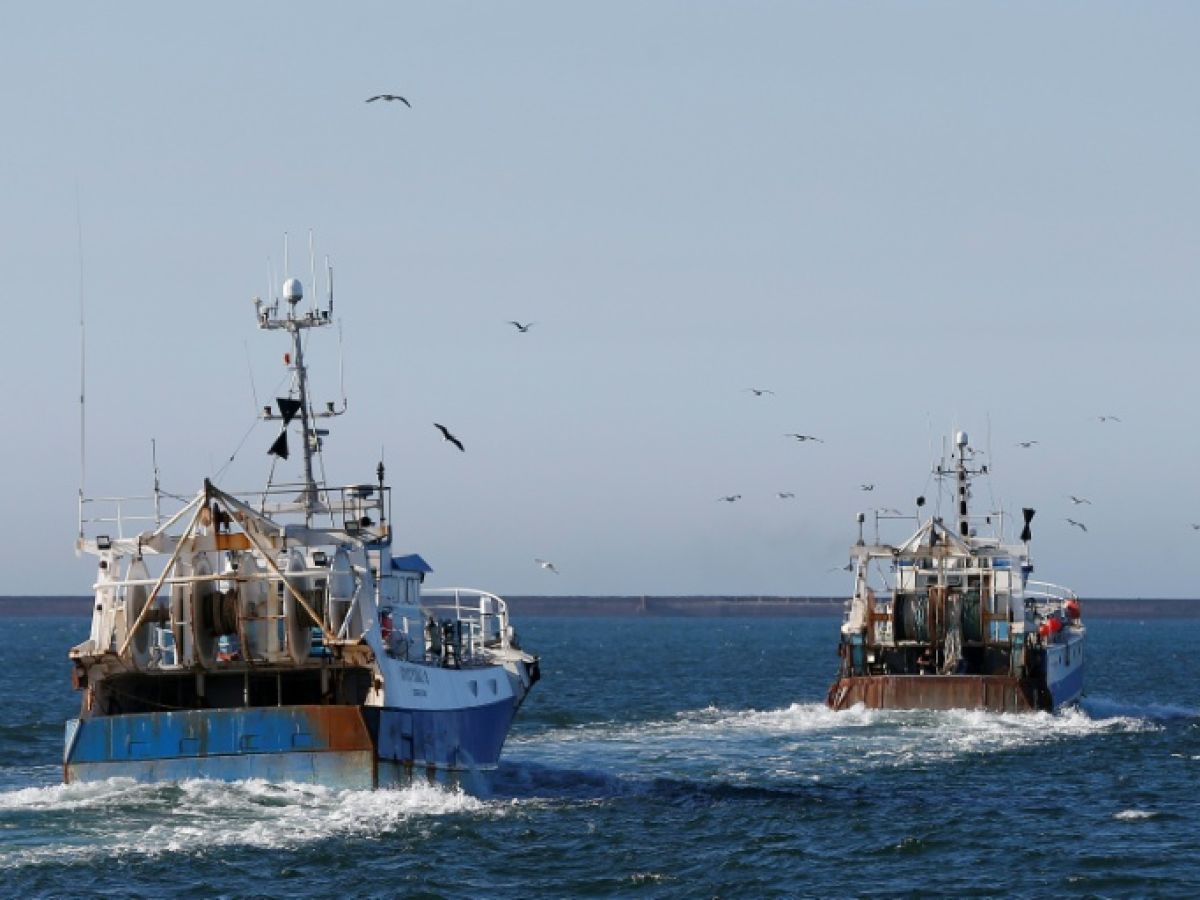
"When you're high, in case of damage or bad weather, things can quickly go wrong": for the past thirty years, drugs have been poisoning French fishing. Faced with the high number of accidents, a new prevention campaign will be launched next year.
On the island of Oléron, Matthieu Guérit, 32, is one of the few fishermen to speak openly about this "sensitive" subject, but one recognized by the profession "as a reality".
In the cramped cabin of his trawler moored in the port of Boyardville, he candidly recounts his past as a former user, from the first "joints" to play the "rebellious teen" at maritime high school, to his "very strong addiction" to cannabis, with "occasional" cocaine use.
His rare bouts of drinking at sea are abruptly halted by "paranoia" and "anxiety attacks" as soon as the ship "rolls a little too much," because "things can quickly go wrong." But the young sailor then finds himself alongside colleagues who are "cocaine addicts," "secretly high on Subutex," or "drunk on cooking wine because there was nothing left."

It was thanks to the support of his "entourage" and the confidence of a boss with "military discipline" that he was able to get his head above water.
Now a shipowner, this fisherman of squid, cuttlefish and cetaceans retains from those years a "difficulty in trusting" when he is not at the helm, on an island "where everyone knows each other and where you know who takes and who doesn't."
– Fatal accidents –
At the port of La Cotinière, a truck from the Tremplin 17 association, financed by the Regional Health Agency, sets up "discreetly" to receive and support the sailors concerned.
"Managing to say no is sometimes very complicated," notes Alice Parvery, a special education teacher who helps them, along with a nurse, to work on "self-assertion."
"Drugs are a real scourge that generates accidents and problems of cohabitation on board," acknowledges Philippe Micheau, president of the departmental fisheries committee in Charente-Maritime.
According to the Ministry of the Sea, fishing is the "most accident-prone" professional nautical activity, with an average of "10 fatal cases per year".
Last May, the death of an eight-year-old child, struck by a boat while sailing a dinghy in front of the Arcachon Sailing Club (Gironde), deeply affected the community. Charged with aggravated manslaughter, the fisherman admitted to having consumed cocaine and cannabis, in a festive setting according to him, the day before the accident.
The profession is now one of the most tested, with a positive test potentially calling into question fitness for navigation.
In 2024, 68,000 urine tests were carried out on sailors: "nearly 3%" were positive for cannabis, "0.6% for cocaine", according to the management of the Seafarers' Health Service (SSGM).
– “Optical illusion” –
"Misleading" figures for sailors and healthcare professionals, who describe "cheating" and "abstinence" strategies to avoid being detected.
A 2013 analysis report from the Lyon university laboratory UMRESTTE, covering 1,000 fishermen from Aquitaine and Charente-Maritime, showed that 46% under 35 years of age were positive for cannabis and 8% under 25 years of age were positive for cocaine.
To better assess consumption, at a time when white powder is flooding into the country, the ministry will launch a large-scale epidemiological survey in early 2026.
A need for vigilance, social isolation, stress related to weather, breakdowns, and workplace accidents: these are all possible reasons for the use of addictive substances. Offshore fishing appears to be more affected than coastal fishing, with gillnetters more so than trawlers.
"On board, time drags. You don't always have a TV. It's often everyone in their own bunk, we don't play cards anymore. Before, we drank wine and smoked cigarettes, today we take drugs," describes a former doctor from the SSGM, for whom the major addiction remains "alcohol."
– “At the stern of the boat” –
Sailors are also the "target" of dealers who "know the arrival times of certain ships" and solicit "at the stern of the ship", the ministry points out.
"Drugs are first and foremost a societal aberration that takes hold at sea, not a crutch to cope with working conditions," says Johnny Wahl, president of the union of artisanal fishing professionals (Synadepa), summarizing the general feeling of the sailors interviewed by AFP.
At the maritime high school in La Rochelle, Marion Briaud, a speaker at Tremplin 17, warns the students right away: "You are entering an environment where there is a strong chance that some of you will see colleagues or bosses using cocaine."
“If I find a drugged sailor on my boat, I’ll throw him overboard,” a local shipowner fumes. Fearing being “stigmatized,” some insist they are “vigilant” despite the labor shortage because, in the event of an accident, “they bear full responsibility.”
"We are neither doctors, nor police officers or customs officers," sighs Franck Lalande, a shipowner from Arcachon.
“We don’t have the power to carry out checks on board,” agrees Johnny Wahl. “A sailor on drugs doesn’t necessarily show on his face, and we don’t search bags,” adds the fisherman from Oléron, who regrets that in the event of positive tests, “no information is communicated to the shipowners.”
 English
  French