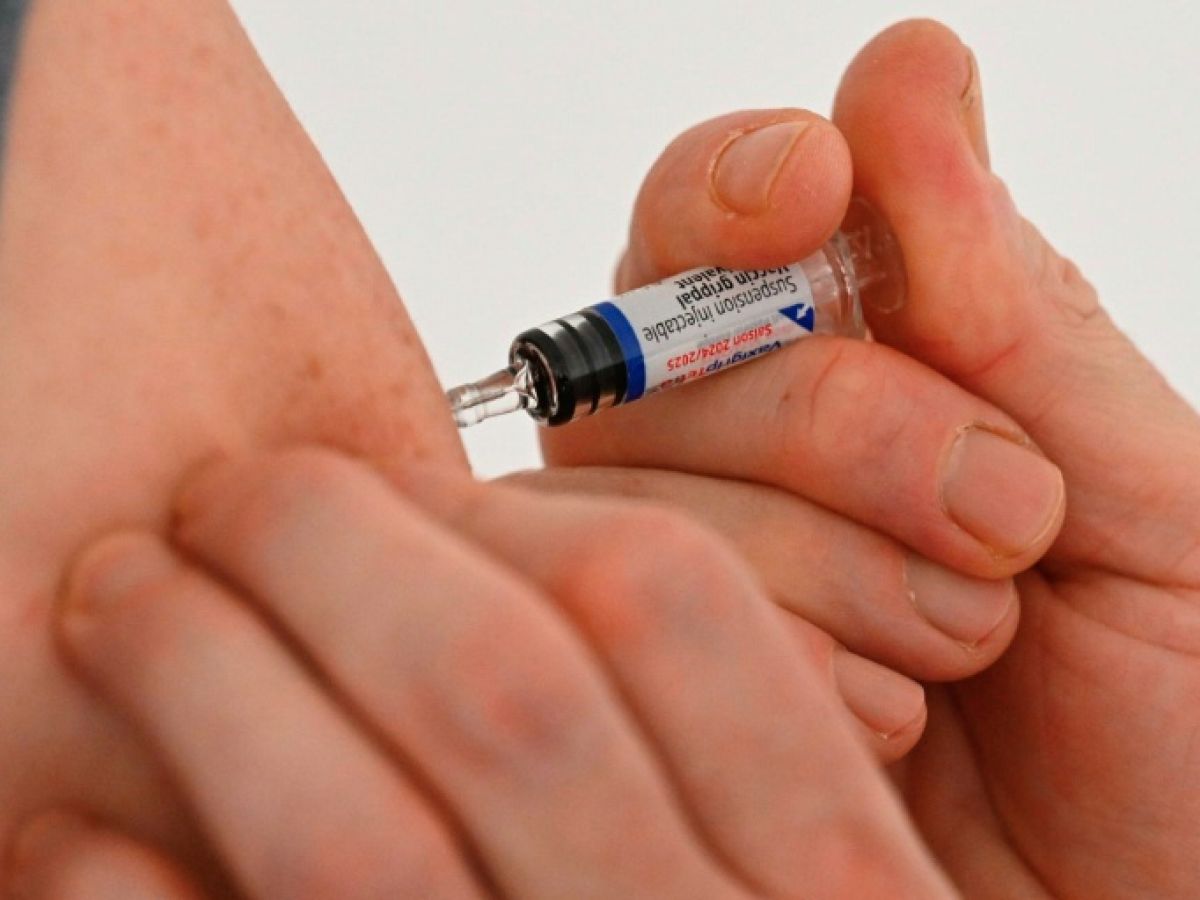
Seasonal flu and bronchiolitis epidemics have spread across almost all of metropolitan France since the beginning of December, and the last region spared, Corsica, is expected to follow soon, according to a report published Wednesday by the public health agency.
Last week, ending December 7, saw the "continued increase in flu indicators in all age groups," summarizes Public Health France (SpF) in a weekly report, noting that "all metropolitan regions (are) in epidemic except for Corsica, which has moved into pre-epidemic."

Overseas, Mayotte remains affected by the epidemic and French Guiana is moving into the pre-epidemic stage.
The dynamics of the epidemic are currently "comparable" to those of last year at the same time, the agency notes, while the 2024/2025 season was marked by a particularly severe flu outbreak, causing more than 17,000 deaths.

This year, the vaccination campaign seems to be working better than last year. The Ministry of Health announced at the end of November that it would release emergency stocks, as some pharmacists reported already running out of doses.
Alongside the flu, the bronchiolitis epidemic, which primarily affects babies, is spreading to almost all of mainland France. Having been spared the previous week, Corsica, like the flu, is now in a pre-epidemic phase. Overseas, Guadeloupe and Martinique have also been affected.
SpF, however, mentions a stabilization of bronchiolitis indicators both in the city and in hospitals, where the epidemic is occurring at a slightly lower degree than at the same time last year.
However, in Île-de-France, the region first affected in France, around fifteen babies have had to be transferred to hospitals in neighboring regions since mid-October. Health authorities downplayed these measures on Monday, explaining that they were sometimes necessary to compensate for a lack of beds, but in other cases, to hospitalize children as close as possible to their parents' homes.
Several treatments are now available to immunize very young children against respiratory syncytial virus (RSV), which causes the majority of bronchiolitis cases: Beyfortus, given directly to babies, and Abrysvo, administered at the end of pregnancy to protect the newborn.
As for Covid, which is also being monitored, its indicators remain "stable at low levels" even though the rate of detection of the virus in wastewater has increased for the second week in a row.
 English
  French