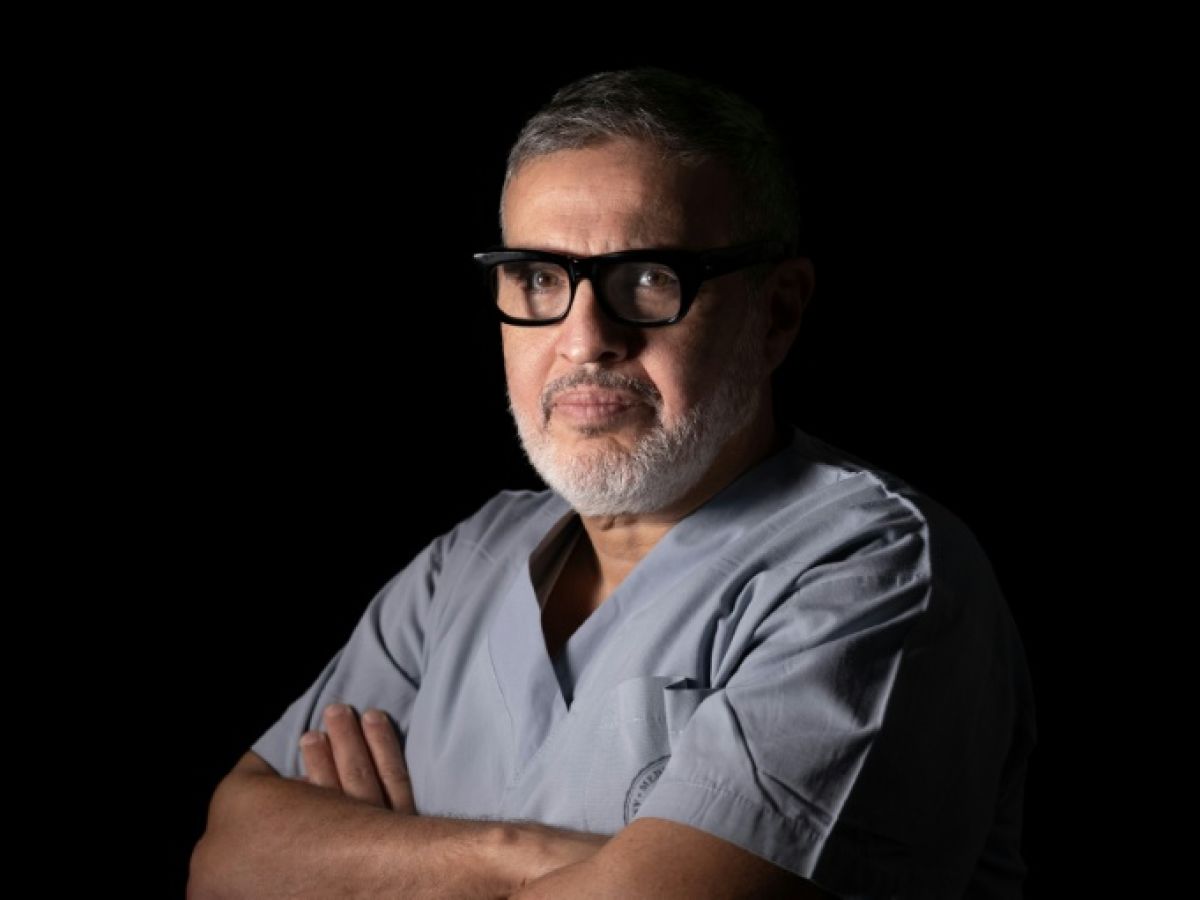
Three weeks of war in Lebanon, and no respite for Dr. Ghassan Abou Sittah. Between operations, the surgeon described to AFP a "race against time" to save children injured in Israeli bombings.
At the American University Hospital in Beirut, its pediatric intensive care unit receives critical cases from all over the country, and desperate parents praying that their little ones will make it.
That morning, fire struck very close by, in the heart of the capital. Three children were pulled alive from the rubble, but seriously injured.
"An 11-year-old girl had shrapnel in her abdomen and a partially amputated foot (...) but she will pull through," says the doctor, who lives on campus and rushes to the operating room for every emergency.

In Lebanon, relentlessly bombarded by Israel after attacks by the Hezbollah movement on March 2, 118 children have already died and 370 have been injured, according to the latest official figures which continue to rise.
Torn limbs, head trauma, brain injuries, shrapnel to the face or eye… the Palestinian-British doctor, a reconstruction specialist, lists the injuries he sees daily.
"Often, we see all of this in a single child, which means that he has to undergo many operations," confides the man with the greying beard and dark circles under his eyes, visibly exhausted.
He mentions three sisters who arrived 15 days ago. "Their injuries are so severe that I have to take them to the operating room every 48 hours (...) to remove as much necrotic tissue as possible and clean the wounds so that they are ready for reconstructive surgery."
– “Not just a number” –
At 57, Ghassan Abou Sittah has seen it all. He has dedicated his life to treating civilians injured in the crises that are ravaging the Middle East: an "endemic disease" in the region, he says dejectedly.
But "one never gets used to" the suffering of children, he adds. "A child should never become anonymous, a mere number."
His first experience of conflict dates back to 1991. Then a medical student, he discovered the ravages of the Gulf War, after the withdrawal of Iraqi troops from Kuwait – where he was born to a Palestinian refugee from Gaza and a Lebanese mother.
This would become a vocation. From the United Kingdom, where he obtained his degree, he went to Gaza during the first Intifada, to southern Lebanon bombed by Israel in 1996, to Iraq, to Yemen, and returned to the Palestinian enclave with each new war.
In 2023, the surgeon narrowly escaped an attack on a hospital in Gaza, where he spent 43 days after Israeli reprisals following the October 7 attack.
For Ghassan Abou Sittah, the parallel with what is happening today in Lebanon is obvious: "It's a miniature Gaza."
Although the fatality rate remains lower there, infrastructure and healthcare professionals are also paying a heavy price.
– Ambulances bombed –
With the incessant bombing of the southern suburbs of Beirut, "we have lost four hospitals (forced to evacuate, editor's note) one of which had a large pediatric emergency unit," he points out.

Several seriously injured children also died because they could not be transferred in time from rural areas where health centers are much less well equipped than in Beirut, according to the doctor.
"Ambulances are being targeted by the Israelis, so transferring children from a hospital in Nabatiyeh (south) or in the Bekaa (east) is very dangerous. These transfers can only take place during the day, and they take a long time," he explains.
Based in Beirut for several years, he created the Ghassan Abu Sittah Children's Fund in 2024, which aims to provide medical care in Gaza and Lebanon – but also comprehensive care once the children leave the hospital.
His youngest patient is four years old; both his parents and three brothers died in a bombing. An amputee at the foot, he also has a head injury and will require extensive long-term physical and psychological care.
"Where will we send him? Who will take care of him?" the doctor asks. "Many come from poor backgrounds who don't have the means to manage all this (...) It's not just the body that is destroyed, it's the entire family unit."
 English
  French