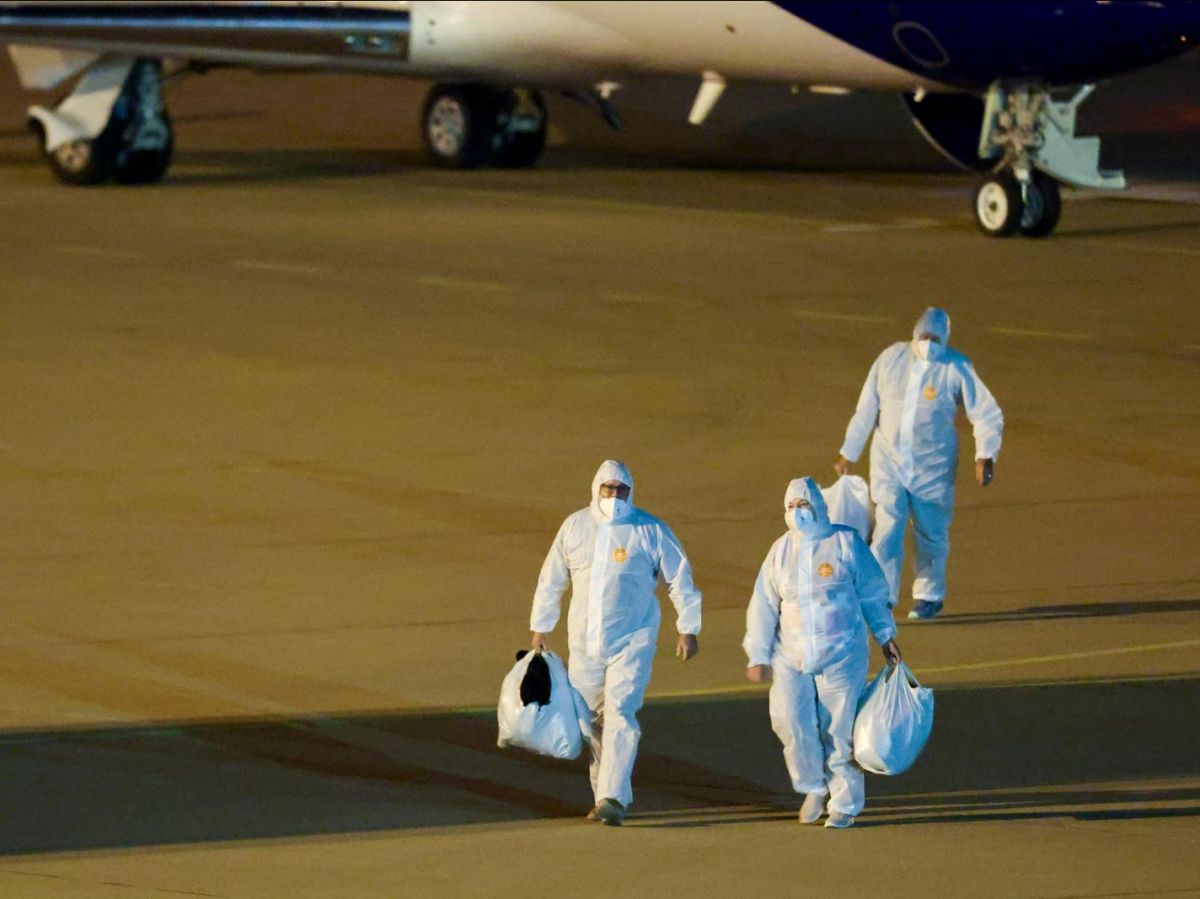
There is currently no specific treatment for hantavirus, which is at the center of attention for international health authorities. But what is the state of medical research on these viruses, which are rare in humans but sometimes fatal?
Present on all continents, hantaviruses, transmitted through the urine, saliva and droppings of rodents, can cause respiratory illnesses and serious, even fatal, kidney damage in humans.
Despite this, no specific treatment or vaccine is available against the virus at the heart of health concerns, the Andean virus, which can degenerate in a few days into acute respiratory distress syndrome and whose lethality is around 40%.
Research is still limited
Currently, the main treatments target the symptoms: management consists of oxygenating the patient and stabilizing their blood pressure. In very critical cases, such as that of the French woman hospitalized in Paris, treatment with a blood oxygenation machine may be necessary.

“ Research dedicated to specific hantavirus diagnoses remains limited", and experimental vaccines as well as potential treatments are included" mostly "at a very preliminary stage," summarizes the Pasteur Institute.
Around fifteen studies dedicated to hantaviruses registered since 2020 are identified in the World Health Organization's international registry of clinical trials.
Experimental vaccines
There is currently no vaccine available against the Andean strain. If there is no " not a great deal of research on the development of a vaccine", it's because Developing a vaccine for a hundred cases a year seems complicated. "Including from a financial point of view," says Odile Launay, an infectious disease specialist and professor at Paris Cité University. Early-stage projects are underway: a trial, conducted on a small sample in the United States, focuses on an experimental DNA vaccine against the Andes virus, while other researchers are trying to rapidly develop an RNA-based vaccine.
Currently, an inactivated vaccine, used only in China and South Korea, exists against other types of hantavirus, but its effectiveness is considered moderate by experts. In theory, it shouldn't work against the Andes, since we know that it generates antibody levels in those who receive it that are probably not high enough to neutralize the virus." notes Olivier Schwartz, virologist at the Pasteur Institute.
Read alsoWhat is hantavirus infection?
The antiviral and antibody approach
No antiviral drug has yet proven effective in treating hantavirus pulmonary syndrome, but research is underway on molecules such as ribavirin and favipiravir. It is not yet clear whether these molecules will have a beneficial effect on patients. This is especially true since this type of treatment must be administered early in the infection, before a significant viral load develops.“, underlines Olivier Schwartz.
Other teams are working on developing antibody-based treatments. An interesting approach"According to Ms. Launay, because they could be used either as a preventative measure in people who have been exposed, or even as a treatment." at the very beginning of the infection " For " This might reduce the viral load and prevent severe cases. "of the disease."
A French biotech company, SpikImm, specializing in the development of monoclonal antibodies to prevent severe viral infections, announced on Tuesday " positioned "to be mobilized against hantaviruses in the event of a hantavirus outbreak. Furthermore, the transfer of human plasma containing antibodies against the Andes virus" has made it possible to significantly reduce mortality in patients infected with this virus"But these results need to be confirmed, according to the Pasteur Institute.
How to protect yourself
In the absence of effective and available vaccines and treatments, preventative behaviors remain essential. In the case of a disease that is not very transmissible, wearing a mask and washing hands are sufficient to create a barrier against transmission." , underlines Xavier Lescure, infectious disease specialist at Bichat – Claude-Bernard Hospital.
 English
  French