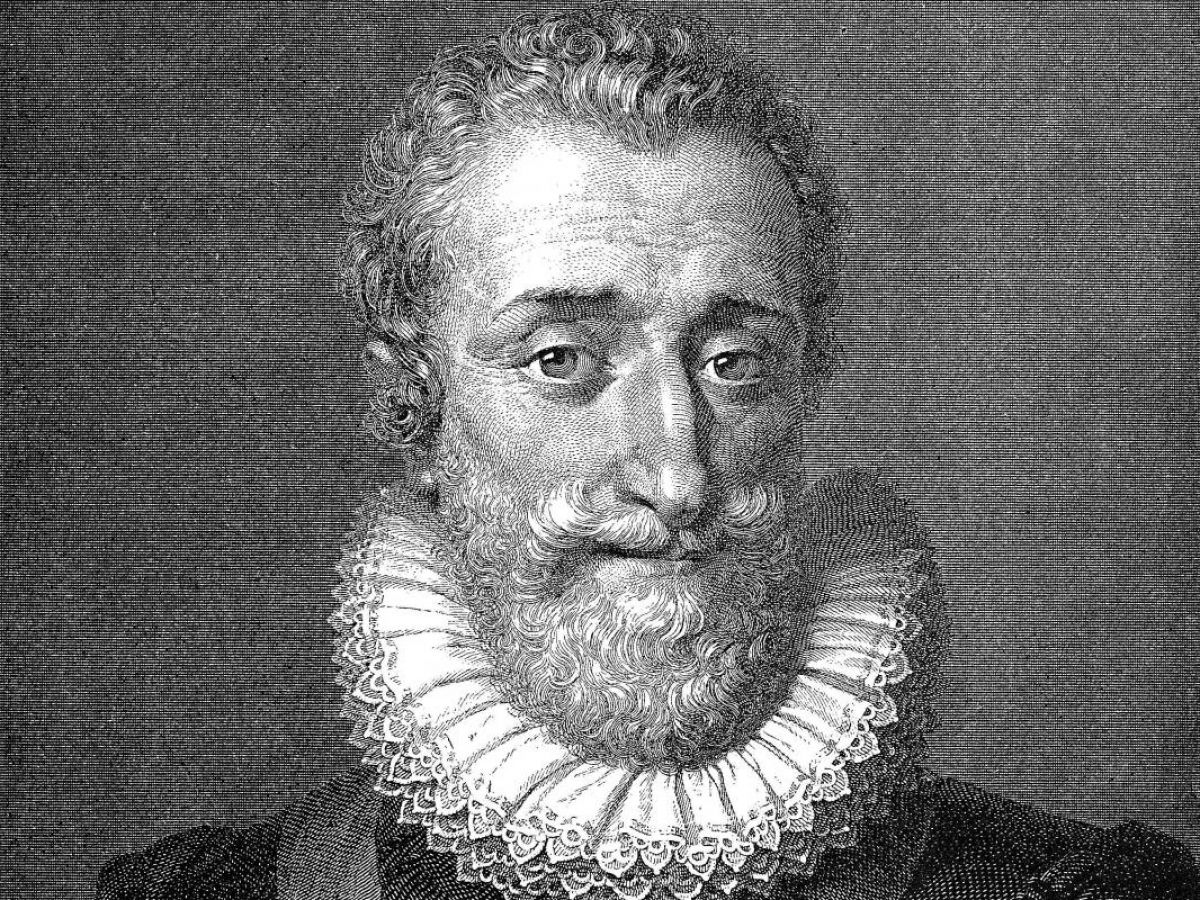
"Arrgh." Listen closely, play the video below and listen. No, it's not a gurgling sound from a comic strip, but the sound of the vowel "a", then that of the vowel "o", produced by Henry IV, King of France (1553-1610) whose voice has just been partially reconstructed.
This unprecedented scientific experiment is the result of meticulous work carried out by a team composed of anthropologists, phoneticians, ENT surgeons and also radiologists from the LAAB (Laboratory of Anthropology, Archaeology, Biology – University of Versailles Saint-Quentin-en-Yvelines – UVSQ, directed by Dr. Philippe Charlier), the Laboratory of Phonetics and Phonology CNRS U7018 (Sorbonne Nouvelle University), from Foch Hospital (Suresnes) and Pitié Salpétrière Hospital (Paris).

These scientists are now pleased to see their efforts rewarded by this original work published in the prestigious journal Journal of Voice, review of the Voice Foundation and of theInternational Association of Phonosurgery.
Henry IV reconstructed in 3D thanks to his mummified head
Since the fatal stab wound inflicted in 1610 by Ravaillac on the sovereign immobilized in his royal carriage at 11 rue de la Ferronnerie, Paris, the sovereign's head has, as we now know, been numerous journeys and many battles between experts.
Finally found, authenticated, then reconstituted in 2013 by the team of forensic anthropologist Philippe Charlier, The royal face was this time studied in close detail thanks to the combination of medical imaging techniques and 3D modeling for the reconstruction of the larynx, an organ essential to the production of the voice, a structure here particularly well preserved thanks to the embalming technique known as the Italian method (external embalming of the head and neck, without opening the skull or removing internal parts), a practice attributed to his wife, Marie de Medici (1575-1642).
As the researchers point out, each bone, cartilage, and mucous membrane structure of the precious mummy was thus able to be reconstructed in 3D. "and digitally simulated to produce acoustically plausible sounds," only the epiglottis, small lA triangular-shaped cartilage core that closes the larynx during swallowing. being missing.

Three-dimensional representation of King Henry IV's vocal tract. The entire model was created using Fusion 360® software (Autodesk Inc., San Rafael, California, USA). A: Overall model of Henry IV's head and neck, including the vocal tract. B: Left lateral view of the vocal tract in the overall reconstruction after removal of the mandible. C: Left lateral view of the 3D representation of the vocal tract. D: Left lateral three-quarter view of the 3D representation of the vocal tract. Credit: R. Baudouin, A. Amelot, S. Nicolleau, I. Huynh-Charlier, L. Crevier-Buchman, S. Hans, P. Charlier
Rehabilitating the voice of patients with ENT cancers
Before arriving at this reconstruction, and in order to best reproduce the soft tissues essential to the modeling of the living tongue, reference MRI scans were also carried out on five adult men all able to pronounce the vowel "a".
Read also Fascinating "Cold Cases" with Philippe Charlier
Here, the vowels /a/, /i/, /u/ and /œ/ were recreated to provide a realistic and plausible overview, although the researchers pointed out a limitation to their work. : “ Although we are relatively confident in this study regarding the shape of the palate, the width of the jaw, and the size of the nasal cavity and maxillary sinuses, Our acoustic results should nevertheless be considered with caution, given the soft tissue assessment.", they write.
Listening to a full royal speech will therefore require imagination and patience. But this multidisciplinary work undoubtedly opens up new, more contemporary perspectives, concerning, for example, the rehabilitation of the voice of patients affected by ENT cancer. There are approximately 20,000 new cases per year in France.
 English
  French