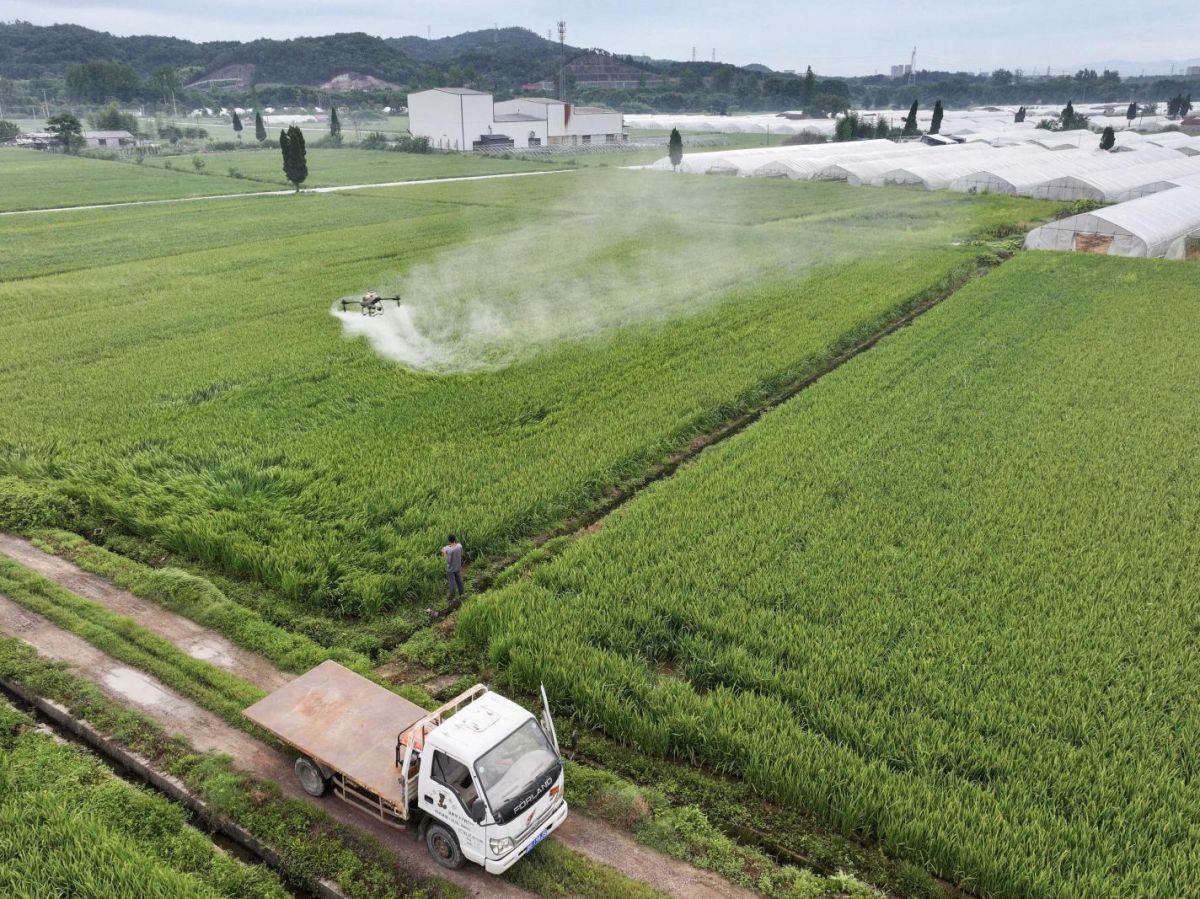
The evidence of the dangerousness of some pesticides The risk to human health is becoming increasingly significant, to the point that the French Agency for Food, Environmental and Occupational Health & Safety (ANSES) is taking action. worryNew evidence of their potential danger has just been highlighted by researchers at the University of Cambridge, in the United Kingdom: pesticides, as well as other commonly used chemicals, can disrupt the microbiota human intestinal. Their discovery, presented on November 26, 2025 in the journal Nature MicrobiologyThis could partly explain how these products affect our health.
Pesticides that target the wrong thing
Researchers tested a thousand chemicals, mainly pesticides, as well as molecules used in industry (such as bisphenols), on about twenty bacterial species typical of the gut microbiota. The concentration studied (20 micromolars, abbreviated 20 μM) corresponds to that estimated in the digestive tract of a person exposed to these products. Approximately one in six chemicals inhibited the growth of at least one of these bacteria. The most sensitive were those in the range of Bacteroidales, in particular the species Parabacteroides distasonis.
The majority of harmful products were only harmful to a handful of bacterial species, but some had a broad spectrum of action, simultaneously hindering the growth of a dozen species. Among these highly harmful molecules were the insecticide chlordecone and bisphenol AF (used, for example, in cosmetic products), among others. We found that many chemicals designed to act on only one target, such as insects or fungi, also disrupt gut bacteria., summarizes in a press release Indra Roux, author of the study.
These products can indirectly lead to antibiotic resistance.
Faced with these toxic products, microbes try to protect themselves… which could make matters worse. Indeed, in-depth genetic analysis has shown that some of these bacteria affected by the toxins try to get rid of them. To do this, they activate pumps more frequently, pumps that extract any harmful molecules from the cell. However, this same mechanism is observed in certain pathogenic bacterial species that are resistant to antibiotics: they quickly eliminate them and thus reduce their effect. It is therefore possible that exposure to these chemicals, which promotes the selection of genetic mutations that activate these pumps, also leads to increased resistance to antibiotics. This was, in fact, the case in the study: exposure to two chemicals (tetrabromobisphenol A, abbreviated TBBPA, a common flame retardant, and the antiparasitic closantel) generated resistance to the antibiotic ciprofloxacin, used for severe infections.
An AI to predict their effects on the microbiota
To better understand the effect of these chemicals on the microbiota, researchers trained an artificial intelligence (AI) to predict this impact. To do this, the AI was fed information on the structure of the analyzed pesticides, as well as on a number of medications (whose target molecule is known), and their observed effects. in vitro during the first part of the study. By analyzing only the structure of any new molecule, the AI was able to predict its toxicity with an accuracy close to 80 %. The real power of this study lies in having generated the necessary data for power predicting the effect of new molecules will help us design safer chemicals in the future."This is a very promising approach," emphasizes Kiran Patil, the study's director, with optimism. This initiative is proving urgent, given the harmfulness of some current pesticides.
 English
  French