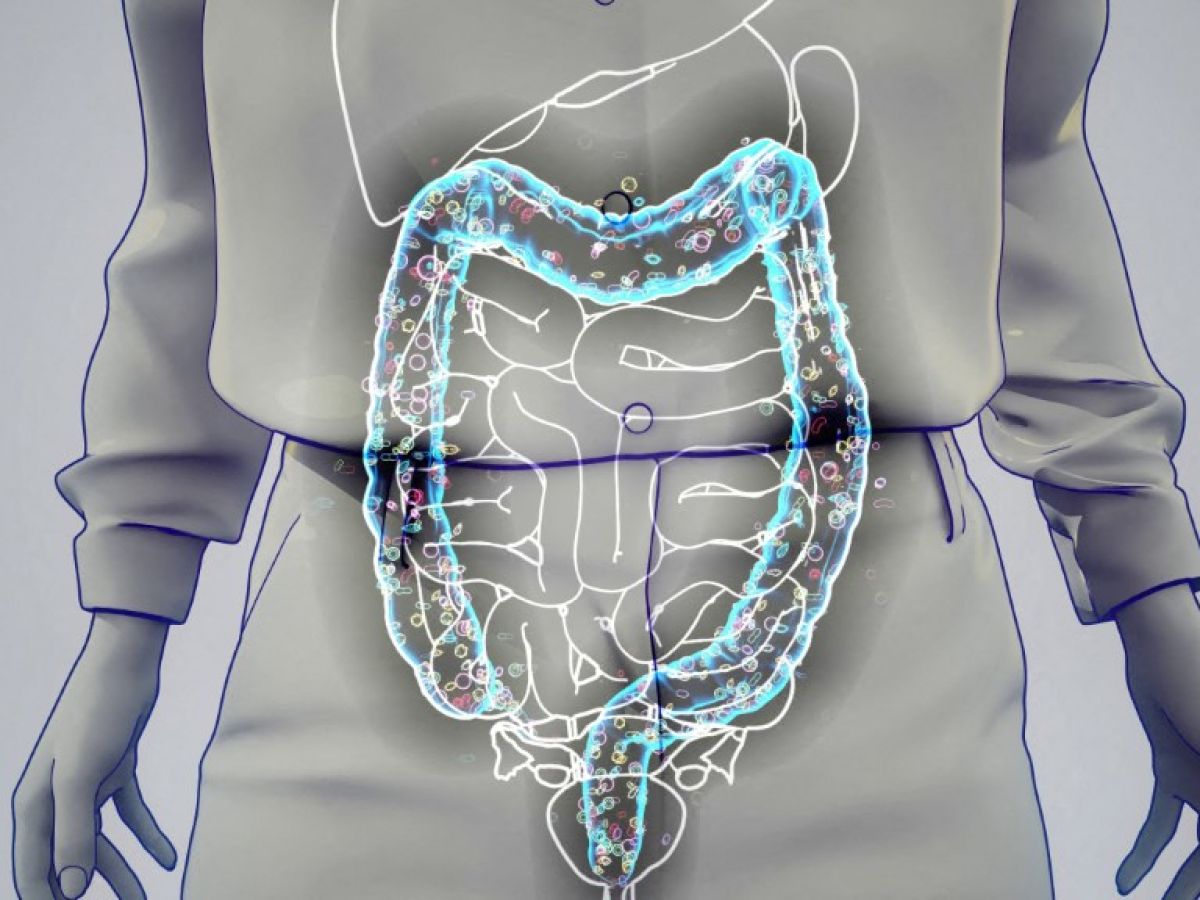
The human microbiota is a living and complex organ, constantly evolving and functioning continuously, producing metabolites day and night. However, very little is known about this real-time production and how our diet influences our bacteria. One way to learn more about this activity would be to measure the volume of flatulence produced. But currently, it is impossible to objectively and precisely document such daily production.
To do this, researchers at the University of Maryland (USA) have designed "smart underwear", a small device that clips onto underwear and continuously measures the amount of hydrogen released by bacterial production in the intestines.
About thirty farts a day

Nineteen healthy adults experimented with the procedure for an average of six days. The first results were published in the journal Biosensors and Bioelectronics: Studies have shown that humans flatulence much more than previous research indicated. This is because such measurements are not easy to conduct. Previous studies relied on much more invasive techniques performed on a small number of subjects for a limited time during the day, or on questionnaires that were necessarily incomplete since they were based on participants' self-reported experiences.
However, two people can emit the same amount of gas and experience it differently depending on their visceral sensitivity. In short, you can fart without necessarily realizing it. Furthermore, this research specifically excluded nocturnal flatulence and the influence of circadian rhythms. This meant that previous findings only reached about fifteen farts per day. The researchers' "smart underwear" measured twice as many, an average of 32. The number varied from person to person, from 4 per day up to a maximum of 59, or 14 times more. This demonstrates the extreme heterogeneity of the process.

The "smart underwear" designed by researchers. Credits: University of Maryland
Read also Under the influence of flatulence, bacteria in the gut microbiota produce sex hormones
A large fart is the size of two cans of soda.
However anecdotal and trivial it may seem, the experiment is important because it helps to more precisely characterize the activity of our gut bacteria. Indeed, while the identity of our microbiomes and the different species of bacteria that inhabit them is becoming increasingly well understood, this only provides a snapshot of the populations present and reveals nothing about their behaviors and activities. To understand how these activities influence our health, continuous monitoring is essential to accurately assess the fermentation of our food by the gut microbiota. We know only that the volume of a fart can reach nearly 70 centiliters, or two cans of soda, and that, according to a 2012 Spanish study published in the journal Gut microbiota, It is the flageolet beans that produce the most ferments and therefore cause the most flatulence…
Furthermore, farts are not solely an expression of our internal fermentations. A quarter of them result from aerophagia and the bloodstream.
Read alsoThe French Gut project: it's the children's turn to reveal the secrets of their gut microbiota
Hydrogen, nitrogen, methane, and sulfur
The University of Maryland team's study will be more precise than any conducted to date, but will still be incomplete since it only considers hydrogen, while a fart also contains carbon dioxide, nitrogen, and sometimes methane. Not to mention sulfur compounds such as methanethiol, hydrogen sulfide, and dimethyl sulfides, which are responsible for the foul odor.
To gain a more precise understanding of our emissions, the laboratory has just launched an "Atlas of Human Flatulence" (Human Flatus AtlasCurrently limited to Americans, the project aims to recruit hundreds of participants to better characterize their gas production. Beyond "normal" individuals, two groups are specifically targeted: people who consume a lot of fiber and produce little flatulence, and intensive hydrogen producers—those who pass a lot of gas. In addition to measurements taken by "smart underwear," researchers will collect fecal samples to analyze the gut microbiota and compare the results.
 English
  French