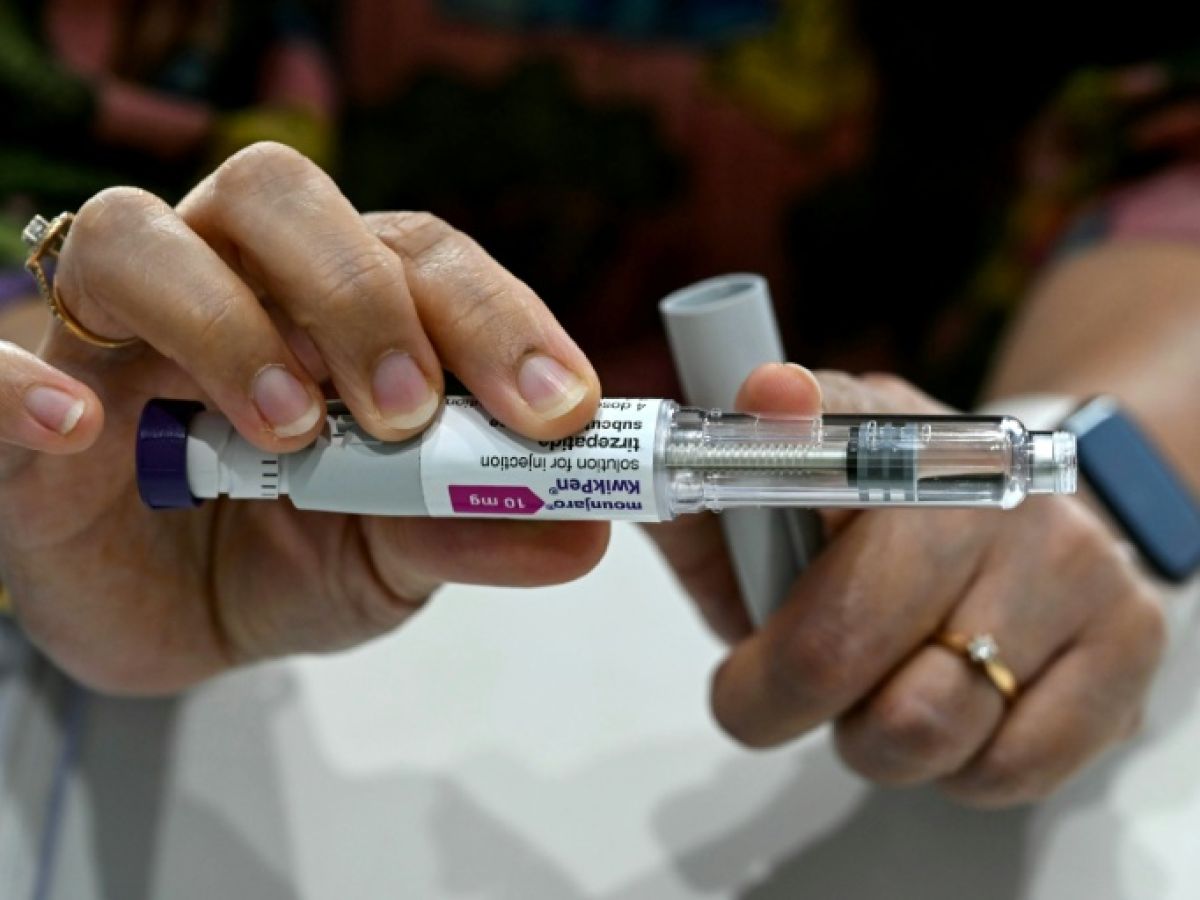
Dr. Nadeem Rais has been preparing for this for months. On Friday, he is sure that the expiration of the patent protecting a famous anti-obesity drug will send a flood of patients rushing to his clinic in Mumbai, western India, eager to take advantage of its cheap, generic version "made in India".
"Today we treat 70 to 80 patients. When generics come out and prices fall, we will easily have up to 200," predicts the endocrinologist.
The name of this molecule that looks like a magic potion? Semaglutide. Manufactured by the Danish laboratory Novo Nordisk and sold under the name Wegovy in its version against obesity, it has risen in just a few years to the list of the best-selling drugs in the world.
The market it shares with tirzepatide from the American laboratory Eli Lilly – another GLP-1-based treatment that promotes weight loss by mimicking a natural hormone that provides a feeling of satiety – is estimated at several billion dollars.

The patent protecting semaglutide expires this Friday, March 20, in China and India. Other countries will follow this year: Brazil, Turkey, South Africa, and Canada. Europe and Japan will follow in 2031, and then the United States in 2032.
Indian laboratories, masters in the art of generic medicine along with their Chinese competitors, are in the running.
Four companies are ready to quickly launch their drug, according to marketing authorization documents reviewed by AFP. One of them, Zydus Lifesciences, could do so as early as this weekend.
– “More sedentary” –
“We know that more than 50 brands will be available,” anticipates Sheetal Sapale, vice president of the research firm Pharmarak.
Even though, according to the World Health Organization (WHO), India alone provides a third of the world's malnourished people, its economic boom has considerably increased its middle class, and with it have evolved its lifestyle and eating habits.
Statistics today estimate that 241% of women and 231% of men in India are "overweight or obese".
“When people start earning money here, they become more sedentary,” observes surgeon Sanjay Borude. “In other countries, the richer you are, the more active you are and the more you take care of your health. It’s the complete opposite in India.”
The revenue of the Indian market for anti-obesity drugs has increased tenfold in the last five years, reaching $153 million according to industry estimates. It is expected to reach half a billion dollars by 2030.
Eli Lilly's anti-obesity drug Mounjaro even became the best-selling drug across all categories in October, surpassing the very popular antibiotic Augmentin.
But its price puts it largely out of reach for the average Indian.
Swati Pradhan, who runs an anti-obesity clinic in Mumbai, estimates its monthly cost—depending on the dosage—at 15,000 to 22,200 rupees ($161 to $236). “The price can be a deterrent,” she admits. “Especially for those who are hesitant to take it and are looking for cheaper options.”
– Global Market –
Although local generic manufacturers remain discreet about their prices, specialists predict a sharp drop, down to just 5,000 rupees for a monthly treatment.
But Indian laboratories are already looking beyond the market, however gigantic, of the world's most populous country – nearly 1.5 billion inhabitants. The lifting of patents also opens doors to many other promising countries.
"Low-cost semaglutide will expand the market for the most effective treatments, particularly in middle-income countries where prices have previously been a barrier," notes Simon Barquera, president of the World Obesity Foundation.
Already a major supplier of generic drugs to Africa, the Indian pharmaceutical industry intends to maintain its position. One of its leading companies, Dr. Reddy's Laboratories, has announced its intention to sell its semaglutide in Canada as early as May.
"These (Indian) laboratories are well positioned to take a good share of the market from those who designed the drugs," predicts Sheetal Sapale of Pharmarak.
Far from these commercial considerations, Sukant Mangal, 46, hopes first and foremost that many of his fellow citizens will finally be able to access the treatment that allowed him to lose nearly 15 kilos in eight months and changed his life.
“I know a couple who started taking it,” he says. “But when they realized they would have to spend 15,000 to 20,000 rupees a month (…) they stopped. It would have been much simpler for them if it were cheaper.”
 English
  French