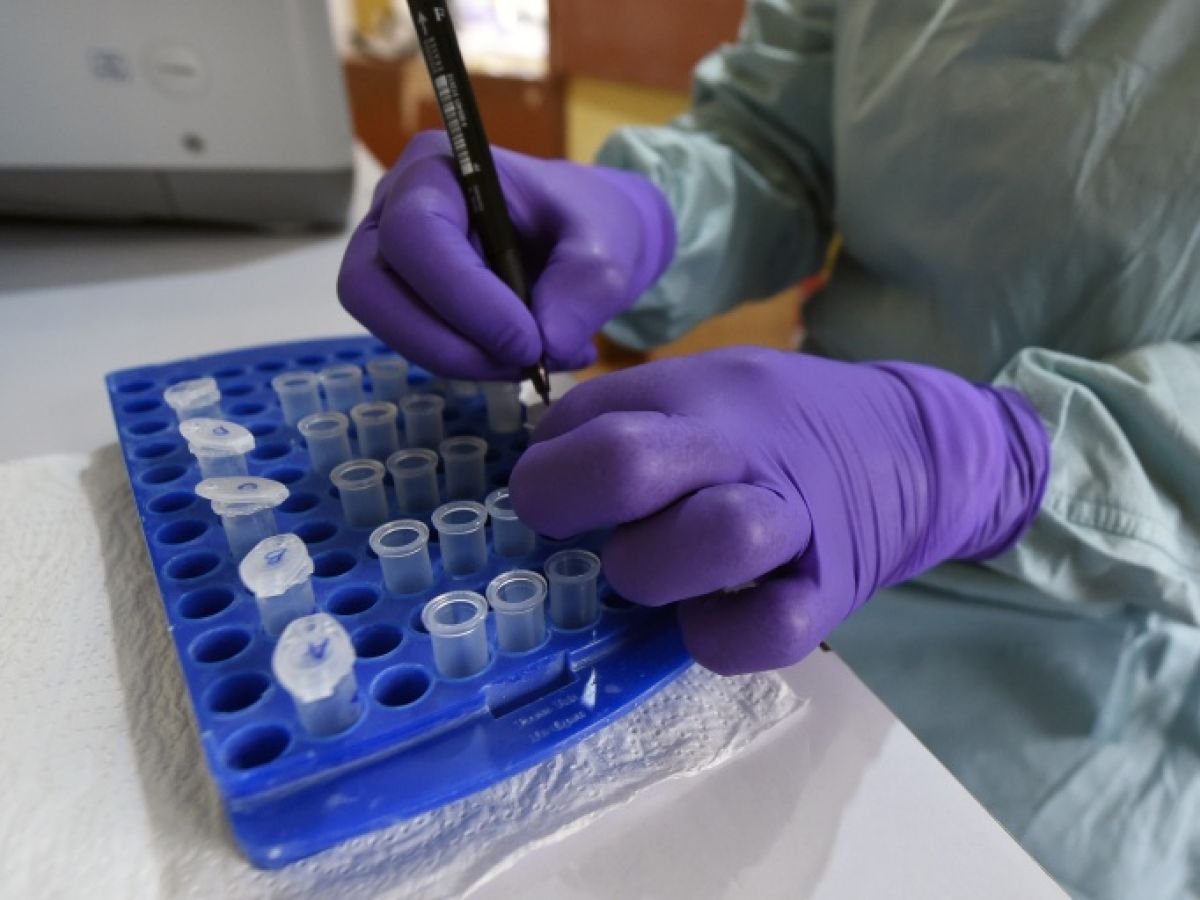
Nigeria is the fourth African country this year to be affected by the Bundibugyo strain of Ebola virus, which has been ravaging the DRC for five months, reviving memories of the fierce battle fought by Africa's most populous country against this disease twelve years ago.
The Democratic Republic of Congo (DRC) has been gripped since May by the 17th Ebola virus disease epidemic in its history, which in a few months has become the deadliest ever known in this vast Central African country.
This deadly viral hemorrhagic fever has since spread to several countries on the continent, including Uganda, which is neighboring the DRC and had recorded 20 cases and two deaths before declaring the epidemic eradicated in the country at the end of August.
Kenya recently reported its ninth case. The head of the African Union's health agency (Africa CDC), Jean Kaseya, warned on Tuesday against "« an extremely serious threat »and called for international mobilization.
The Africa CDC has convened a high-level meeting of African health ministers next Wednesday in order to "« to assess the situation, strengthen cross-border coordination, accelerate support to affected countries and consolidate the preparedness of the entire continent“.
Bundibugyo
In Nigeria, authorities announced the first case of Ebola on Tuesday: a diplomat who arrived in Abuja on a flight from Uganda. They also identified 44 contact cases.
On Wednesday, they confirmed that this case is of the Bundibugyo strain, the same one currently affecting the DRC.
“ We performed three levels of testing, all molecular. The strain was Bundibugyo«" said Olajumoke Babatunde, director of public health laboratory services at the Nigeria Centre for Disease Control and Prevention (NCDC), following an emergency meeting Wednesday morning.
Another official clarified that it was "« from a diplomat »whose condition worsened to the point of« multiple organ failure“.
She arrived in Nigeria on October 3 on a flight from Uganda, the NCDC said.
On Tuesday, the Nigerian Minister of Health, Ali Pate, explained that she had been admitted to a private hospital in the capital, Abuja.« where she was cared for for several days before the diagnosis was confirmed“.
The World Health Organization (WHO) said in a statement that infection prevention and control measures were "strengthened" at the upscale private hospital where the patient is admitted.
A clinical trial is underway, but to date there is no vaccine or specific treatment against the Bundibugyo virus.
Read alsoFirst case and first death of Ebola recorded in Kenya
«"A shock"»
To date, the epidemic has passed the 9,000 case mark, with 4,381 deaths, according to a report from Congolese health authorities, and cases have been recorded in several other countries.
Nigeria faced Ebola twelve years ago, in 2014, when the epidemic was raging in West Africa. This highly contagious disease caused more than 11,000 deaths in the region between the end of 2013 and 2016.
A first case was reported in Lagos, the sprawling economic capital with 20 million inhabitants at the time, raising fears of a rapid spread of the disease and a "« apocalyptic urban epidemic«", according to the terms of the World Health Organization (WHO).
But thanks to the rapid response of the authorities and the technical assistance of international organizations present in Nigeria, the epidemic was quickly brought under control and lasted only 21 days with only seven deaths and 19 people infected.
“ It was a real shock when we heard the news yesterday.«" Anthony Ojogho, a 42-year-old civil servant, told AFP on the streets of Abuja Wednesday morning, expressing confidence in the country's ability to« to stem the spread of the virus“.
Denis Agbo, a 56-year-old lawyer, called for the establishment of a "« awareness campaign within society, in every city, in every state“.
“ The federal government and local authorities must mobilize.«,” added Kayode Lukman, a retiree.
 English
 French