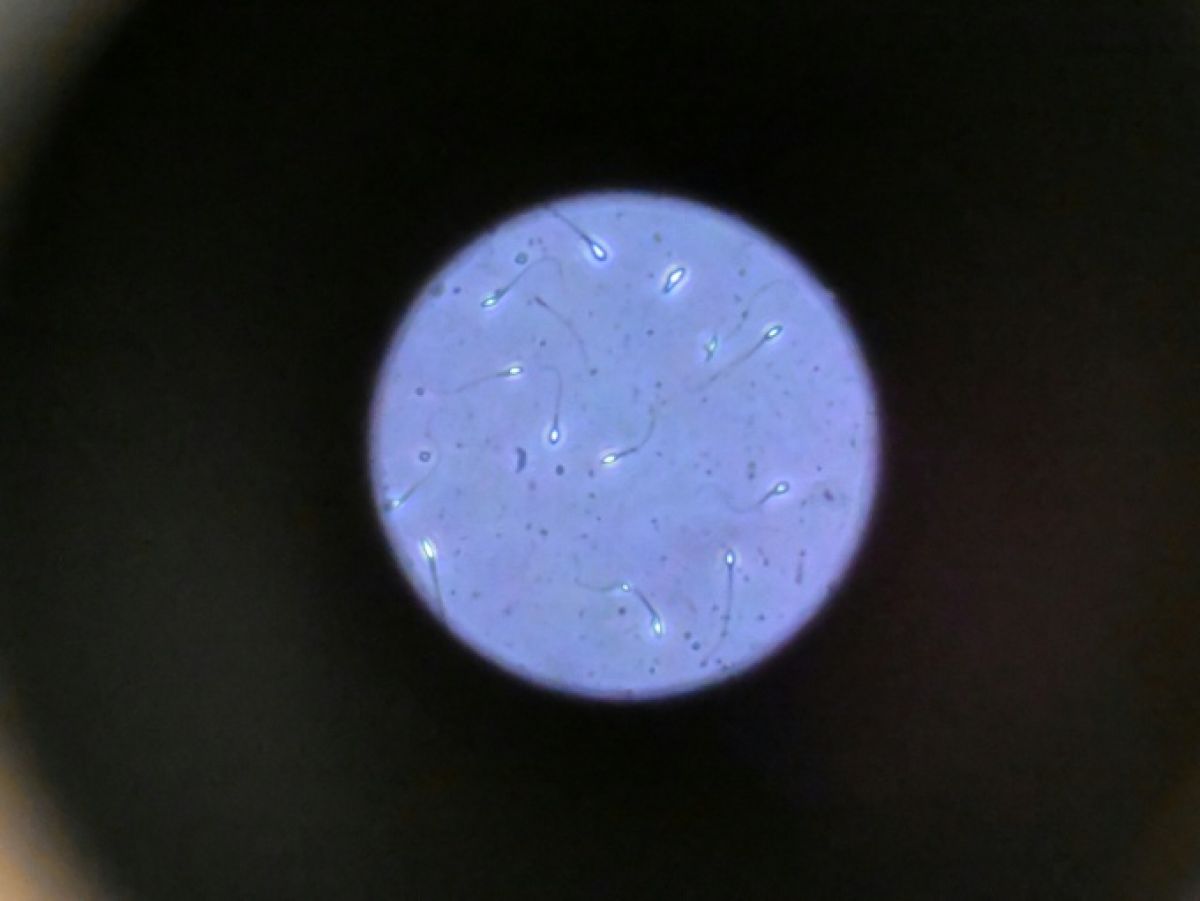
In space, sperm have difficulty finding their way to the egg due to microgravity, which also disrupts embryo development, according to a study published on March 26, 2026 in Communications Biology.
While NASA aims to build a lunar base in the coming years and eventually send manned missions to Mars, scientists are studying how difficult it might be to reproduce aboard spacecraft or on other planets.

One of the difficulties lies in the fact that the sperm is no longer pulled downwards by Earth's gravity. Sperm must actively find their way to the egg, and this study is the first to test their ability to do so under conditions similar to those found in space." Nicole McPherson, lead author of the study and researcher at the University of Adelaide (Australia), explained to AFP.
His team used a plastic chamber mimicking the female genitalia, which served as their " miniature obstacle course" . " Think of it like a tiny race track… The sperm were introduced at one end and had to swim to the other end." she describes.
Elimination of the weakest

Researchers successively tested mouse and human sperm in this device, which was placed in a constantly rotating apparatus to simulate microgravity. The gametes were approximately 50% less efficient at navigating this path than under Earth's gravity. This equates to a 30% decrease in the successful fertilization rate, according to the study's results.
Sperm that successfully navigated the course appeared to produce higher-quality embryos. It seems that the stress associated with microgravity acted as a " filtered eliminating the weakest and leaving only the best performers in the running", which could prove to be" beneficial", according to Ms. McPherson.
However, a more serious problem arose within twenty-four hours of fertilization. The results took a dramatic turn, with fewer embryos forming. And those that remained were of lower quality.", notes the researcher. Microgravity" It may not be the insurmountable obstacle we feared, but protecting embryos from weightlessness during those critical first hours will likely be essential for reproduction in space." , says Ms. McPherson.
However, much more research will be needed to understand how reproduction works in space, fertilization being only one step. a small piece of a very large and complex puzzle" she adds. " We are still a long way from seeing the first baby in space. »!
 English
  French