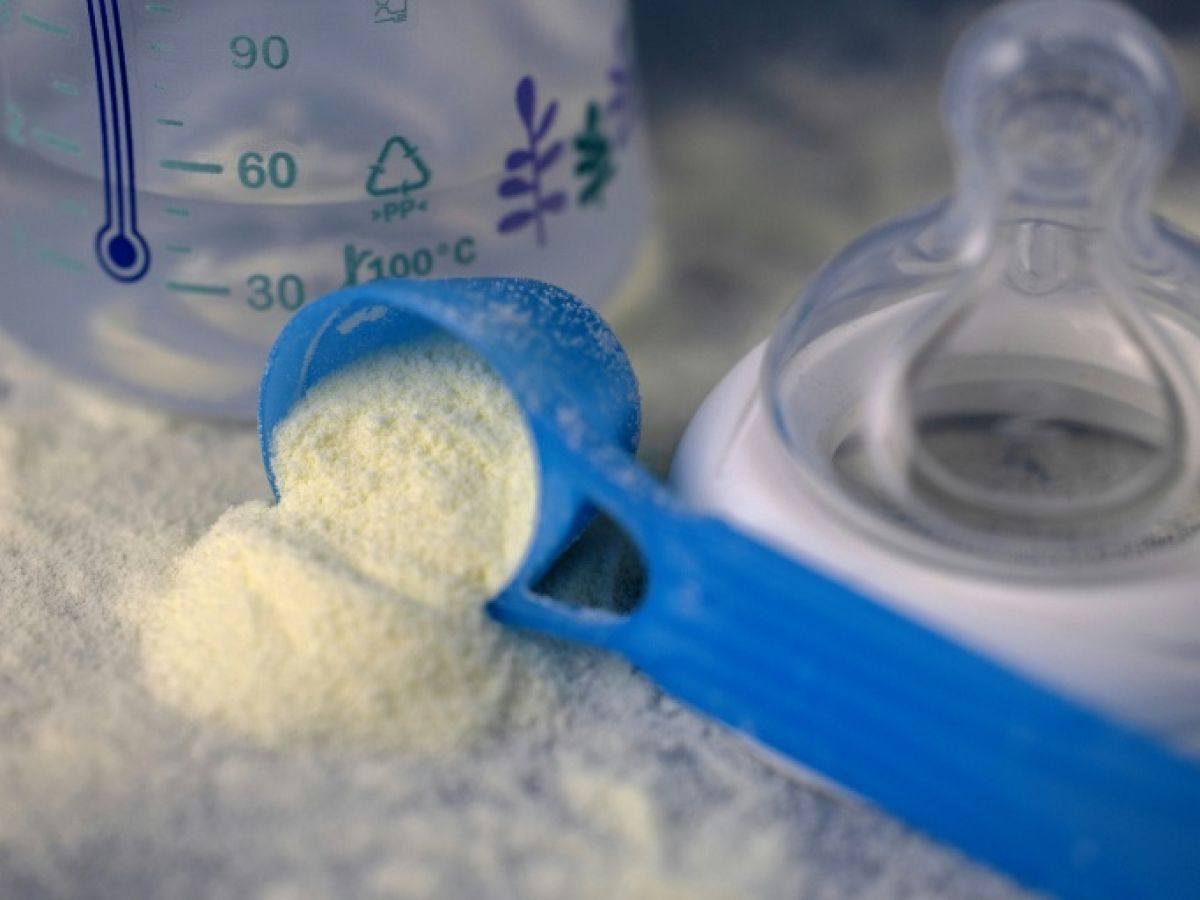
The cereulide toxin, at the heart of the current wave of infant formula recalls, has for the first time been identified in a French baby who was hospitalized after consuming an implicated product, the Ministry of Health announced on Friday.
The Ministry of Health has received a "first result of stool analysis positive for cereulide toxin", reports the Directorate General of Health, confirming information from the Radio France investigation unit but specifying that this did not allow them to conclude a cause-and-effect relationship.

The infant formula affair began in December, with Nestlé first recalling dozens of batches in some sixty countries because of the potential presence of cereulide, a toxin that can cause dangerous vomiting in a newborn.
Since then, a cascade of similar recalls has taken place worldwide by manufacturers such as Danone or Lactalis, but also by smaller players in this rapidly growing market.
Three deaths have been reported among babies who consumed recalled milk in France, the only European country in this situation, along with about ten hospitalizations. However, no causal link has yet been established, with French health authorities having already warned that it could be difficult to determine such a relationship.
The identification of cereulide in a French baby, after consumption of recalled milk, nevertheless marks a first, and constitutes a potential indication pointing towards poisoning.
"This result confirms that the child in question was exposed to this toxin," the presence of which "is likely to explain the observed symptoms," the ministry acknowledges, while refusing to make a definitive determination regarding "cause." This "is a matter for the competent experts, particularly the healthcare professionals who treated the child as well as the toxicology specialists involved in the investigations," it asserts.
The ministry is not releasing details of the case. According to Radio France, it involves a baby hospitalized overnight in early February in Montpellier who consumed Gallia (Danone) milk.
Abroad, the presence of cereulide had already been reported about ten days ago in Belgium in eight infants, all of whom only showed mild symptoms.
The analyses carried out in connection with this case are centralized in Belgium. France, in particular, sends samples taken from French babies to the Belgian public health laboratory, as there is no laboratory within its territory authorized to detect this toxin at the levels identified as risky.
 English
  French