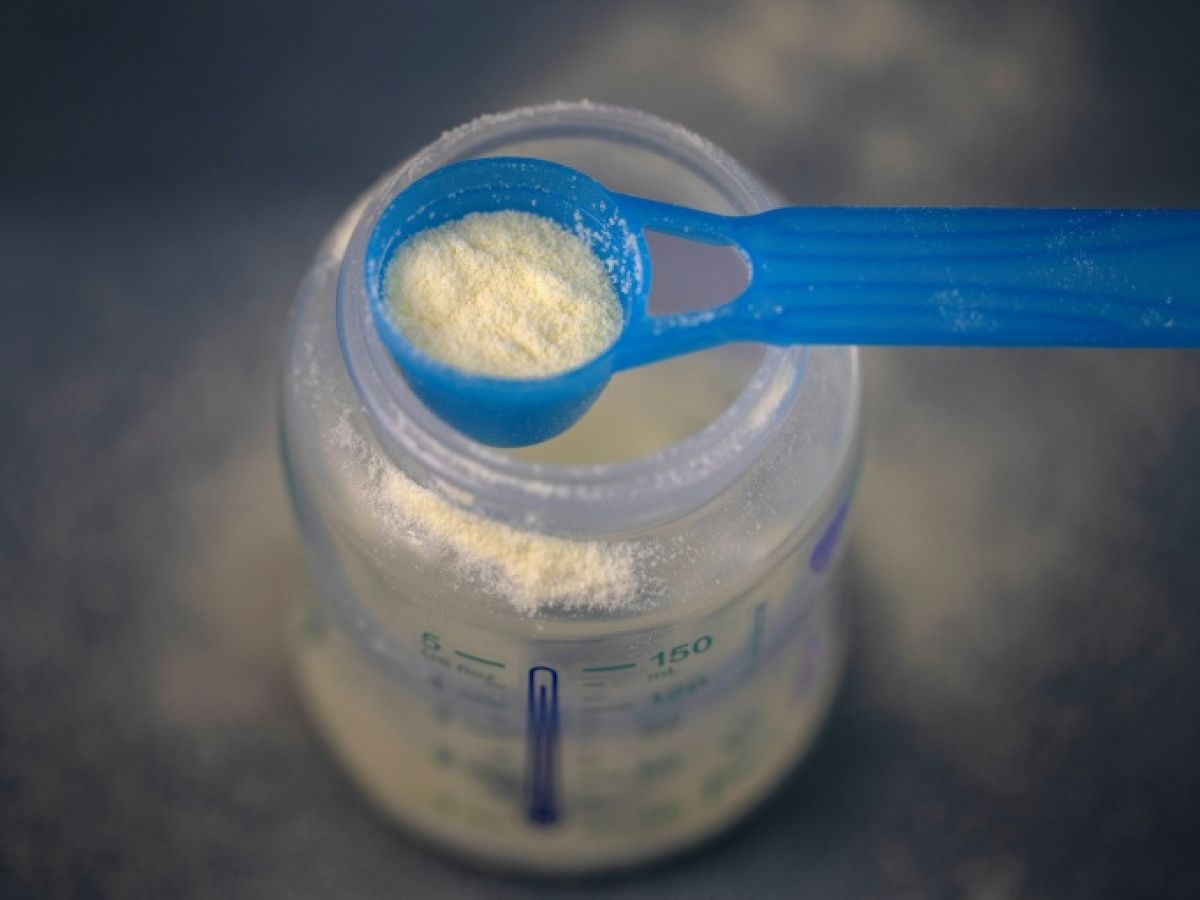
Did the French state and infant formula manufacturers do enough to protect babies' health during the wave of recalls at the beginning of the year? A mission, bringing together several members of parliament, begins its work on the subject on Tuesday.
The aim of this "flash" mission will be to assess "the responsibility of multinationals" and "the strategy of the State" for conclusions to be delivered by June, MP Mathilde Hignet (LFI-NFP), who will be co-rapporteur with Michel Lauzzana (Renaissance), explained to AFP in early March.
The infant formula scandal began in December with a recall of cans by Nestlé, then escalated in early 2026 when the food giant launched much larger recalls in some sixty countries. The cause was the potential presence of cereulide, a toxin that can cause dangerous vomiting in infants.
Soon, a cascade of similar recalls took place worldwide, initiated by major players like Danone and Lactalis, but also by smaller companies. The common thread was an ingredient – an oil rich in arachidonic acid – supplied by the same Chinese subcontractor.

The health consequences remain uncertain to date. In Belgium alone, a link has been established between the consumption of contaminated milk and the hospitalization of several babies, all of whom recovered after experiencing mild symptoms.
In France, health authorities are investigating two deaths of babies who consumed recalled milk – in a third fatal case, the milk was ruled out in early March – but no causal link has been established at this time.
However, cereulide was indeed detected in the stool of a baby hospitalized in France. According to health authorities, this is not enough to prove a link, a viewpoint different from their Belgian counterparts for whom the presence of the toxin provides sufficient evidence.
– Legal fronts –

In this context, the parliamentary mission, created at the initiative of the social affairs committee, will study the merits of several accusations made against the State and industrialists by families and associations.
The grievances are essentially threefold. First, the manufacturers allegedly took too long to initiate the recalls, and the government supposedly relied excessively on their goodwill. However, the authorities reiterated that this was standard procedure in such cases.
Secondly, France is being criticized for insufficient analytical capacity. Samples taken from French babies had to be sent to Belgium, which was able to detect cereulide at levels deemed suspicious.
Finally, criticisms focus on the recommendations made to healthcare professionals, particularly in hospitals, regarding the possibility of cereulide poisoning. According to several families and associations, these recommendations were issued too late and based on overly broad criteria.
For the time being, the Council of State, seized in summary proceedings by a group of families – Intox'Alim – has ruled in favour of the State, considering that its policy had not harmed the life and health of the babies.
But other legal fronts are open, with multiple complaints by associations and NGOs, as well as investigations opened by the prosecutor's office into the deaths of infants.
In addition to this judicial aspect, there is now the flash mission. Its two co-pilots will conduct hearings, entirely behind closed doors – this is "the principle" for this type of work, where only the final report is "public", points out a collaborator of Ms Hignet.
The hearings begin on Tuesday with those of associations and representatives of families. On Wednesday, representatives of the State – the Directorates General of Health (DGS) and Food (DGAL) as well as the French Agency for Food, Environmental and Occupational Health & Safety (Anses) responsible for conducting the analyses – will follow, and on Thursday, several agencies of the European Union (EU) will also hear from them.
The turn of the manufacturers, among whom only Nestlé has so far publicly communicated an exhaustive list of the products concerned, will come on Tuesday the 31st with Nestlé, Danone, Lactalis and Vitagermine already confirmed.
 English
  French