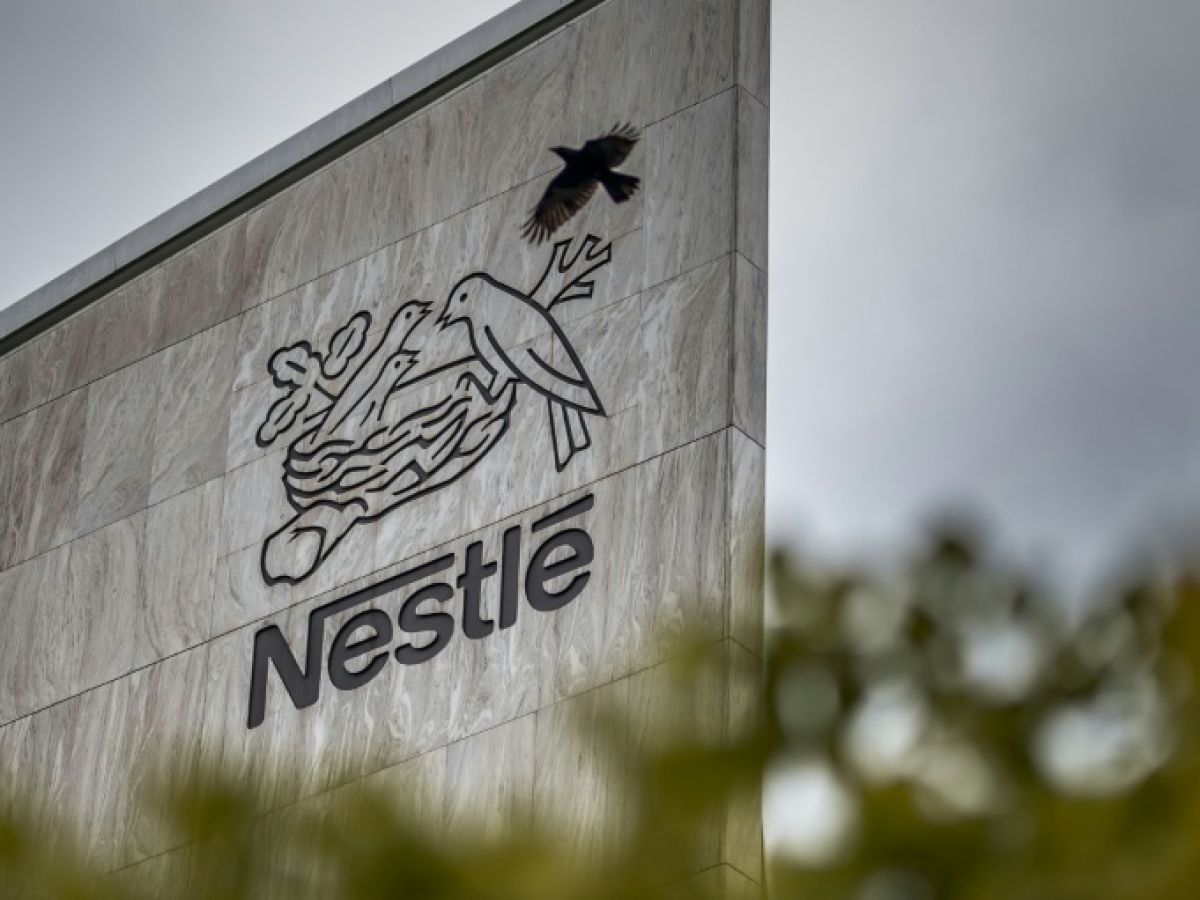
Two separate investigations have been opened in Angers and Bordeaux following the recent deaths of two infants who consumed infant milk recalled by Nestlé due to "possible contamination" by a substance of bacterial origin, without any "causal link" established at this time, according to the authorities.
A first suspicious death, mentioned without specific location on Tuesday by one of the services of the Ministry of Health which has launched health investigations, concerns a baby born on December 25 and died on January 8 at the Haut Lévêque hospital in Pessac, in the suburbs of Bordeaux.

"Once out of the maternity ward, the infant was notably fed, between January 5 and 7, 2026, with Guigoz brand artificial milk which had been recalled for possible contamination by a Bacillus Cereus bacterium," Renaud Gaudeul, the public prosecutor in Bordeaux, told AFP.
In Angers, "two days ago", the mother of a 27-day-old baby girl, who died on December 23, contacted investigators again to mention a box of Guigoz milk previously given to her baby, the city's prosecutor, Eric Brouillard, indicated Thursday evening.

"It's a serious lead" but it is "far too early to say that it's the main lead," stressed Mr. Brouillard, who has "urgently" contacted a laboratory.
On January 5, Nestlé, the Swiss food giant, initiated a large-scale recall of infant milks from the Guigoz and Nidal brands due to the potential presence of "cereulide" in these products, which are nevertheless highly controlled.
This toxic component, produced under certain conditions by a family of bacteria, Bacillus cereus, can cause significant vomiting within hours of consumption.
– Large-scale health alert –
In Bordeaux, the baby victim was taken to the hospital urgently on January 7, "the mother having noticed digestive problems in the child," according to the prosecutor, Renaud Gaudeul.
The first results of analyses carried out by the investigation "established the absence of contamination by the Bacillus Cereus bacterium", but "additional analyses" have been requested to find the cereulide toxin, added Mr. Gaudeul later in the evening.
The results of these new, “longer” analyses “are not yet known,” he specified.
"At this stage, no causal link has been established between the consumption of the infant milks in question and the occurrence of symptoms in infants," they argued.
– Chinese supplier –
"The conjunction of the two things has not been established, that is what the investigation will determine," confirmed the Minister of Agriculture, Annie Genevard, on a visit to the Manche region, saying she was following the case "with great vigilance."
"It is the responsibility of companies to carry out checks and recall contaminated batches," she insisted.
The recall initiated by Nestlé concerns around sixty countries including France, and the head of the Swiss giant, Philipp Navratil, apologized in mid-January, while the group is accused by some NGOs of having been slow to take action.
On Wednesday, the French group Lactalis also announced a large-scale recall of infant formula in several countries, including France, China, Australia and Mexico.
According to the Ministries of Agriculture and Health, this withdrawal, like that of Nestlé, is linked to an ingredient suspected of being the source of the contamination, "an oil rich in arachidonic acid useful for the proper development of babies, produced by a Chinese supplier."
"To date, all infant formula manufacturers worldwide, having used arachidonic acid-rich oil from this supplier, must conduct a risk analysis to assess the safety of each batch," they added.
The NGO Foodwatch announced on Wednesday that it is filing a complaint against persons unknown to "shed light" on these recalls, stating that "millions of infants worldwide were affected."
pgr-jdy-mdz-aro-kal-jed-mb-tsq/gf/bfi
 English
  French