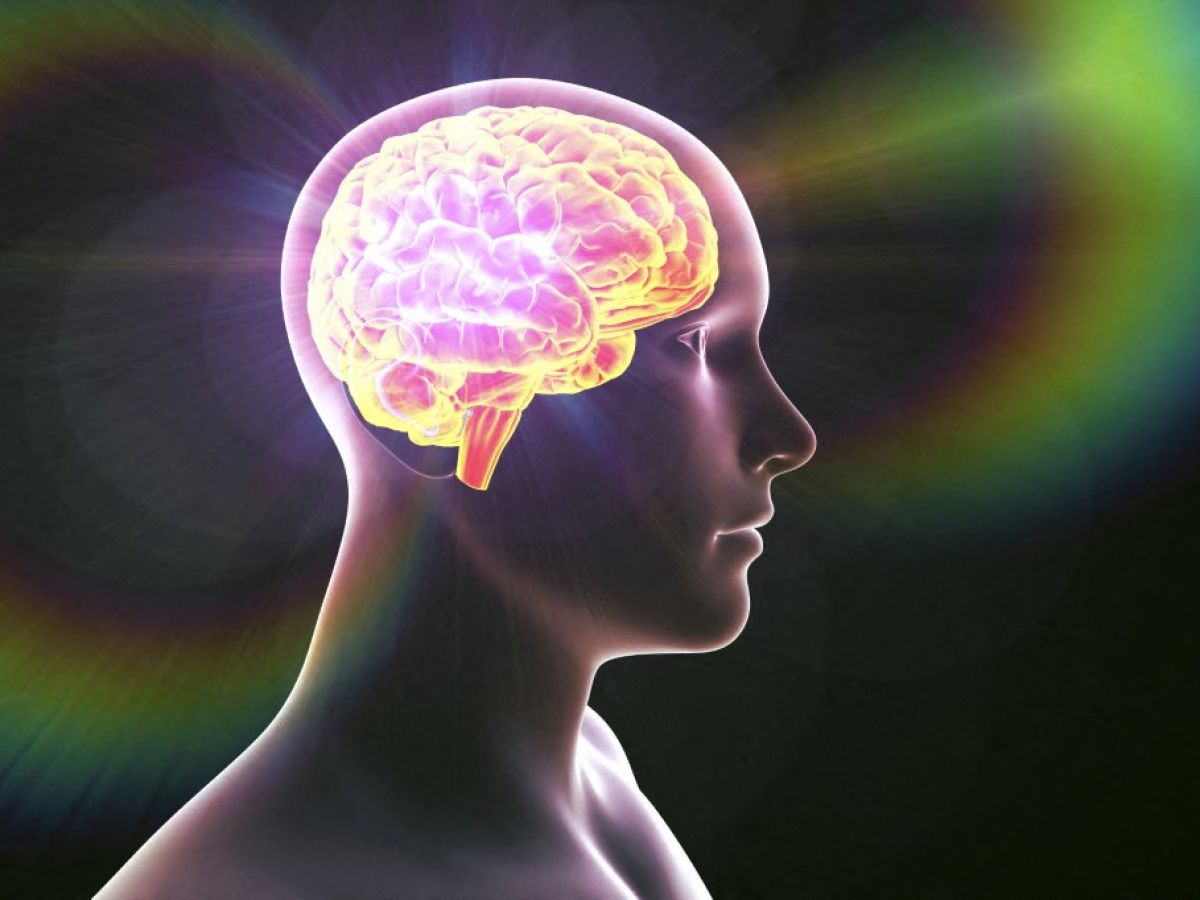
"It's better to think of nothing than not to think at all." sang Serge Gainsbourg in 1965. Sixty years later, a Franco-Australian team has just demonstrated in a study published in the journal Proceedings of the National Academy of Sciences that the act of not thinking about anything, the "mind blanking" consists of a real interruption of the flow of thoughts and even has a very particular brain signature.
Researchers from the Brain Institute (Paris) and Monash University (Melbourne) have indeed just proven that this state corresponds to a specific mental state that can be correlated with neurophysiological and behavioral markers. “ "Mind blanking" is defined as the complete absence of any mental content that one can describe to others. No images in one's head, no catchy music, no obsessive thoughts… nothing. ! explains Esteban Munoz-Musat, one of the study's authors, in the press release from the Brain Institute.
A very common condition after intense and prolonged cognitive effort
Often actively sought by practitioners of meditation or mindfulness, this state is also very common after intense and prolonged cognitive effort (a university exam), in cases of sleep deprivation, but also in particularly anxious individuals and those with attention deficit hyperactivity disorder (ADHD). (ADHD). Hence the idea here to study more closely this condition which has long intrigued the neuroscientific community.
Esteban Munoz-Musat, Lionel Naccache, Thomas Andrillon of Picniclab (Paris) and their Australian colleagues therefore recruited 62 healthy volunteers. All were subjected to cognitive exercises requiring prolonged concentration, long and tedious tasks, during which their mental activity was recorded by high-density electroencephalography (hdEEG) and their behavior, carefully monitored, through questionnaires.

Read alsoLearning, but without a brain or neurons
The results indicate that the episodes of "mental blanking" reported by the participants are all associated with very specific neurophysiological markers and behavioral patterns.
The researchers have indeed identified reduced connectivity between different areas of distant neural networks, as well as disrupted processing of visual information, specifically with regard to the so-called "visual processing" latethat is, within 250 to 300 milliseconds after exposure to a stimulus. However, it is precisely this time window that is considered in some models as the conscious part of visual processing. In addition, the subjects appeared slightly drowsy, slower, and made more mistakes, the researchers noted.
"Between 5 and 20 % of waking time"
This leads another scientist in the group, Thomas Andrillon, to say: This new data supports an increasingly prevalent idea: being awake does not necessarily mean being aware of something! "Mind blanking" corresponds to a genuine interruption of the flow of thoughts..
According to the researchers' hypotheses, these moments of "mental blankness" may correspond to an inverse experience of lucid dreamThis refers to a transient loss of consciousness occurring during the waking phase. This is undoubtedly an extremely common event, during which certain brain regions enter a form of sleep. We estimate that it represents between 5 and 20% of waking time, although there are large differences between individuals., continues Thomas Andrillon.
Read alsoBrain implant can decode thoughts
This work has also shown that "mind blanking" is distinct from two other mental states such as intense concentration on a task ("on-task") and mind wandering, those moments of reverie during which mental activity neglects information from the environment and focuses on thoughts unrelated to the place, people or events present.
While this work represents a further step in the understanding of consciousness and attention, it could also in the future allow us to know whether moments of brain pause could one day be considered a diagnostic marker of certain neurological or psychiatric disorders.
 English
  French