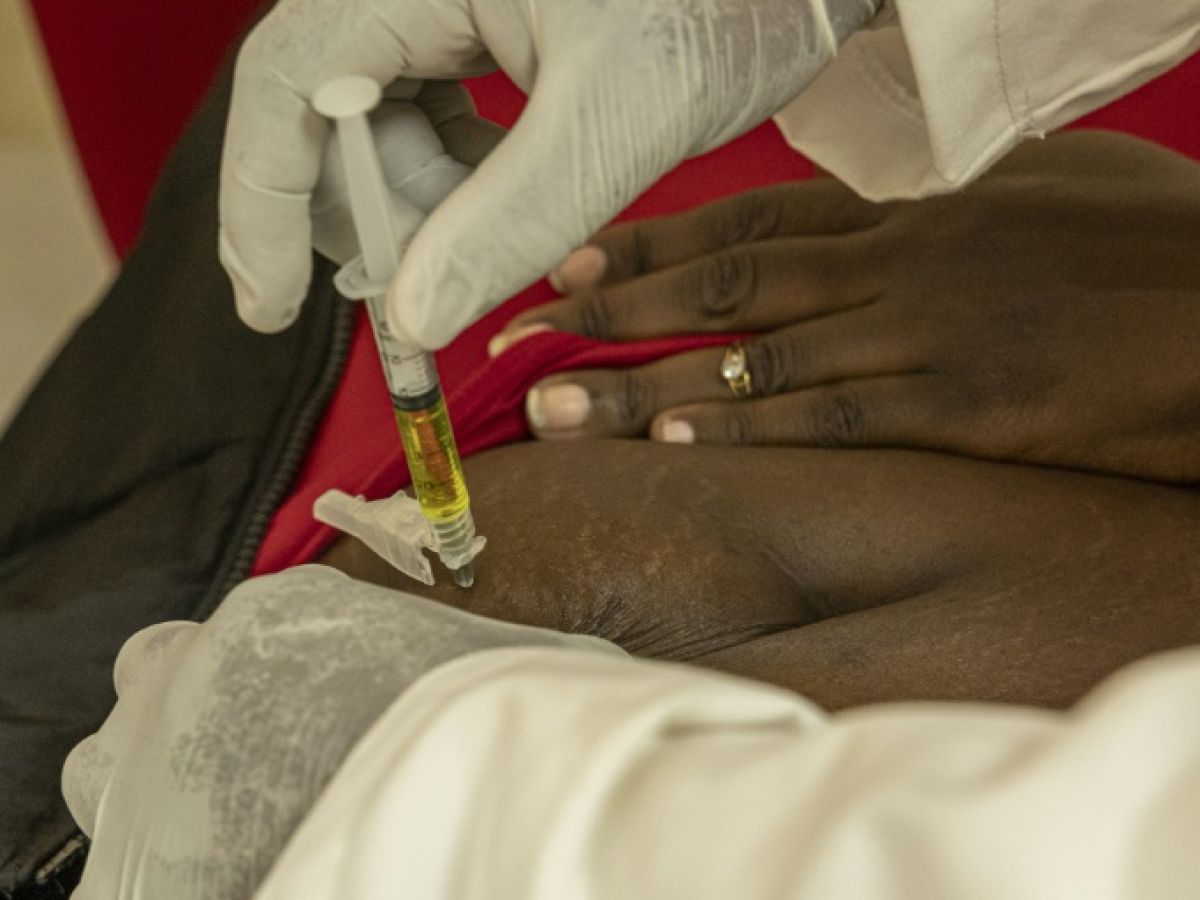
Kenya began administering its first doses of a promising new HIV prevention treatment in a densely populated area of the capital Nairobi on Thursday, an official source said.
Lenacapavir is an injectable HIV treatment that only needs to be administered twice a year. According to experts, it represents a huge improvement over treatments requiring a daily pill.
"Today is a moment of hope for thousands of Kenyan families," said Health Minister Aden Duale at a public event.
Kenya is one of nine African countries selected last year to introduce lenacapavir, which has been deployed in South Africa, Eswatini and Zambia since December.
Extremely expensive (more than $28,000 – €23,700 – per patient per year in the United States, according to UNAIDS, which had asked Gilead to "lower its price" in July), the treatment will cost only 7,800 Kenyan shillings (€50) per person per year thanks to "an agreement negotiated with the manufacturer", according to Minister Duale.
Approximately 1.3 million people are living with HIV in Kenya, the majority of whom are 15-24 years old.
“Many of our young people are still at risk of infection (…), this innovation gives us renewed strength in our national fight against HIV,” hopes Mr. Duale, adding that the drug will be free for those who receive it.
Last week, Kenya received its first batch of 21,000 doses thanks to an agreement with the manufacturer of lenacapavir, Gilead Sciences, and the Global Fund to Fight AIDS.
Lenacapavir offers greater discretion compared to regular visits to health centers for treatment, explains Carol Njomo, a community health worker in the Kawangware district, where the first doses were administered.
"It's an extra layer of protection," rejoices Samson Mutua, 27, the first person to receive the injection.
Peace Lawrence, a 23-year-old sex worker, describes it as "a relief," as she often forgets to take pre-exposure prophylaxis (PrEP), a preventative treatment available in tablet form, requiring very frequent intake.
"Having sex with multiple partners always leaves me feeling apprehensive," she told AFP.
This deployment comes as African countries face cuts in global humanitarian aid, particularly from the United States, which have affected HIV/AIDS programs across the continent.
 English
  French