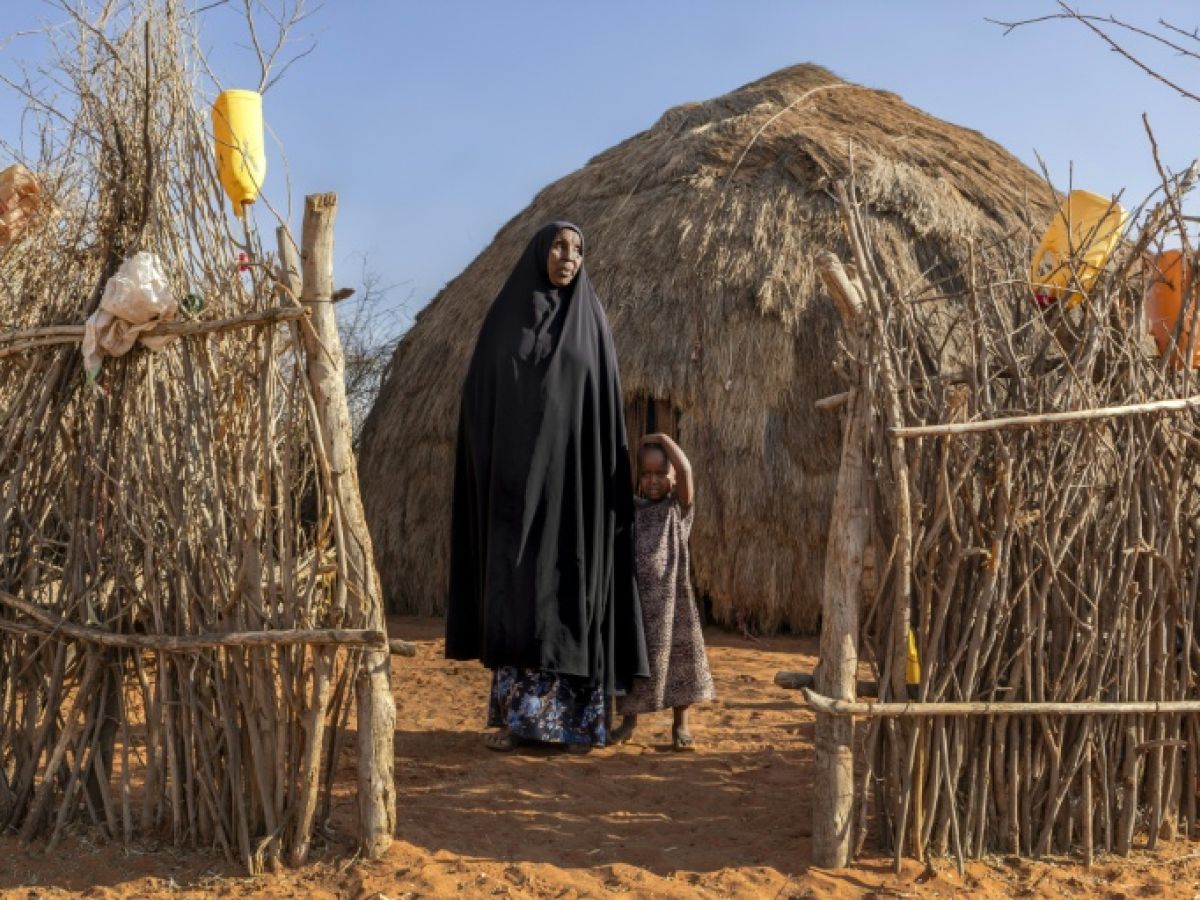
For nearly a year, a misdiagnosed case of kala-azar left Harada Hussein Abdirahman on the brink of death. Despite the ordeal she endured, the Kenyan woman can consider herself fortunate to have survived, as this little-known disease wreaks havoc in arid regions of Africa.
Kala-azar, another name for visceral leishmaniasis—meaning "black fever" in Hindi—is caused by a parasite transmitted by midges, resulting in fever, weight loss, and enlargement of the spleen and liver. After malaria, it is one of the deadliest parasitic diseases in the world. Without treatment, 951% of those infected die.

Harada Hussein Abdirahman, a 60-year-old grandmother, believes she was bitten while herding cattle in Mandera County, northeastern Kenya.
This territory, almost as large as Belgium and bordering Somalia and Ethiopia, is a major hotspot for the parasite. But it has only three facilities capable of treating kala-azar.
The woman in her sixties therefore had to rely first on a local pharmacist who, for a year, treated her for dengue and malaria.
"I thought I was going to die," she told AFP. "It's worse than any of the illnesses they thought I had."
After this long ordeal, Ms. Abdirahman was finally diagnosed with kala-azar. She lost some of her hearing due to the powerful treatments she subsequently had to undergo to get rid of it.
The World Health Organization (WHO) reports 50,000 to 90,000 cases of kala-azar worldwide each year, a figure that is likely an underestimate because it estimates that only 25,000 to 45,000 cases are actually reported to them. More than two-thirds of those infected are in East Africa.
– Endemic –
Kala-azar is spreading to areas of Kenya previously unaffected and is becoming endemic there, due in particular to climate change.

According to the Kenyan Ministry of Health, 3,577 cases of kala-azar were recorded in the country in 2025, more than double the previous year (1,575 cases). Kenyan authorities estimate that up to six million people are at risk in Kenya.
"Climate change is expanding the range of sandflies (the midges that carry the disease, editor's note) and increasing the risk of outbreaks in new areas," worries Dr. Cherinet Adera, a researcher at the Drugs for Neglected Diseases Initiative, an NGO, in Nairobi.
Numerous infections among workers at a quarry in Mandera last year led authorities to restrict movement at dusk and dawn, when sandflies are most active.
At least two of these workers died, according to their colleagues.
But Kenyan authorities are unable to say exactly how many people died during this outbreak, as most of the workers were not from the area. Many returned home for treatment and presumably died there.
"We didn't know about this strange disease that was killing our colleagues," says Evans Omondi, 34, who came from western Kenya, hundreds of kilometers from Mandera, to work in the quarry.
- " Fear " -
“We were very scared,” says Peter Otieno, another worker from western Kenya, who remembers how his infected colleagues were wasting away day by day.
Thirteen countries—six of them in Africa—account for 95% of kala-azar cases. In 2023, the most affected African countries adopted a framework in Nairobi aimed at eliminating the disease by 2030.
But "very few facilities" in Kenya "have the capacity to diagnose and treat the disease," Dr. Paul Kibati of the medical NGO Amref told AFP.
Health workers must also be trained in kala-azar, he continues, because errors in diagnosis and treatment can be serious, as the example of Harada Hussein Abdirahman demonstrates, or even fatal.
The final, and major, problem is that a patient can spend up to 30 days in the hospital before recovering, with a bill that can reach 100,000 Kenyan shillings (approximately 650 euros), excluding medication. This is an unaffordable sum for many residents of Mandera.
Kala-azar, whose damage is aggravated by malnutrition and a weakened immune system, "mainly affects the poorest," says Dr. Kibati.

The sandfly takes refuge in the cracks of poorly plastered mud houses, termite mounds, and crevices in the ground. The insect multiplies during the rainy season after a prolonged drought.
However, northeastern Kenya, as well as neighboring regions of Ethiopia and Somalia, have experienced a devastating drought in recent months.
The worst seems yet to come. "We expect more cases when the rains start," sighs Paul Kibati.
 English
  French