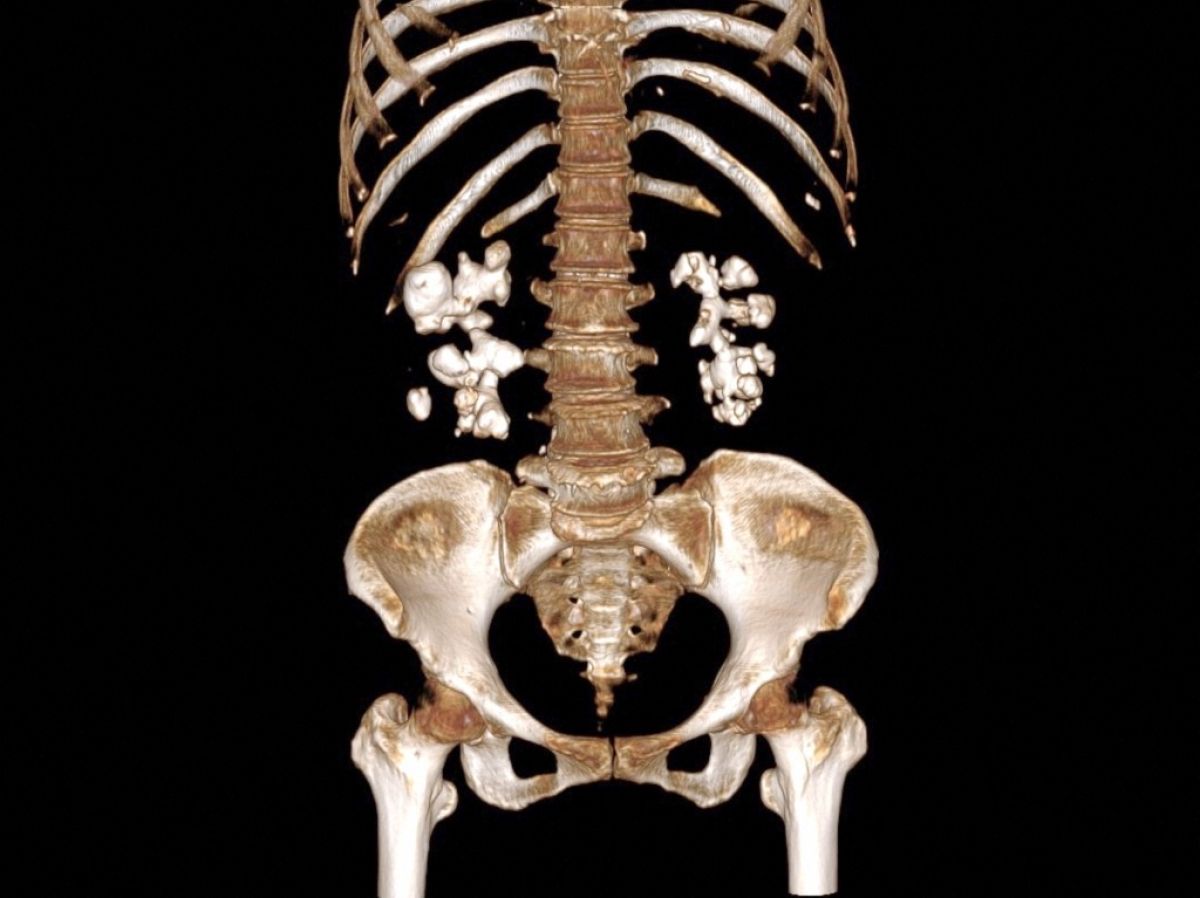
Exquisite pain in one side, searing and radiating down the back and into the lower abdomen. Attacks of renal colic Kidney stones are caused by the presence of stones, aggregates of crystals, in the kidney that can partially or completely block the flow of urine to the bladder. For decades, kidney stones have been described as the product of a chemical imbalance, more or less induced by insufficient hydration. But a new study is shaking this consensus by invoking, for the first time, the role of bacteria.
80% of calcium oxalate calculi
Kidney stones are aggregates of crystals that form when certain substances in urine reach concentrations high enough to precipitate. Nearly 80% of these stones are composed of calcium oxalate, found in many food sources such as chocolate, coffee beans, tea, dried fruit, and some leafy green vegetables, particularly spinach. Unlike a rare type of infectious stone already known to harbor bacteria, these calcium stones were previously considered strictly abiotic.

However, by analyzing calcium oxalate calculi using electron and fluorescence microscopy, the presence of live bacteria, organized in layers and in biofilmsintimately intertwined with the mineral crystals. This result challenges the idea that these calculations are formed solely through chemical and physical processes." explains Kymora Scotland, assistant professor of urology at the David Geffen School of Medicine and co-author of the study, published in the PNAS. “ Our data support the hypothesis that bacteria promote the growth and stabilization of the stone once its formation has begun.“.
Read alsoKidney stones: their elimination made easier by… the roller coaster
An active role
In a follow-up article to be published in another journal, the same team indicates that bacteria also play a role in crystal nucleation, that is, in the first stage of stone formation. In other words, stones do not simply form through the passive assembly of crystals, but rather constitute a structured environment in which bacteria participate in their construction and consolidation. This close interaction between living organisms and minerals could partly explain why calcium oxalate stones are so common. It also suggests that their resistance to treatment and their tendency to recur are not solely due to urinary chemistry or diet.

Calcium oxalate crystals. Credits: CAVALLINI JAMES / BSIP / BSIP via AFP.
A therapeutic approach
The study also explains why some patients experience recurrent urinary tract infections and recurring kidney stones. Protected by the mineral structure and biofilms, these bacteria could evade antibiotics, persist over time, and then recolonize the urinary tract. In my clinical practice, I observe a striking correlation between the bacteria found in kidney stones and those responsible for urinary tract infections in the same patients.", the urologist points out.
Read alsoKidney stones don't look like pebbles, but like coral.
The team is now working to experimentally demonstrate this causal link. Ongoing studies aim to understand why some patients are particularly prone to relapses and what allows certain bacterial species to promote the nucleation or growth of crystals. Beyond simply observing the findings, these results open up concrete clinical perspectives. Our team is currently working on non-antibiotic approaches for the treatment of kidney stones." , says Kymora Scotland. Such a lead could transform the management of a condition that currently affects approximately one in eleven people during their lifetime.
 English
  French