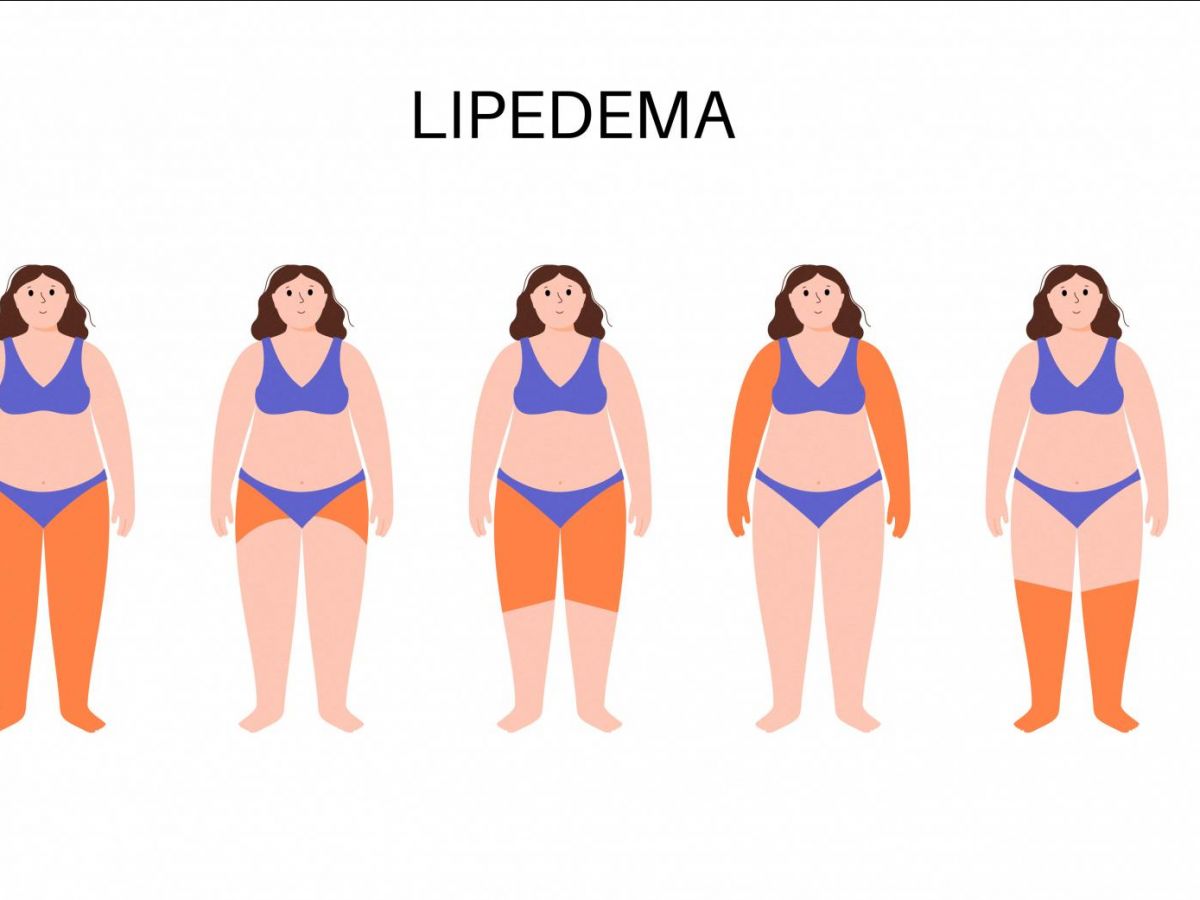
Swollen legs with a " feeling of being in a vice"Orange peel skin, bruises... What if it was a lipedema Testimonies from women living with this still little-known disease are multiplying on social media, between self-diagnosis, medical uncertainty and costly – and not reimbursed – interventions.
Since adolescence, Aurélie Hamon, 47, has suffered from severe leg pain and unexplained weight gain that she cannot control.

“ Walking for more than 20 minutes without feeling extremely heavy and constricted was impossible… The doctors told me to exercise, to eat less, but I had already tried every diet imaginable, and even my personal trainer couldn't understand why I wasn't losing weight." , this export sales representative told AFP.
One day, on social media, she came across testimonies from women that resonated with her. A self-diagnosis, confirmed a year later by an angiologist who assessed her lipedema as stage 3 (out of 4).

First described in 1940 as the " tree-leg disease" Lipoedema is characterized by a significant, abnormal, bilateral and symmetrical accumulation of fat", most often in the lower limbs, describes Health Insurance.
Read alsoHeavy legs: five solutions to promote venous return
Affecting almost exclusively women, it can be triggered or exacerbated by hormonal changes during puberty, pregnancy, or menopause. Genetic and inflammatory factors can also play a role.
THE lipedema causes pain, discomfort, a disproportionate appearance between the upper and lower body, increased skin sensitivity, and frequent bruising.
Recognized as a disease in France since 2018, it is still little known by doctors even though studies suggest it affects up to one in ten women.
“ On average, patients are diagnosed after 20 years of medical uncertainty."e," says Pascale Etchebarne, president of The French Lipoedema Disease Association (AMLF, 350 members).
“ Eating disorders, depression: they feel incredibly guilty, they're told to eat better, to make an effort, except they're already doing that, without any results" she emphasizes.
In the magazine Nature CommunicationsResearchers estimated in 2026 that this pathology " It remains underdiagnosed, often confused with obesity or lymphedema, and the medical community still has a limited understanding of it. leading to diagnostic errors " And " Inappropriate treatments“.
No support
Conservative medical treatment is based on " An anti-inflammatory diet, regular physical activity, wearing compression garments, and lymphatic drainage." describes Michèle Cazaubon, angiologist.
A protocol followed by Denise, 34, diagnosed with stage 1 lipedema: I've stopped drinking alcohol and sugar, I take an anti-inflammatory, and I drink 1.5 liters of water a day. I walk 8,000 to 10,000 steps daily and do three hours of weight training per week. Since then, the swelling in my legs has gone down, and I no longer have any bruises.“.
Sometimes therapeutic liposuction is performed, but several operations are often necessary. Not covered by social security, they can cost tens of thousands of euros.
Following successful arm surgery in Germany, a pioneer in the care of lipedemaAurélie Hamon has launched a fundraising campaign to raise the 29,000 euros needed for the surgeries on her thighs and calves.
Margo Chinea, 25, was forced to take out a loan: In total, it cost me 13,000 euros. I needed two weeks of hospitalization, but at 400 euros a night, I couldn't afford it.“.
Studies in progress
Surgery, unlike traditional liposuction, allows patients to regain a certain quality of life: I no longer have any pain in my arms and I have regained mobility.“,” confides Aurélie Hamon, relieved.
In Nature CommunicationsResearchers believe that surgery should be considered when it is likely to have a positive impact on lipedema-related symptomsAccording to them, a Missed or delayed diagnoses or treatment increase the financial burden on patients and the healthcare system.“.
In 2025, Pascale Etchebarne's association submitted a file to the High Authority for Health (HAS) to obtain better coverage, but the file was rejected due to a lack of " sufficient data"The HAS told AFP that it is waiting for..." the results of ongoing scientific studies“.
Pascale Etchebarne has not given up hope: It's like with endometriosis, it took 20 years for that, for us it could be 10 years"She plans to reapply in June 2028, after completing her studies."
 English
  French