From the top floor of the National Institute for Young Blind People (INJA) in Paris, the start-up SeeHaptic, a member of the Louis-Braille campus, has set itself a somewhat crazy challenge: to make visually impaired people feel the space.
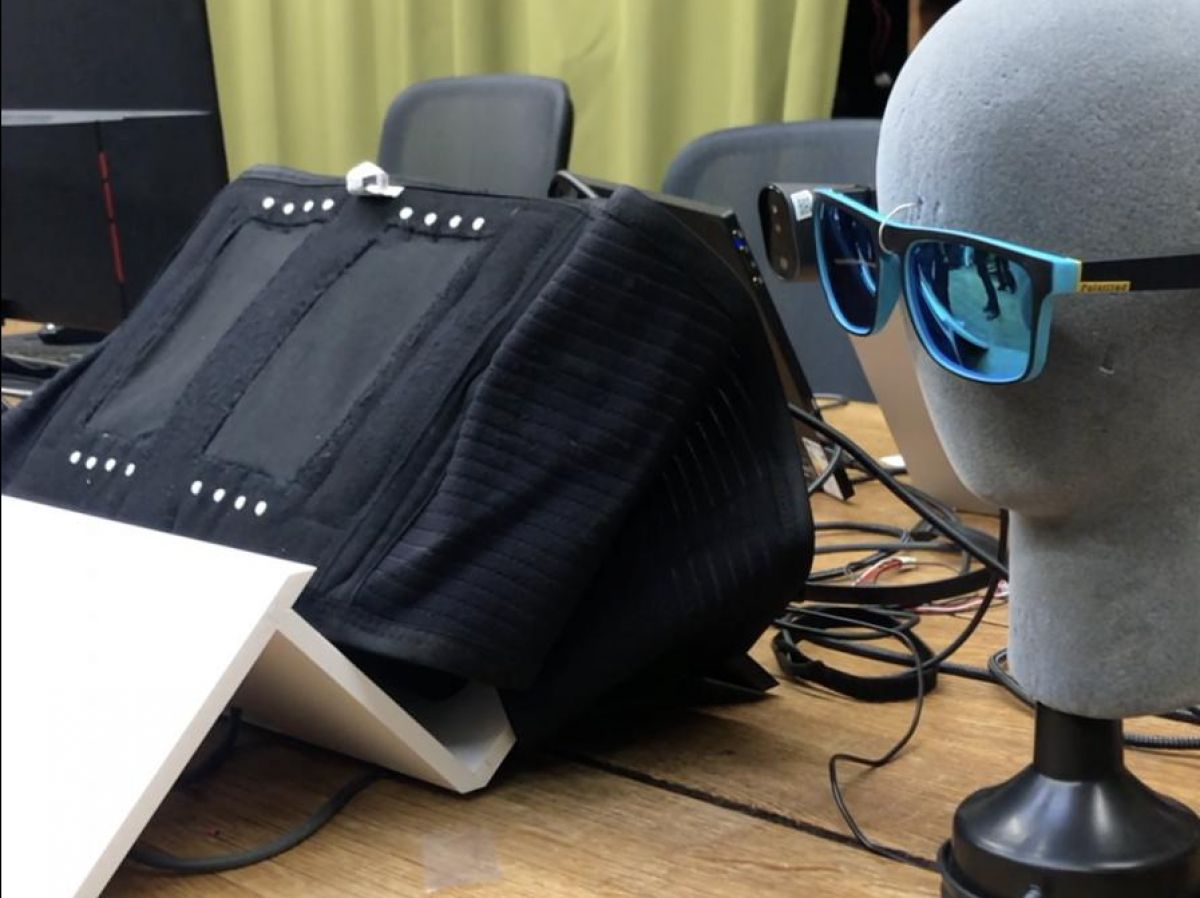
On a large desk sit a black lumbar support belt and a mannequin head, equipped with glasses. When someone passes by, the sound is no longer the creaking of old parquet flooring, but a symphony of clicking. It all originates from a miniature camera, perched on one of the temples of the glasses, which tracks the actions of anyone who crosses its path.
A resolution of 1000 frames per second

A deterministic artificial intelligence based on neural networks translates the environment of the visually impaired or blind user into a structured tactile image: the impulses in the haptic belt (from the Greek háptô (which means touch). This last element is composed of 256 small coils – solenoids – arranged in eight units. The refresh rate can reach 1000 frames per second, exceeding that of a computer or smartphone screen. Stairs, people, or a door: the landscape unfolds behind the user continuously, smoothly, and clearly.
The SeeHaptic system is enhanced by an optical character recognition module for signs and displays. Users can thus ask a conversational artificial intelligence for the color of their interlocutor's T-shirt, or the opening hours of a bakery, written on its storefront.
Sensory substitution, a concept that's not new.
This idea originated with Rémi du Chalard in 2017. The engineer researched sensory substitution and studied the work of the neurologist and inventor of this concept: Paul Bach-y-Rita. In the 1980s, the American doctor conducted numerous experiments replacing sight with touch.SeeHaptic doesn't show what the eye sees, but what the brain expects to see through touch, a sense more creative than sight.“,” explains the founder of SeeHaptic. In 2024, the invention won the most prestigious distinction from the Lépine competition.
The SeeHaptic team announced the pre-commercialization of its technology at the Consumer Electronics Show (CES) in Las Vegas on Monday, January 5, 2026. After eight years of research and development and more than 300 user tests, a clinical trial will soon be launched to document the device's effectiveness. The ultimate goal is for the technology to be eligible for reimbursement by the French national health insurance system.
 English
  French