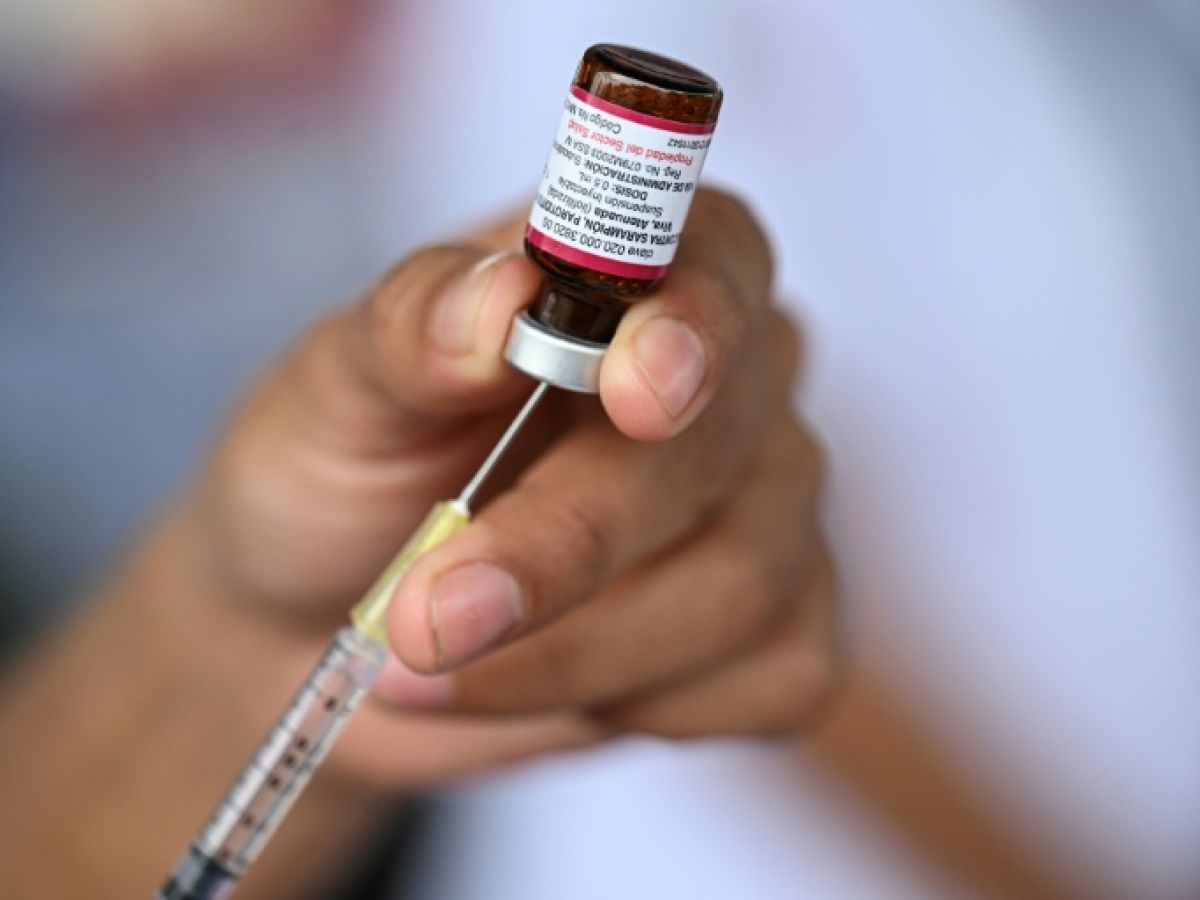
Measles vaccination is progressing worldwide, but remains below pre-Covid-19 pandemic levels, warns the World Health Organization (WHO), pointing to the obstacle of misinformation about vaccines but especially the difficulties of access for the most vulnerable.
Global coverage of the first dose reached 84% in 2024, up from 83% in 2023 and 71% in 2000, but still below the 86% achieved before Covid-19, the organization announced Friday in a new report.
Furthermore, in 2024 alone, "20.6 million children did not receive their first dose, more than half of them in Africa," warns the WHO. Yet measles, which is highly contagious, requires vaccination coverage of at least 951 T3P with two doses to stop its transmission.
"This is a serious disease that can be fatal; children under five, pregnant women and people with weakened immune systems are most at risk of serious complications and death," Kate O'Brien, director of the immunization and vaccines department at the WHO, reminded the press.

Vaccination coverage for the second dose has improved considerably since 2000, increasing from 17% to 76% in 2024.
But persistent gaps "in immunity have fueled a resurgence of epidemics, with 59 countries experiencing significant or disruptive outbreaks last year – a record number since 2003," the WHO notes.
And "the fact that 251,300 outbreaks are occurring in countries considered to be free of measles is very alarming," Diana Chang Blanc, unit chief of the WHO's Essential Immunization Programme, told the press.
Many countries in the Americas experienced outbreaks in 2025. Canada recently lost its measles-free status, notes the WHO, and experts believe the United States – where the worst outbreak in over 30 years is taking place – could follow.
"Every case we see today (...) reminds us of what happens when vaccination coverage declines and when health systems fail to reach every child," Ms. O'Brian stressed.
– “Vaccine hesitancy” –
Among the causes identified, the organization mentions the persistent effects of the "cumulative decline in vaccination coverage during the Covid-19 pandemic," which has disrupted health services.
“Vaccine hesitancy” is another factor, admitted Ms. Chang Blanc, noting that misinformation “affects confidence and demand for vaccination services.”

But the main problem remains the difficulty of reaching certain populations. "It's about providing access for the populations who need it most, those who face multiple challenges, and integrating them into the health system," she stressed.
Thus, to fill these gaps, the WHO recommends "strengthening primary and routine health care systems, adapting innovative strategies and methods to reach the hardest-to-reach populations, and conducting mass vaccination campaigns" where routine vaccination is insufficient.
The organization also advises health authorities to strengthen "rapid epidemic response capacities", increase political commitment and local ownership, all with the support of "sustainable funding".
"A world without measles or rubella is only possible if every child, everywhere, in every country and even in the most remote regions, is immunized," Ms. Chang Blanc reminded everyone.
In 2024, the organization estimates that 11 million people worldwide will be infected with measles, nearly 800,000 more than before the 2019 pandemic, but overall progress is significant when compared to the approximately 38 million cases recorded in 2000.
As for the number of deaths in 2024 (95,000), it is one of the lowest recorded since 2000. Most involved children under five years old, and 801,300 of the deaths occurred in Africa and the Eastern Mediterranean region.
 English
  French