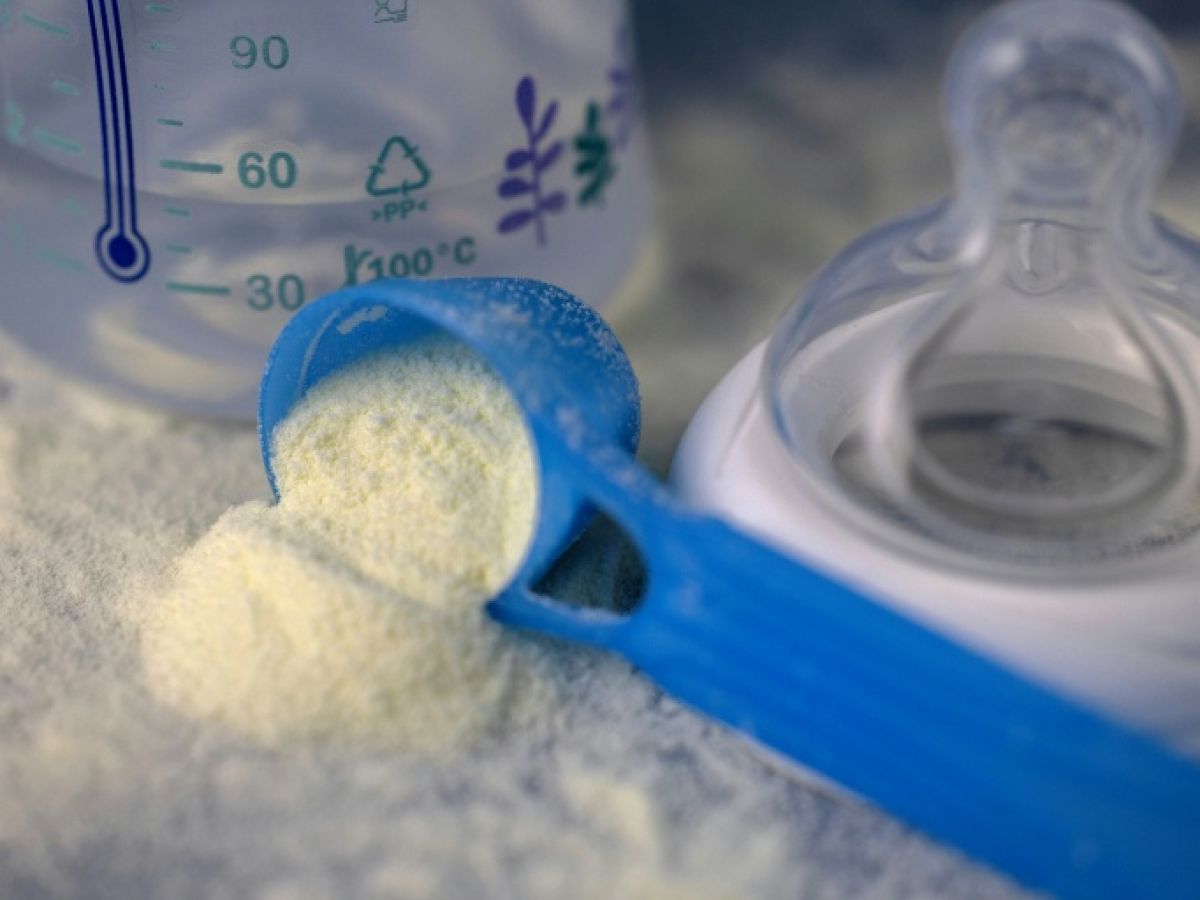
Nestlé, accused of delaying the recall of infant milk after identifying the presence of toxin in its products, on Friday refuted the accusations of the association Foodwatch, which filed a complaint with the Paris prosecutor's office alongside eight families.
"Foodwatch's allegations, made without any factual basis, expose Nestlé to unacceptable and unfounded suspicions," the group said in an open letter to the association published on its website.

"If Foodwatch continues to disseminate misleading or false information on this subject, Nestlé reserves the right to take all necessary actions to protect its interests," he added.
The complaint against X, which AFP was able to consult, targets a series of offenses, including endangering and harming the physical integrity of infants, aggravated deception or failure to comply with safety obligations.
On Friday, the French daily Le Monde reported that the presence of a toxin in Nestlé products had been identified ten days before the first recalls, as early as the end of November.
This timeline is acknowledged by Nestlé, which, in a statement published on its website, mentions "very low levels" of toxin detected at the end of November and recalls the absence of "regulation setting a maximum limit for cereulide".
"However, we acted quickly by withdrawing products that did not meet our quality requirements," the group added.
This toxin, produced by certain Bacillus cereus bacteria, is likely to cause digestive problems, such as diarrhea and vomiting.
– “Very low levels” –
"At the end of November 2025, following routine checks (...) in our factory in the Netherlands, we detected very low levels of cereulide in product samples," the food giant said.
Nestlé claims to have at that time "immediately blocked production" and launched "more in-depth laboratory analyses".

"The results received in early December 2025 confirmed the presence of minute quantities of cereulide in the products still under our control," that is to say, not yet distributed, he states.
"We have asked our experts to conduct a health risk analysis – that is, to understand the symptoms and consequences associated with consuming products that contain it – and to share it with the relevant authorities," a spokesperson told AFP.
"On December 10, 2025, we informed the authorities in the Netherlands (where the factory is located) as well as those of all potentially concerned countries and the European Commission, to provide our analyses and risk assessment," the group recounts in its chronology.
Since the beginning of the affair, Nestlé has maintained that the large-scale recall of the brand's infant milks is linked to a "quality problem", and claims to date that it has received no evidence of a link between an illness and its products.
"We took action as soon as we confirmed the problem, both in December and January," the group insisted in its open letter to Foodwatch, stating that it was "wrong" to talk about a late recall.
Nestlé also emphasizes in this letter that it "proactively alerted the entire industry via professional associations (as early as December 30), given that this problem could affect other infant formula manufacturers."
Besides Nestlé, several manufacturers, including giants Danone (Blédilait, Gallia) and Lactalis (Picot), but also smaller players like Vitagermine (Babybio Optima), have carried out recalls of infant milks in more than sixty countries in total, including France, since December, due to this risk of cereulide contamination.
 English
  French