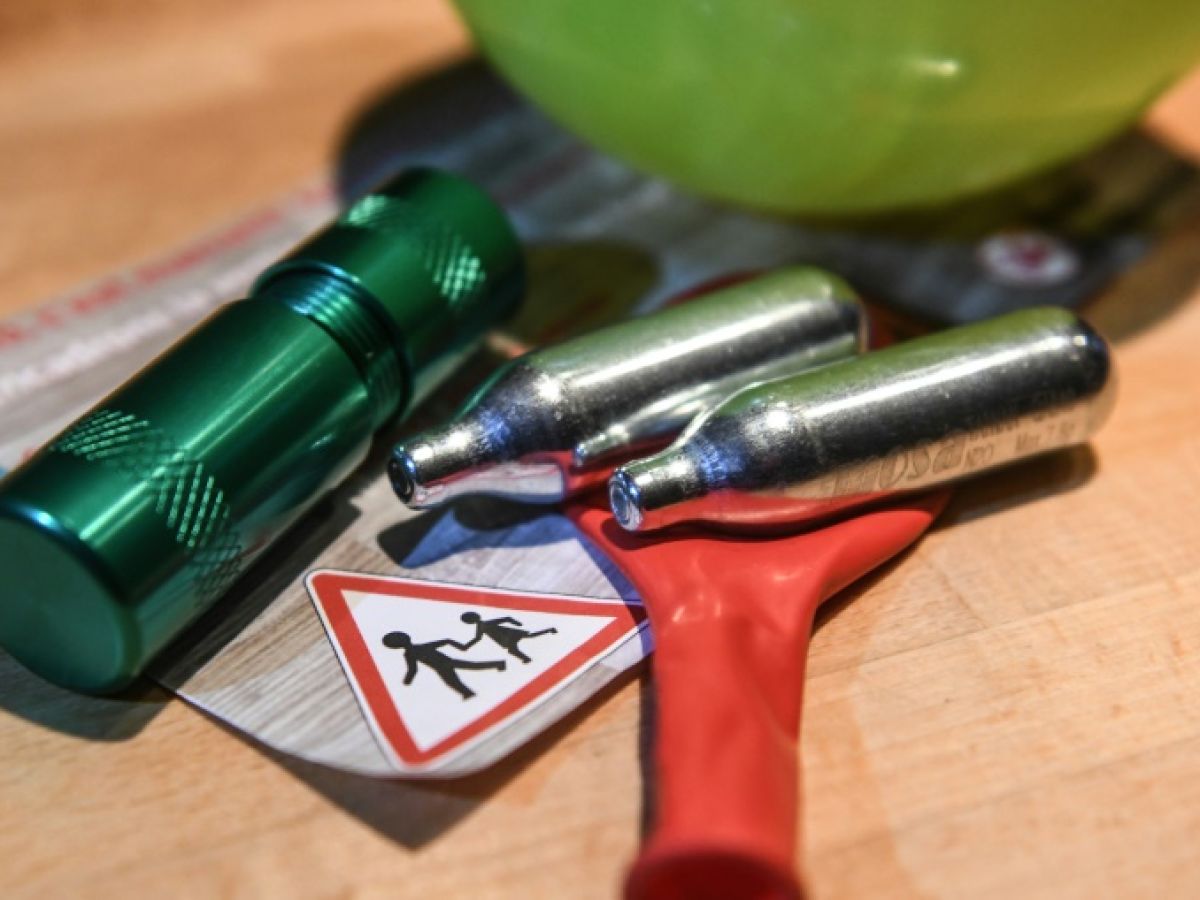
The shadow of nitrous oxide driving looms large over several fatal accidents in recent months, including the one that claimed Mathis's life in Lille in November. It's a phenomenon that authorities are struggling to control on the roads due to a lack of detection tools.
On November 1st, 19-year-old Mathis was killed on one of Lille's main boulevards by a driver who had consumed nitrous oxide and was trying to flee from the police.
On Wednesday, three young people aged 14, 15 and 19 drowned after their car, in which several bottles of nitrous oxide were found, missed a turn and ended up in the swimming pool of a house in Alès (Gard).
In early 2025, a young woman was already struck by an 18-year-old driver on a Saturday night in the center of Lille, after he "ingested this gas", according to statements from the prefect of the North.
“More and more people are reporting to us that they use it while driving,” observes Guillaume Grzych, biologist and president of Protoside, a network dedicated to the prevention and care of users with symptoms.
Several hypotheses exist regarding this behavior: "the patient is completely addicted and cannot wait to go home, others may be seeking sensations."
– “promise of a law” –
With the euphoric effect of nitrous oxide, "you're no longer in control," he continues. Loss of coordination, diminished reflexes, and increased reaction time: all these factors increase the risk of accidents. Several users also report blackouts, with a sudden loss of vision.
The sale of the product, which is also used in medicine or cooking, has been theoretically prohibited to minors and in certain places since 2021, but except for local regulations, it remains legal, and no test can prove that a person has consumed it.
Researchers are trying to identify a biological signature of nitrous oxide in the body, which would confirm whether and when a person has consumed it, explains Mr. Grzych. This is an essential tool for legislation: "How can we prohibit and punish if we cannot control it?"
For Antoine Régley, lawyer for Mathis' parents, there is "a double urgency": "prefectural decrees to suspend the sale of nitrous oxide to the general public," which can be done "within the week" according to him, and "a law to penalize those who possess, consume, buy or sell it."
Mathis's parents are scheduled to meet with the Minister of the Interior on December 12th. Me Régley hopes to emerge from this meeting "with the promise of a law that would be passed as early as January."
According to Vincent Ledoux, a Macronist MP from the North, the ministry wants to revive legislative work around the text voted in March by the Senate, which penalizes the misuse of "laughing gas".
For now, the bill does not specifically target driving and does not go so far as to completely ban its sale to private individuals, as the members of parliament had previously done. The future of this law depends on negotiations between the two houses of parliament.
Faced with this “bombshell”, Vincent Ledoux calls for “a very strong crackdown” on the illegal sale of nitrous oxide, through “prison sentences” and “temporary closures” of businesses.
– “not afraid” –
On the ground, the police "come across people who are drinking while driving with a balloon in their mouth" and "are getting a little crazy, taking all the risks," describes Clément Coasne, from the Un1té Police union.
Wrong-way driving, running red lights and stop signs, refusing to let pedestrians cross: it's "as if someone had taken cocaine and was driving," he believes.
If an arrest is made, this cheap drug only carries a fine of 150 euros, Clément Coasne points out. "That doesn't scare them."
And in the absence of testing, consumption must be "caught" in the act, he laments.
Detection is "very difficult or even impossible" according to the road safety delegation: if young people "have canisters in their cars, they throw them out" before the arrival of law enforcement.
According to an Ipsos survey for the Vinci Autoroutes Foundation published in October (based on 2,256 people), one in ten young people under 35 has already used nitrous oxide in the evening, and half of them have done so while driving. According to this study, 101% of 16-24 year olds believe that inhaling it while driving is not risky.
Several municipalities have issued local ordinances prohibiting its use or possession. On Wednesday, the Drôme prefecture announced an ordinance specifically banning the possession and consumption of nitrous oxide in public spaces.
 English
  French