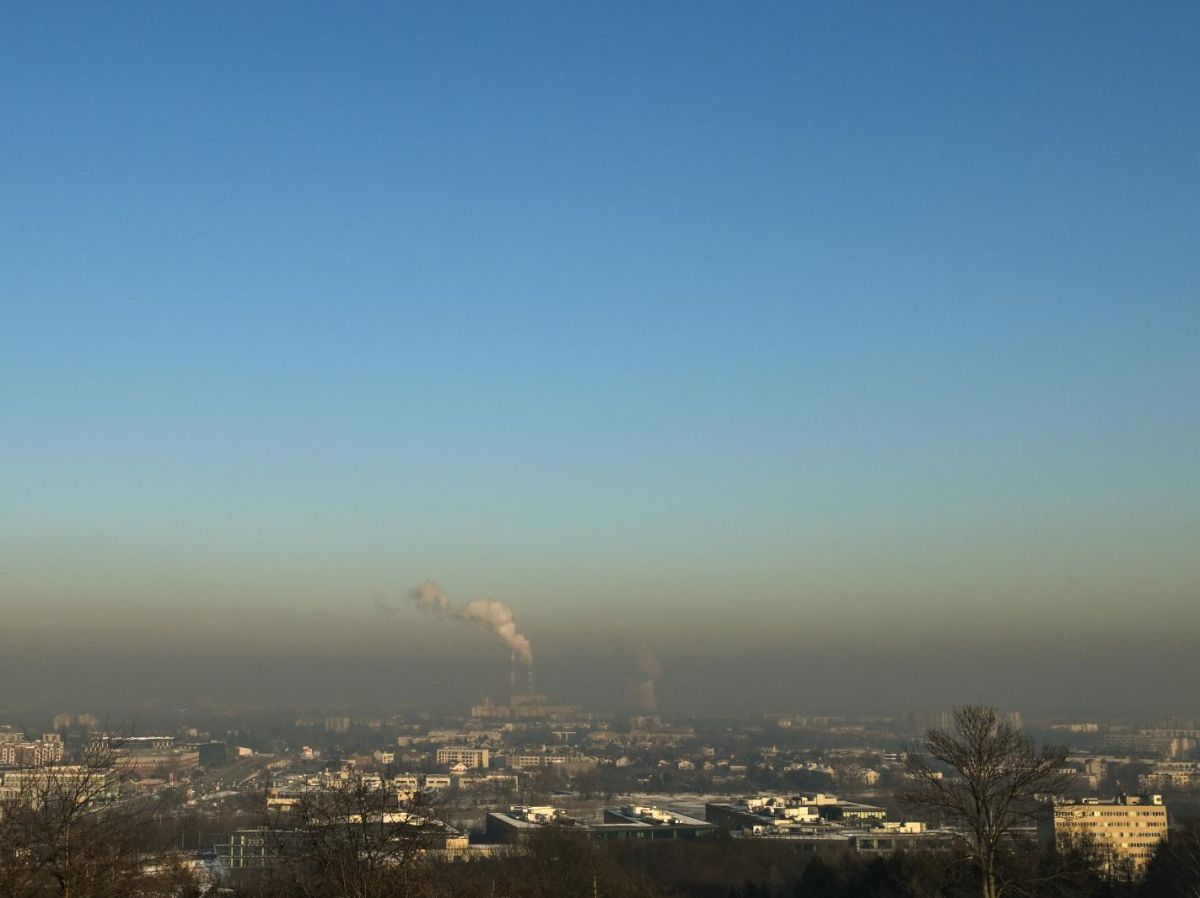
Approximately two-thirds of the European Union (EU) population breathed dangerous levels of ozone in the air during the exceptional heatwave in June. This is the conclusion of a report by an NGO, which warns of health risks ranging from asthma to lung damage.
Ozone pollution, exacerbated by high temperatures, is a " invisible threat", warned Flossie Boyd, an executive at the environmental NGO Global Witness, who exclusively shared this report with AFP on Thursday.

According to researchers, nearly 300 million of the EU's 450 million inhabitants were exposed to dangerous levels of ozone during the June heatwave, which was exceptional in its scale even as heatwaves are increasing as a direct consequence of global warming.
More specifically, around one hundred million children and elderly people, the most vulnerable groups in terms of health, are believed to have breathed ozone at dangerous levels, a type of pollution implicated in several pathologies ranging from asthma to damage to lung tissue.
This shows how "people are forced to live in dangerous conditions because of our dependence on fossil fuels," insisted Ms. Boyd.
This report, which has not been published in a scientific journal, is based in particular on data collected from 162 air quality monitoring stations across the EU.
Read also What is ozone, the pollutant of heat waves?
Indirect effects of heat
By focusing on ozone pollution, he adds another piece to the puzzle when assessing the health impact of the June heatwave, already considered the hottest month ever recorded in Western Europe.
The health effects of extreme heat are not limited to immediately observable cases of heatstroke and dehydration. The effects can be more indirect and sometimes result in illnesses and deaths only appearing after several days.
Thus, ambient ozone pollution – to be distinguished from the ozone layer which protects our atmosphere from the sun's rays – has been associated with 63,000 deaths in 2023, according to estimates from the European Environment Agency, which also mentions billions of euros in damage for farmers.
Human activities do not directly emit ozone, but it is synthesized by chemical reactions in the ambient air during high temperatures and intense exposure to the sun, characteristic of heat waves.
The EU has reduced its emissions of nitrogen dioxide, involved in ozone synthesis, in recent years, but Global Witness accuses it of lacking ambition to do the same with methane, another essential component.
According to the NGO's estimates, 298 million Europeans were exposed to an ozone level exceeding that recommended by the EU, namely an average concentration of 120 micrograms per cubic meter over an eight-hour period.
Read also Heatwave: how the body adapts to the heat
"One more problem"
This represents two-thirds of the EU population. But, the NGO points out, if we instead use the thresholds set by the World Health Organization (WHO) – stricter at 100 µg/m3 – the proportion rises to almost seven out of eight inhabitants.
And 72 million inhabitants – about one in six – breathed air polluted with more than 150 µg/m3, a threshold considered " particularly dangerous", the NGO reminds us.
However, its methodology has limitations. The figures presented are not based solely on the previously mentioned monitoring stations, but also on models from Copernicus, the EU climate observatory, which do not directly measure ozone levels and therefore include a degree of uncertainty.
When questioned by AFP, researchers who had not participated in the report nevertheless felt that it appeared consistent with their own observations, such as the British climatologist James Weber.
Mr. Weber analyzed data on ozone pollution in the UK during the last heatwave, and found that it exceeded WHO thresholds at more than half of the measurement sites.
“ Ozone is yet another problem, at a time when health is already being compromised by humidity and temperatures.he insisted to AFP, emphasizing the role of climate change.
Ozone pollution, he points out, is yet another reason to avoid going out during the hottest times, especially for exercise.
 English
  French