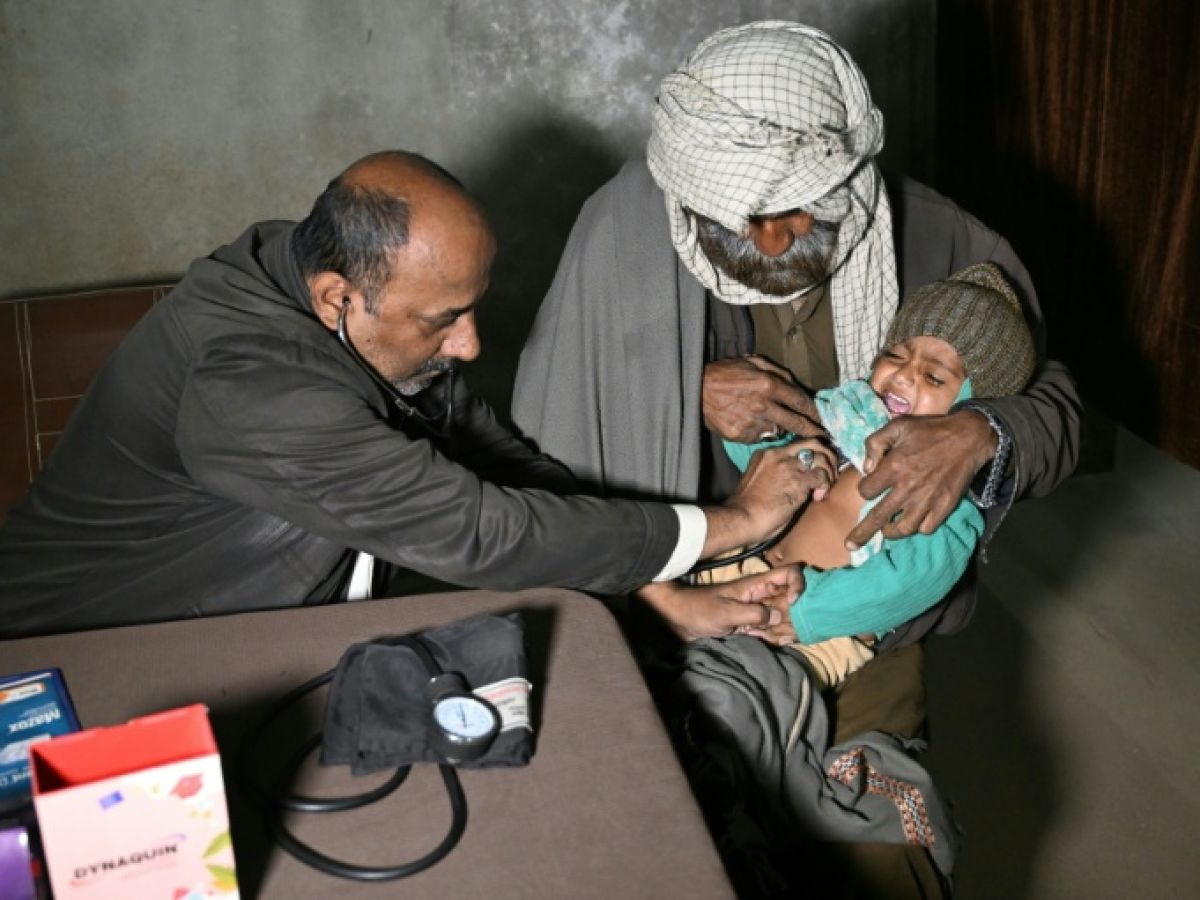
Rusty nails driven into the wall hold used IV tubes, some visibly damaged, in a clinic run by one of the countless unqualified doctors practicing in Pakistan.
Dozens of patients come every day to this small roadside building located in the southern province of Sindh, where a few chairs are arranged around wooden tables used for patients to lie down.
“These patients have faith in me. They believe I can treat them well,” says Abdul Waheed, 48, who opened the facility a few months ago on the outskirts of Hyderabad.
"I have spent a great deal of time in this field. I have worked with several doctors. Thank God, I have the confidence to diagnose a patient and treat their illness," Mr. Waheed told AFP.

No sign, no registration number, and no legal authorization to practice: Mr. Waheed, who trained as a nurse for four years and holds a diploma in homeopathy, nevertheless displays his confidence.

After examining two children, he insists: patients come to him of their own free will and have confidence in his skills.
"No one has asked me any questions yet. If someone comes, I'll see what needs to be done," he explains.
These kinds of unlicensed clinics are often the first, and sometimes the only, healthcare center for poor communities.
– Public health crisis –
According to Abdul Ghafoor Shoro, secretary general of the Pakistan Medical Association, there are "more than 600,000 fake doctors" in the country. This figure was confirmed by the Sindh Health Care Commission (SHCC), based on estimates from the Pakistan Medical and Dental Council.

Mr. Shoro explains that illegal practitioners learn some basics by working with doctors, then open their own clinics.
“Unqualified doctors don’t know the side effects and precise dosages of medications,” he warns. “The instruments they use aren’t sterilized. They simply wash them and continue using them. They reuse syringes, which increases the risk of spreading hepatitis and HIV.”
While AFP journalists were visiting Tando Said Khan, another unqualified doctor immediately closed up shop and disappeared.

A villager, Ali Ahmed, says that there are many places like this in the region.
"None of them have qualified doctors. People are not educated and do not know how to recognize a qualified doctor," laments the man in his thirties.
– Insufficient laws and resources –
According to medical experts, these uncontrolled practices have a direct impact on Pakistan's already strained health system, as specialist hospitals are overwhelmed with patients whose condition has worsened after inappropriate treatment.

Khalid Bukhari, director of the Karachi Civil Hospital, indicates that his facility regularly receives such cases.
“They (the fake doctors) make incorrect diagnoses and mistreat patients. Our hospital is overcrowded. Most of the cases we receive are those of people they have injured,” Mr. Bukhari lamented. “These people are playing with the lives of impoverished citizens.”
Regulatory authorities acknowledge their failure.
"It is difficult to eradicate these practices. If we close 25 shops, 25 others open the very next day," acknowledges Ahson Qavi Siddiqi, director of the SHCC.

The SHCC recently sealed off a bungalow in Karachi that was operating as a hospital, with intensive care units.
"The law is insufficient. We file a complaint, but the accused are released on bail the very next day, because it is an offense eligible for bail," Mr. Siddiqi told AFP.
"These people (the fake doctors) have a great deal of influence in their region.

"Often, our teams are taken hostage. We are attacked. I don't have the means to intervene firmly," he adds.
Using a fake doctor can also ruin families, who end up with huge bills if a problem arises.
"Many people die or become disabled, and their families suffer for the rest of their lives," according to the director of the SHCC.
 English
  French