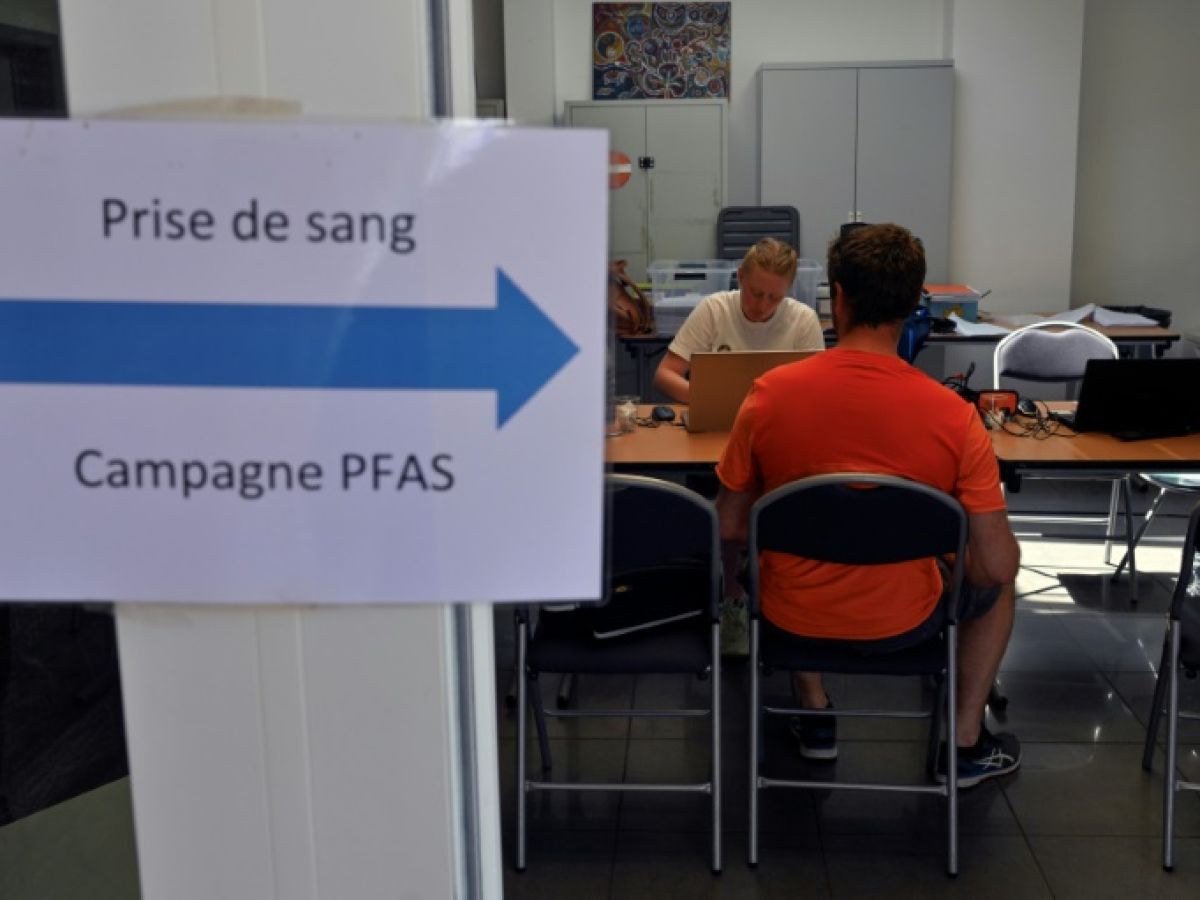
Perennial pollutants (PFAS), persistent chemicals that are ubiquitous in our daily lives, could cost the European Union up to 1.7 trillion euros by 2050, according to a report commissioned by the European Commission and published on Thursday.
This study assesses, in particular, the impacts of PFAS on human health and the costs associated with soil and water remediation, with four scenarios.
Depending on the scale of the measures decided by the EU, perennial pollutants could cost it between 330 billion euros and 1,700 billion euros by 2050.
The most expensive scenario includes extensive soil remediation and wastewater treatment to ensure compliance with high environmental standards in water, for around twenty PFAS.

The €330 billion scenario, meanwhile, corresponds to the total cessation of the production and use of PFAS, but without additional treatment of drinking water or specific treatment of wastewater.
From pizza boxes to clothing, the European Commission wants to ban PFAS in everyday consumer products, while providing exceptions for strategic sectors.
But his proposed law is not expected before the end of 2026 at the earliest, in a context marked by many uncertainties regarding the exemptions that certain industries could benefit from.
To legislate, Brussels must first rely on two decisive opinions from the European Chemicals Agency (ECHA): one expected in March on the risk assessment of PFAS, the other expected at the end of 2026 on the socio-economic impact of a ban in the EU.
Cosmetics, kitchen utensils, packaging… PFAS are everywhere, used for their non-stick, waterproofing or heat resistance properties.
These per- and polyfluoroalkylated chemicals take an extremely long time to decompose, hence their nickname "forever pollutants." They can also have harmful effects on health, including increased cholesterol levels and a higher risk of cancer, as well as effects on fertility and fetal development.
 English
  French