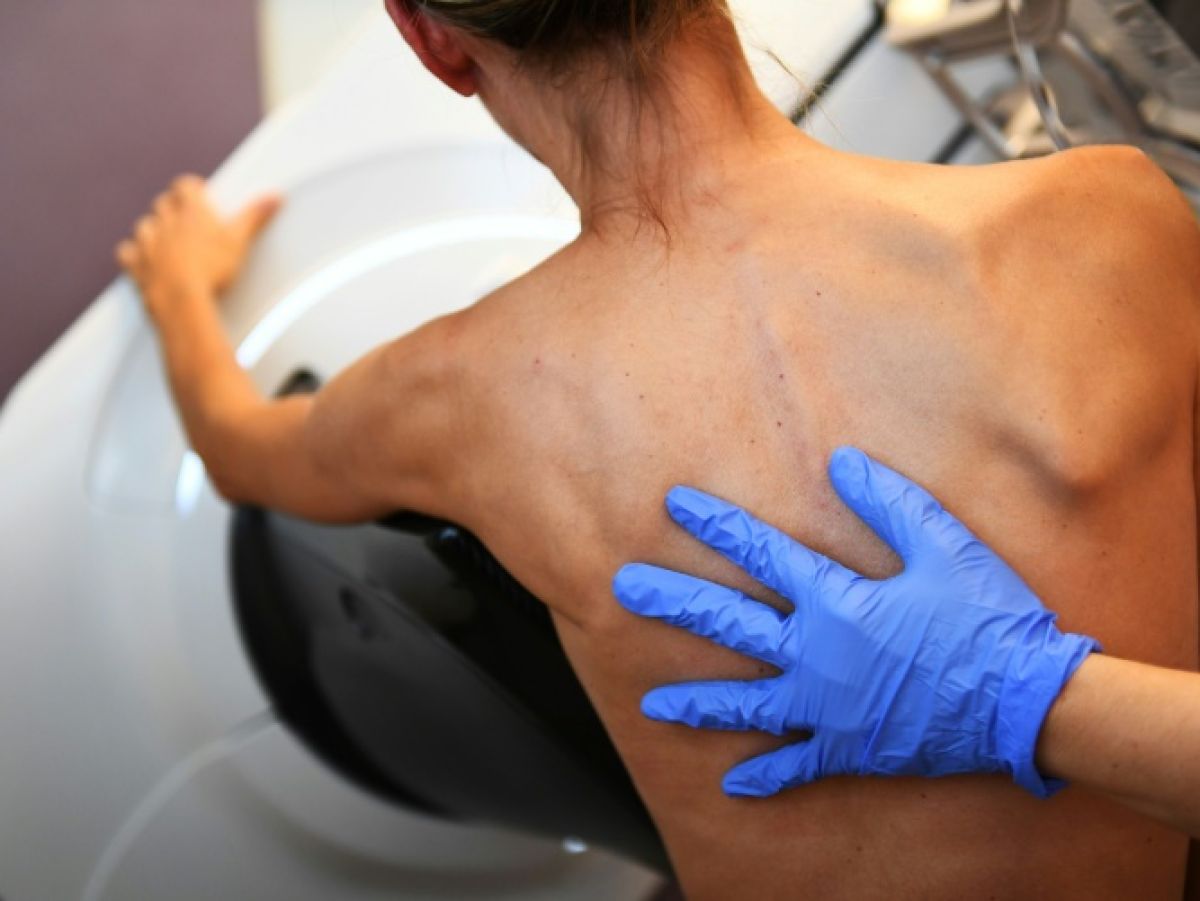
Despite growing scientific evidence of a link between certain working conditions and some breast cancers, a woman with this disease must, in order to have it recognized and compensated, prove that her activity played a major role in its onset.
A cancer is said to be "of occupational origin" if it is the direct consequence of occupational exposure to a physical, chemical or biological risk, or results from the conditions under which the activity is carried out.

For breast cancer – the focus of the Pink October prevention campaign – ionizing radiation is classified as a "known carcinogen" by the WHO's International Agency for Research on Cancer (IARC), and night work is considered a "probable" carcinogen. Other factors, such as chemical substances, are being examined by the French Agency for Food, Environmental and Occupational Health & Safety (ANSES), which will publish its findings at the end of 2027.
The deadliest cancer in women, with nearly 13,000 deaths annually in France, breast cancer is a disease of multifactorial origin.
«Very difficult to prove“
Having breast cancer recognized as work-related is difficult because it is not included in the list of illnesses for which a link to a profession is presumed. Lacking inclusion in a specific "table" – which would entitle women to a lump-sum compensation when certain criteria are met – each woman must prove in court the "direct and essential" link between her illness and her work.
«"‘'Essential' means that there are no other factors that could promote the development of cancer: this is very difficult to prove«" explains to AFP Dr. Alain Randon, a doctor with the Ramazzini association who analyzes the occupational exposure of patients accompanied by unions and victims' associations in their demand for recognition.
“ Unfortunately, we only give a favorable opinion to initiate legal proceedings in one out of two cases: those almost devoid of 'confounding factors', personal factors that promote the onset of cancer: heavy smoking, family history of breast, ovarian or uterine cancer…" he said.
The weight of 'confounding' factors‘
“ We look at the weight of these 'confounding' factors in relation to occupational exposure. Having worked night shifts for 20 years, having been exposed to ionizing radiation, and being stressed – which weakens the immune system – will have a greater impact than having smoked ten packs of cigarettes a year, having gained weight, or having taken the pill for 5 to 10 years.«", the doctor explains.
Trade unions – in particular the CFDT Grand-Est, a pioneer on the subject – and associations are seeking to obtain an improvement in case law.
“ The more cases that are recognized, the more incentive there will be to have them recognized.«", the doctor believes, because "« The Ministry of Labour is not ready to publish new tables of occupational diseases; there is a total deadlock.«"These tables, which result from negotiations between unions and employers, must be validated by the ministry.".
For the time being, the occupational origin of breast cancer has only been recognized for a few women, after years of procedure: nurses in Metz exposed to ionizing radiation in radiology, a parquet floor worker exposed to night work and endocrine disruptors in Agen or, in July, a flight attendant who had accumulated nights and exposure to cosmic radiation during long-haul flights, in Bayonne.
Read alsoThe courts have recognized a "direct link" between a nurse's breast cancer and her night shift work.
Massively exposed
His lawyer, Elisabeth Leroux, points to a speech "« guilt-inducing »"towards her clients:"« You smoked, you drink a little too much, you didn't breastfeed, you're too fat: it's your fault“.
While working three nights a week for ten years triples the risk – but this returns to zero as soon as one finds a daytime job –, « These women are never asked about their potential occupational risks.«", laments the lawyer, who defends nurses, police officers, night watchwomen, factory workers, croupiers…
However, " When they have spent their entire careers working night shifts or have been massively exposed, without protection, to endocrine disruptors, it can be demonstrated that this exposure outweighs personal risk factors: the judges understand this.«" explains Mr. Leroux.
But the lengthy and complex procedures discourage many women who must« already fighting against the disease »"and take care of their families, because these cancers often strike young people.
 English
  French