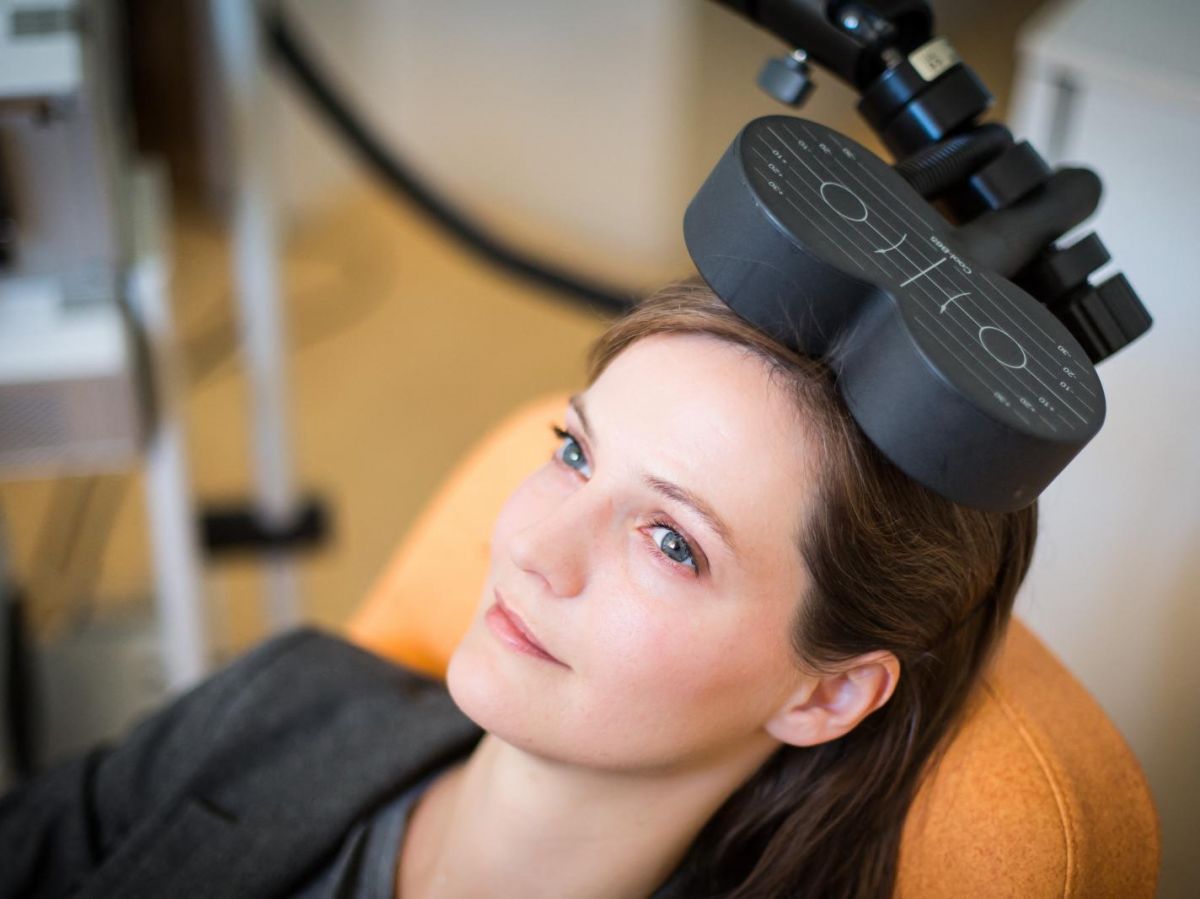
Stop depression in just five days! In an article published on February 4, 2026 in the Journal of Affective Disorders, Researchers from the University of California, Los Angeles (USA) claim that accelerated treatment of transcranial magnetic stimulation manages to do in five days what would normally take between six and eight weeks.
Turn on your brain to turn off depression
This non-invasive method is emerging as a viable alternative for patients who do not respond to conventional pharmacological treatments. In its traditional form, transcranial magnetic stimulation (TMS) involves the administration of intermittent magnetic pulses through the skull. This treatment stimulates neurons located within the magnetic field, altering brain activity in the treated area. Short daily sessions (each with 600 pulse repetitions) can alleviate depression after six to eight weeks. However, the length of the treatment, which requires the patient to travel to the health center every day for almost two months, makes this alternative too burdensome for many patients.
Can we do in five days what normally takes 50?
The accelerated version, presented by researchers at the University of California, increases the number of pulses in each session (to 1800, three times the usual number), with pulses that are also longer than those normally used. And the number of sessions drops considerably, requiring only five consecutive days of treatment.
For their study, they compared the medical data of 135 patients who followed the traditional six- to eight-week protocol (treated between February 2023 and March 2025 at the university's dedicated treatment clinic) with 40 patients following the accelerated protocol during the same period. According to the results of their analysis, both treatments were able to reduce depression symptoms to a comparable extent, despite the difference in protocol length.
Read also5 Mental Hygiene Measures Against Depression
Less restrictive, but also slightly less effective
However, there were differences between the results of the two treatments when looking beyond the averages. Approximately half of the patients following the accelerated protocol saw no improvement immediately after the five days. In these patients, the beneficial effect was only observable two to four weeks later. According to the authors, this delayed effect suggests that the brain continues to adjust its activity, even weeks after the end of treatment.
Another difference was the degree of improvement in depression scores between the two groups. In patients with a delayed effect, this improvement, while statistically significant, was less pronounced than that seen in the group with immediate results: the decrease in depression scores was 36 (%), compared to almost double that for those seeing results at the end of the five-day treatment period. The authors add that the traditional six- to eight-week treatment appears to be more effective in the long term.
A viable alternative for some patients
However, if we consider the difference in commitment between the two protocols, the five-day protocol could prove to be a better alternative for some patients who cannot commit to a nearly two-month treatment. For some patients suffering from depression, going to the hospital every day for at least six weeks can be a real obstacle, recalls in a press release Michael Apostol, author of the study. What this study suggests is that these patients could be offered a path leading to significant relief in less than a week.
The study's director, Andrew Leuchter, goes further, revealing that additional tests would show that the effectiveness of this accelerated protocol can be improved with just one additional session, two weeks after the first treatment. This rapid alternative seems viable, as it confirms results previously obtained by researchers from Stanford with a similar protocol of only five days. Randomized trials will now be needed to verify the benefits of this accelerated treatment.
 English
  French