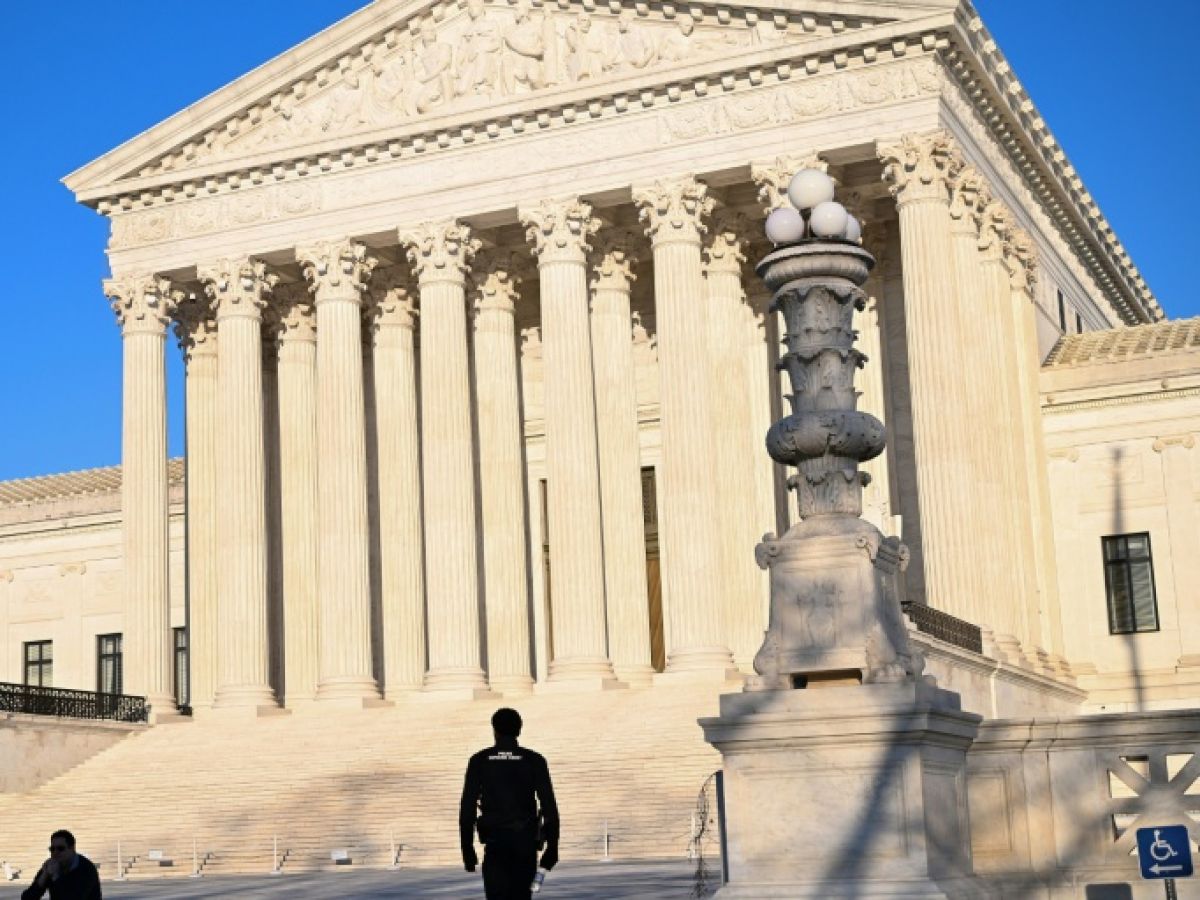
The U.S. Supreme Court heard arguments on April 27, 2026, from the German agrochemical giant Bayer seeking to overturn tens of thousands of lawsuits based on the alleged cancer risk linked to the herbicide Roundup, manufactured by its subsidiary Monsanto. The nine justices, six conservatives and three liberals, will have to rule on the admissibility of the lawsuits filed in various U.S. states against products approved without health warnings by the Environmental Protection Agency (EPA).
Bayer, which acquired Monsanto in 2018, is invoking the federal FIFRA pesticide law, arguing that it prohibits states from imposing additional health warnings. Congress simply wanted uniformity in safety warnings on pesticide labels“,” argued Bayer’s lawyer, Paul Clement. “A decision in favor of the opposing party.” would pave the way for an overwhelming responsibility "for manufacturers" and would harm the interests of farmers whose livelihoods depend on federally approved pesticides" he stated.

Backed by the Trump administration, Bayer points out that the EPA considers glyphosate, the active ingredient in Roundup, not to be carcinogenic. However, it is classified as a "probable carcinogen" by the International Agency for Research on Cancer of the World Health Organization (WHO).
Read alsoRoundup: A study on glyphosate withdrawn after years of warnings about Monsanto's involvement
"Things that slip through the net"“

At the origin of this case is the conviction of Monsanto in October 2023 by a Missouri jury to pay $1.25 million in compensation to John Durnell, a man who developed a form of cancer which he attributes to his exposure to the controversial herbicide.
Government representative Sarah Harris also stressed the value of a single set of regulations, an argument to which several judges were receptive. If Iowa says it may cause cancer, California says it definitely causes cancer, while another state says the opposite, then that information must also be included on the label; otherwise, labeling uniformity will be eliminated." she explained.
“ On the other hand", objected the Chief Justice, John Roberts, If it turns out they are right, perhaps it would have been better if they had had the opportunity to bring this danger to the public's attention while the federal government was carrying out its process. » of health risk assessment.
Ashley Keller, John Durnell's lawyer, pointed out that the EPA was not infallible and that its recommendations sometimes lagged behind the state of scientific knowledge. There are many conscientious people working at this agency, but we can all agree that sometimes things slip through the net." he reminded us.
Since 2018, Bayer has already paid out more than $10 billion to settle glyphosate-related litigation and has set aside more than $8 billion in recent months for ongoing cases. The Supreme Court is expected to rule before the end of its annual session in late June.
 English
  French