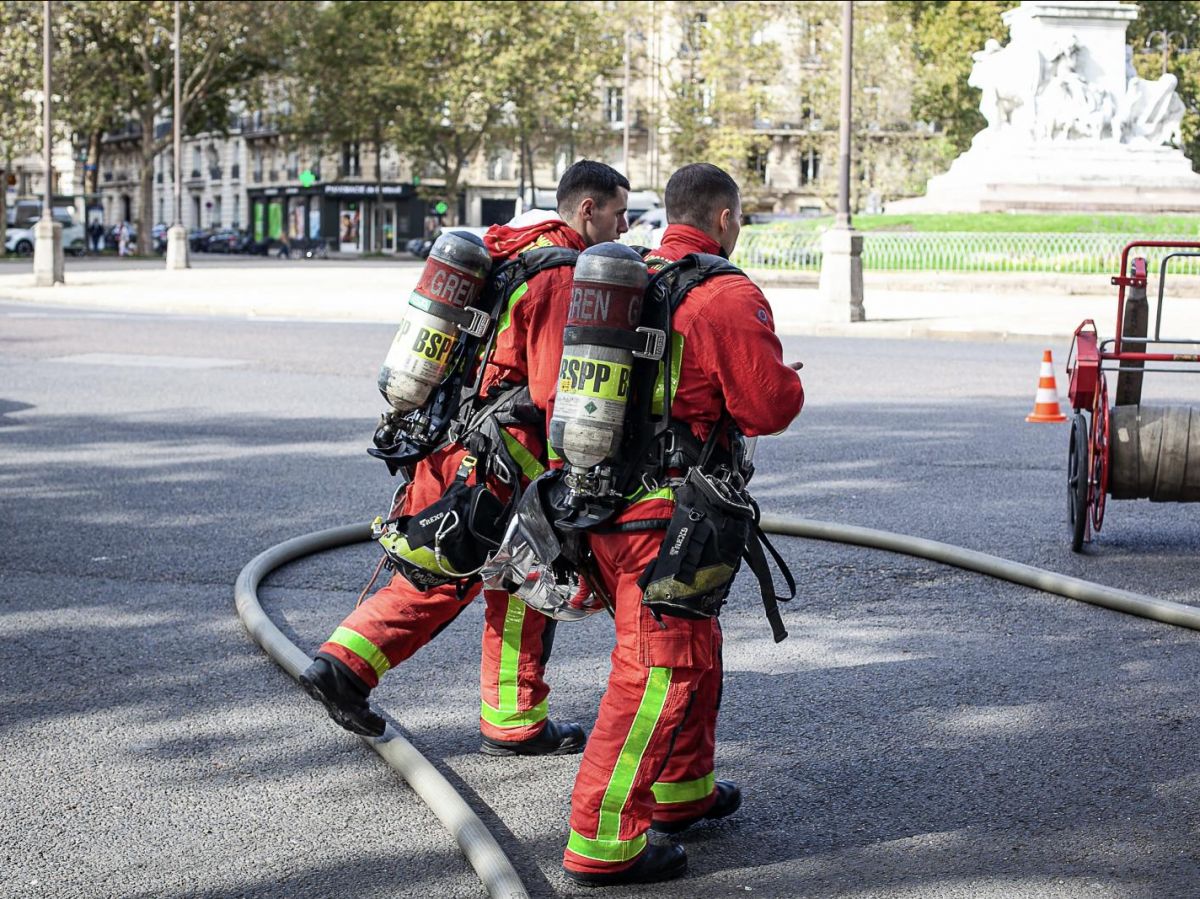
Multiple cancers have been added to the list of occupational diseases for firefighters, a measure that should allow for better management of these pathologies suspected of being linked to exposure to fires.
"We welcome this: it is a legal recognition of occupational exposures, and it also concerns our volunteers," Norbert Berginiat, vice-president of the National Federation of Firefighters, told AFP on Monday, the day after the publication of a decree expanding the list of occupational diseases faced by firefighters.

This decree, published in the Official Journal, concerns "professional and volunteer firefighters, as well as military personnel from units permanently assigned to civil security missions".
It updates two tables listing certain diseases considered to be linked to the patient's profession. The first table applies to exposure to coal combustion, the second to asbestos inhalation.
These charts mainly list cancers, even decades after the exposure. Two are now linked to the activity of firefighters: mesotheliomas (pleura, peritoneum…) and bladder cancers.
Until then, the list was practically empty for firefighters. Only two cancers were officially associated with their work: nasopharyngeal carcinoma and hepatocellular carcinoma
Designation as an occupational disease allows the affected patient to receive compensation beyond what is covered by national health insurance. If a table describes the patient's situation, they can automatically benefit from this compensation without having to initiate a specific, often lengthy and complex, procedure.
The inclusion of new cancers in the firefighters' list is a long-standing demand, as studies increasingly point to a probable link between their work and the development of certain cancers. In 2022, the International Agency for Research on Cancer (IARC) established a probable link with bladder cancer and mesothelioma.
"It can be transmitted through (inhalation of) fire smoke, but it can also be transmitted through the skin," Mr. Berginiat, himself a doctor, explained to AFP.
"It's good that it's recognized, but it's better that it's avoided," he stressed, hoping that the designation of new occupational diseases would, beyond the compensation itself, raise awareness of "the need to strengthen protection."
A study, promised for several years by the Ministry of the Interior to precisely measure the risks, is currently "being prepared", he noted.
 English
  French