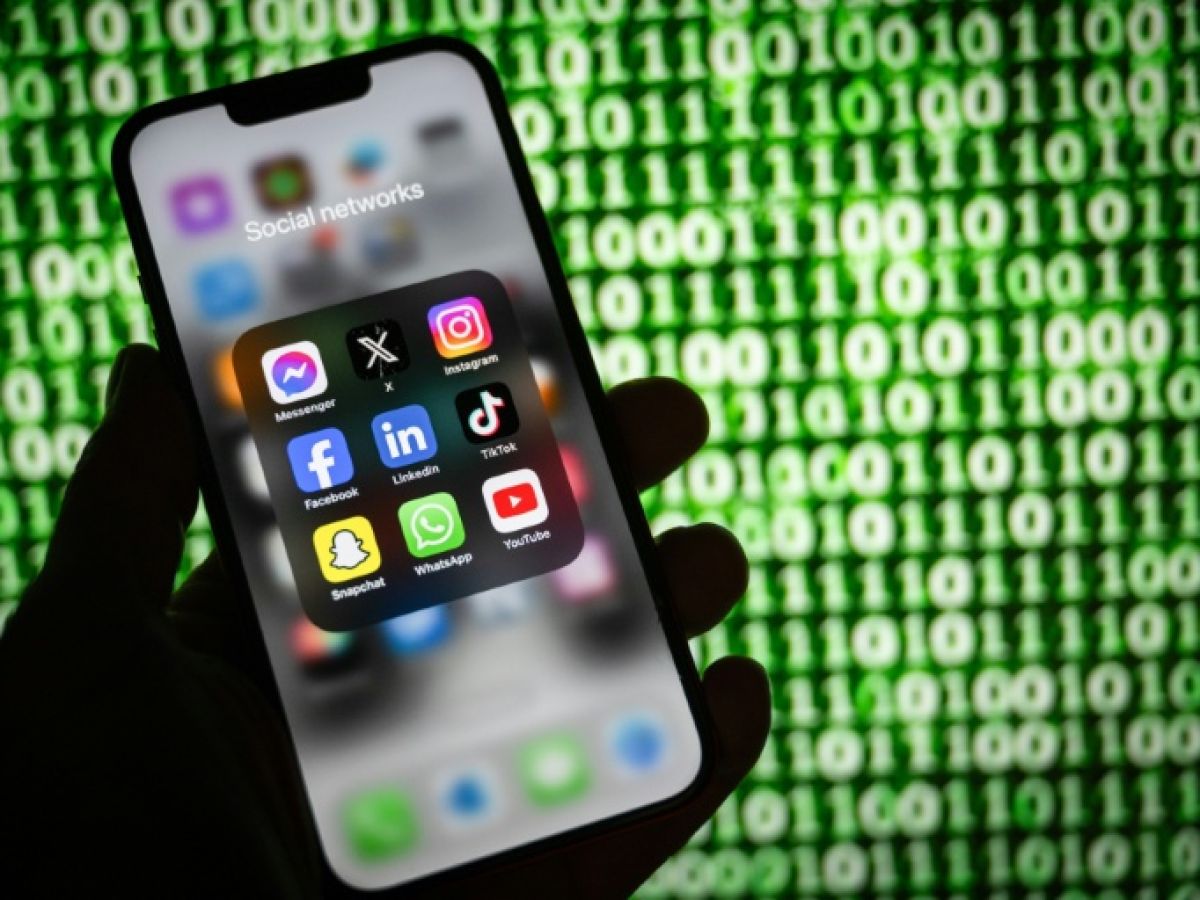
Should social media be banned for children and teenagers? Implemented in Australia and considered in France and the United Kingdom, the measure divides researchers: some consider it necessary in the face of a major threat to mental health, others defend a more nuanced approach. "Restricting young teenagers' access to social media is a gamble worth taking."Australian researcher Michael Noetel told AFP.
His country is already following this path: since December, Australians under 16 have been banned from major social networks – Facebook, TikTok, Instagram, etc. – and other community websites like YouTube and Reddit. France plans to do the same for those under 15, with several bills expected in the coming weeks, including one championed by President Emmanuel Macron.
The cause is the multiple risks associated with social networks: harassment, algorithms that promote constant comparison, exposure to violent or sexual content, etc.
The trigger for "Anxious Generation"
For several years, research has focused on this topic. A book by American psychologist Jonathan Haidt, published in 2024 and selling millions of copies, has had a particularly strong political influence. In it, he argues that smartphones, and social media in particular, are the primary cause of the decline in young people's mental health since the 2000s: this is the "Anxious Generation," which gives the book its title.

Read alsoChatGPT and mental health: "A chatbot shouldn't pretend to be a human who cares about you."
As a sign of this influence, Mr. Haidt – who was unable to speak with AFP due to scheduling conflicts – was cited by Australian officials and then received by Emmanuel Macron in the spring of 2025. He was also approached for discussions with representatives of the British government, the newspaper reported last week. The Guardian.
His book remains controversial. Upon its release, the magazine Nature published a critique of the American psychologist Candice Odgers, denouncing a simplistic thesis that notably overlooked the economic factors contributing to youth distress. Two years later, a relative consensus is nevertheless emerging regarding the toxic effects of social media, particularly on girls, even if a debate continues concerning the extent of the phenomenon.
In France, theFrench Agency for Food, Environmental and Occupational Health & Safety (ANSES) It was thus concluded in January 2026, based on the available scientific literature, that social networks had many detrimental effects on adolescents, without being the sole cause of the deterioration of their mental health.
"Social media is appallingly toxic."Serge Tisseron believes
Despite overly categorical statements, Mr. Haidt "has drawn attention to a real problem"Michael Noetel believes this, accusing his opponents of demanding an unrealistic level of evidence.

Mr. Noetel himself supervised a large-scale study, published in 2025 in the journal Psychological Bulletin and compiling around a hundred studies conducted worldwide to analyze the links between screen use and psychological and emotional problems in children and adolescents. Its findings suggest a vicious cycle: excessive screen time, particularly social media and video games, has negative effects, and this distress can in turn encourage increased screen use.
Read alsoTo combat fake news in healthcare, we need to educate ourselves "from school to nursing homes".
However, other researchers are skeptical of a blanket ban. "Excessive restrictions can be just as problematic as excessive use, and this depends on age and gender."Australian researcher Ben Singh told AFP.
In a study recently published in the JAMA Pediatrics and conducted among approximately 100,000 young Australians, Mr. Singh observes that high time spent on social media is associated with poorer mental health, but that this is also the case in the event of total abstinence.
The researchers hypothesize that social networks can, to some extent, play a positive role in socialization and thus limit isolation. However, this beneficial effect appears to be more pronounced among boys.
Skepticism towards a general ban is also expressed by some personalities who have long warned about the dangers of screens, such as the French psychiatrist Serge Tisseron. "Social media is appallingly toxic."He believes this is necessary, calling for ambitious regulation. But he fears that a blanket ban could be easily circumvented by teenagers, while absolving parents of responsibility and leaving the issue of digital education entirely unresolved.
"The debate has become very polarized in recent years between an outright ban or nothing at all."he laments, pointing to a paradox: "That's exactly the logic of social media: either all for it, or all against it."
 English
  French