Prevention is better than cure… but first you need to determine what you want to prevent in order to know how to go about it! Certainly, there are some actions that facilitate the prevention Many diseases can be prevented through activities such as a balanced diet or physical activity. However, some at-risk individuals require special care, and it's not always known in advance if you fall into that category.
Artificial intelligence (AI) could help us solve this problem by highlighting the weaknesses in our health and therefore the diseases that we are at risk of developing in the future. One such predictive tool is SleepFM, which uses data collected during sleep to determine the risk of becoming ill in the near future. This AI, developed by researchers at Stanford University in the United States, was presented on January 6, 2026, in the journal Nature Medicine.
When health is reflected in sleep
Why analyze the sleep Because numerous studies show that the quality of this night's rest is associated with health: sleep disorders are linked to an increased risk of dementia and of chronic diseasesand affect the brain health and the immune systemamong other things. The authors therefore thought it might be possible to gain insight into an individual's overall health by analyzing their sleep.
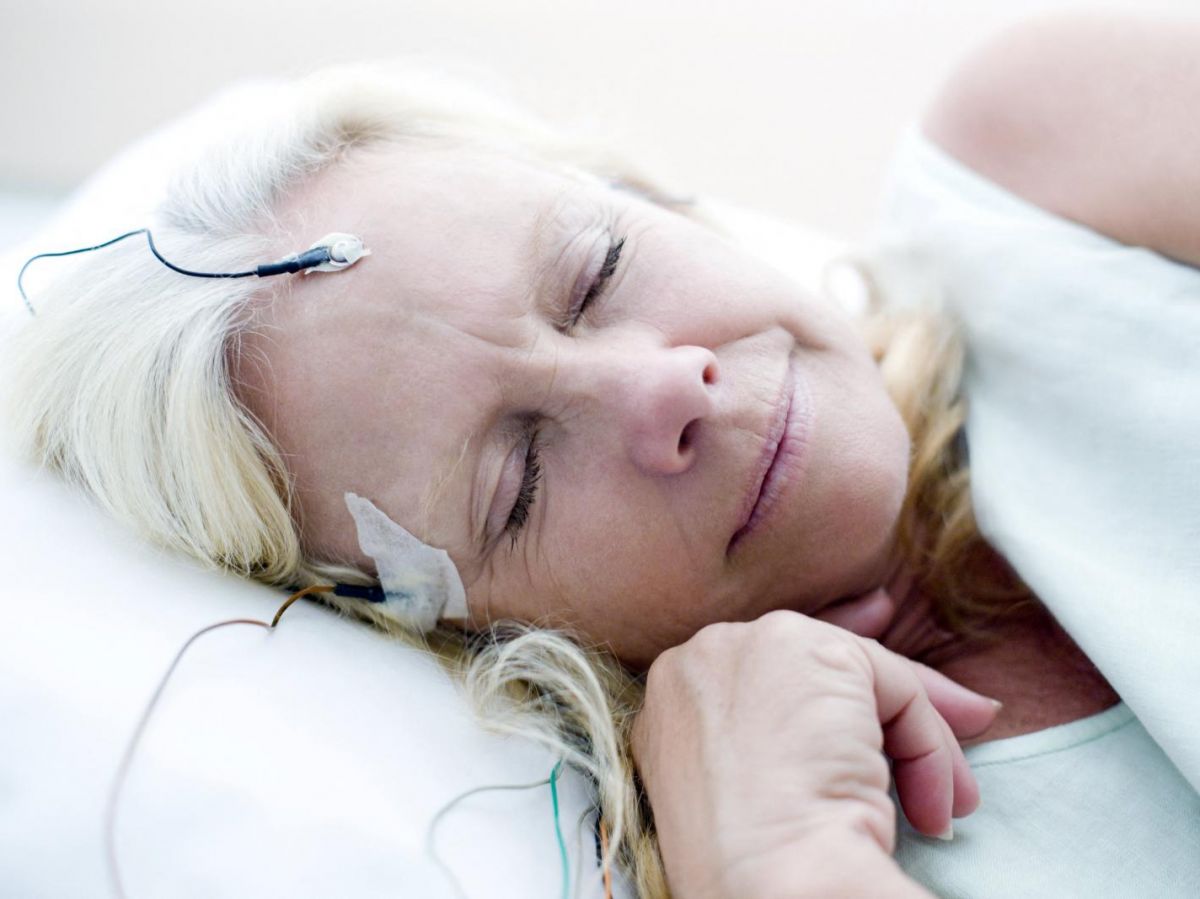
To do this, they used polysomnography data, a medical examination to study sleep quality and detect disorders such as apnea. This examination involves recording several physiological variables during the night, including brain activity, eye movements, cardiac and respiratory activity, and the muscle function of the arms and legs.
Seeing sleep patterns to predict the future
SleepFM is a so-called "foundational" model that analyzes a large amount of unlabeled data (no one tells it what each data point represents) to infer relationships and autonomously learn how these relationships can be generalized. It was trained on over 585,000 hours of polysomnography data from more than 65,000 participants across various studies, along with their health data (such as whether they had chronic illnesses). Each hour is broken down into five-second segments, which serve as "tokens" for the model (similar to how words serve as "tokens" for language models like ChatGPT).
By linking sleep data to participants' illnesses, the AI was able to determine which conditions these individuals had or would develop within the next six years. It proved particularly effective for a subgroup of 130 diseases, with a success rate of at least 75%. SleepFM was especially effective at predicting the risk of developing Parkinson's disease and dementia (conditions where sleep disturbances are considered early indicators), heart problems caused by hypertension, cerebral hemorrhages, and prostate, breast, and skin cancers. The AI was also effective at predicting the risk of mortality within the next six years (i.e., by examining data from a specific day, it could predict the person's death within that timeframe, a prediction that could be verified against the patient's medical history).
A hope for disease prevention
This artificial intelligence was then tested with a cohort of over 6,000 adults whose data had not been used to train the model. Approximately half of this cohort was used to retrain the AI and allow it to adapt to differences in population and data. Finally, it was tested on 2,000 participants, demonstrating good predictive capabilities, particularly for cardiovascular diseases. Thus, the model could be easily adapted to other countries or populations without having to repeat the entire training process. However, the authors caution that SleepFM was primarily trained using data from studies on sleep disorders, and therefore on patients suspected of having these disorders. There may therefore be a bias, as people without sleep problems are likely underrepresented, and thus the AI cannot be used as is for the entire population.
However, the increasing availability of wearable health devices (smartwatches and others) could provide AI with data from healthy individuals, helping it to better generalize its findings. As with other predictive AI in healthcare, there is still a long way to go before SleepFM can be used in medicine. But these technologies represent enormous hope for public health, since prevention is better than cure.
 English
  French